Bird Details by Order Ascending |
||||
|---|---|---|---|---|
| English; | HummingbirdO | The bee hummingbird is a species of hummingbird, native to the island of Cuba in the Caribbean. It is the smallest known bird, the male being 55mm long, and wieghs just 2 grams. The bee hummingbird feeds on nectar of flowers and bugs found in Cuba. The Ostrich is the world heaviest and tallest bird weighing in at 150kg (23 stones) and a height of 2.8m (9').As omnivores, they primarily eat plants (roots, seeds, and leaves) but also consume insects, lizards, and small rodents. -HELLO WELCOME TO GEO'S BIRDS- A site with a scottish bias. Hopefully this will help you identify any birds you see out and about |
 |
|
| Habitats; | Woodland | |||
| Status; | ||||
| Family; | ||||
| Latin Name; | ||||
| Order; | ||||
Top of Page | 
| |||
 |
||||
| English; | Little Bittern | Birds from temperate regions in Europe and western Asia are migratory, wintering in Africa the Avalon Marshes in Somerset in 2010, by 2017 this species had been present in this area for nine consecutive years. Heron Conservation |
 |
|
| Habitats; | ||||
| Status; | Migrant | |||
| Family; | Anatidae | |||
| Latin Name; | Ixobrychus minutus | |||
| Order; | ||||
Top of Page | 
| |||
|
||||
| English; | Booted Eagle | Migratory birds winter in southern Africa and southern Asia; northern birds leave their breeding grounds in September and return in March and April, and those breeding in South Africa move northwards in March and return in August (del Hoyo et al. 1994). Migrants are thought to partially cross water on a broad front (assumed from regular occurrence on islands across the Mediterranean), but nevertheless many pass through bottleneck short crossing points each season. Birds tend to be seen singly or in pairs, and even on migration rarely form groups of more than five, and stay away from other raptors (Ferguson-Lees and Christie 2001). Birds soar c.200-300 m above the ground when hunting (Brown et al. 1982). Habitat It is a species of open woodland, preferring patches of forest interspersed with open areas; it is recorded up to 3,000 m (del Hoyo et al. 1994). Diet Small birds are the most important part of its diet (del Hoyo et al. 1994). Breeding site Nests are built in trees (del Hoyo et al. 1994). |  |
|
| Habitats; | ||||
| Status; | ||||
| Family; | ||||
| Latin Name; | ||||
| Order; | ||||
Top of Page | 
| |||
|
||||
| English; | Iberian Green Woodpecker | The visible difference from its northern cousin is the lack of a black eye-patch in both sexes and the reduction of the black surround to the red moustachial stripe in the male. Habits and habitats remain similar, i.e. a large amount of ground-feeding activity, loud, strident calls and similar, undulating flight of rapid wing-beats followed by short glide. The juvenile has a spotted belly. |
 |
|
| Habitats; | ||||
| Status; | ||||
| Family; | Picidae | |||
| Latin Name; | ||||
| Order; | ||||
Top of Page | 
| |||
|
||||
| English; | Glossy Ibis | The species feeds in very shallow water (Hancock et al. 1992) and nests in freshwater or brackish wetlands with tall dense stands of emergent vegetation (e.g. reeds or rushes) and low trees or bushes (Marchant and Higgins 1990, del Hoyo et al. 1992). It shows a preference for marshes at the edges of lakes and rivers (Hancock et al. 1992), as well as lagoons, flood-plains, wet meadows (Marchant and Higgins 1990, del Hoyo et al. 1992), swamps (del Hoyo et al. 1992), reservoirs (Hancock et al. 1992), sewage ponds, rice-fields and irrigated cultivation (Marchant and Higgins 1990, del Hoyo et al. 1992). It less often occurs in coastal locations such as estuaries, deltas, saltmarshes (Hancock et al. 1992) and coastal lagoons (del Hoyo et al. 1992). Roosting sites are often large trees that may be far from water (Brown et al. 1982, del Hoyo et al. 1992). Diet The diet of the species varies seasonally depending on what is available (Hancock et al. 1992). It takes adult and larval insects (e.g. aquatic beetles, dragonflies, grasshoppers, crickets, flies and caddisflies), worms, leeches, molluscs (e.g. snails and mussels), crustaceans (e.g. crabs and crayfish) and occasionally fish, frogs, tadpoles, lizards, small snakes and nestling birds (del Hoyo et al. 1992). Breeding site The nest is a platform of twigs and vegetation usually positioned less than 1 m above water (occasionally up to 7 m) in tall dense stands of emergent vegetation (e.g. reeds or rushes), low trees or bushes over water (del Hoyo et al. 1992). |  |
|
| Habitats; | ||||
| Status; | ||||
| Family; | Threskiornithidae | |||
| Latin Name; | ||||
| Order; | ||||
Top of Page | 
| |||
|
||||
| English; | Spotless Starling | This species is found in open woodland with expanses of short grass, often in association with grazing mammals as well as in farmland, parks, gardens and cities. Breeding occurs from April to mid-July in Spain and March to July in Morocco. It is a colonial nester. Both sexes build the nest, mainly from dry grass and it is lined with grass, roots, leaves and feathers. Often yellow flowers are included in the structure, as well as fresh green leaves. It is placed in a natural hole or an old woodpecker hole, or in the disused burrow of European Bee-eater (Merops apiaster) or Collared Sand Martin (Riparia riparia) and artificial structures and nestboxes are widely used. Clutches are four to five eggs in Spain. It is omnivorous; it takes mainly animal matter in the spring and summer and fruit and seeds in the autumn and winter. The species is mostly sedentary (Craig et al. 2015). |  |
|
| Habitats; | ||||
| Status; | ||||
| Family; | ||||
| Latin Name; | ||||
| Order; | ||||
Top of Page | 
| |||
|
||||
| English; | Zitting Cisticola | The species occupies open grasslands, including seasonally flooded and grassy wetlands, meadows, fallow lands and cultivated croplands and is occasionally found in urban areas. It prefers to forage in areas where there is Typha and Phragmites reedbeds and Salicornia saltmarsh as well as some bare ground, but breeding pairs require live, narrow-bladed grasses, sedges or plants with similar structure for nest-sites. It is usually found where vegetation is less than 1 m tall. It mostly breeds from March to September in Europe. The male builds the nest (Ryan 2006) low down in marshy vegetation and it is an elongated pear or bottle shaped structure with an entrance at or near the top. It is made of grasses bound together with cobwebs and lined with more cobwebs, flowers, hair and down. Usually four to six eggs are laid (Snow and Perrins 1998). It feeds mainly on insects and small invertebrates as well as some grass seeds. The species is largely resident throughout most of its range, but is subject to local movements often linked to seasonal changes in habitat suitability (Ryan 2006). |  |
|
| Habitats; | ||||
| Status; | ||||
| Family; | Cisticolidae | |||
| Latin Name; | Cisticola juncidis | |||
| Order; | ||||
Top of Page | 
| |||
|
||||
| English; | Iberian Magpie | Sexes are similar and with a black head, grey-brown back and blue wings with a long blue tail, this species is unmistakeable. It is resident throughout the southern half of Portugal but absent from the majority of the north. They travel in loud and noisy loose flocks through recognized territories, often foraging on the ground where they hop from one place to the next. Their flocks are often accompanied by Jays who steal food found by the Magpies. |  |
|
| Habitats; | ||||
| Status; | ||||
| Family; | ||||
| Latin Name; | ||||
| Order; | ||||
Top of Page | 
| |||
|
||||
| English; | Crested Lark | This species inhabits dry plains with sparse vegetation cover and dry cultivations. It may originally have inhabited warm semi-desert and steppe landscapes but it has also adapted to human-modified landscapes, such as open farmed countryside in the northern Mediterranean Basin and alpha (Stipa tenacissima) steppe and deserts in North Africa and the Middle East, and sandy semi-desert and dry cultivations in India, also forest clearings and savanna in the Afrotropics. The breeding season is from March to June or July in the north of its range, from April in Spain, it lays September-June in Senegambia, April-May in Mali, November-March and May in Nigeria, December-March in Ethiopia, April-May in Somalia, March in East Africa and breeding March-August in Pakistan and India. The species is monogamous and usually lays a clutch of three to five eggs. The nest is a depression on the ground with an untidy lining of grass or other vegetation either beside a shrub or in the open (de Juana and Suárez 2004). It feeds on invertebrates and plant material such as seeds and leaves. The species is mainly resident apart from in northern Russia where it is migratory (Snow and Perrins 1998), central European and Mediterranean populations make some dispersive movements (de Juana and Suárez 2004). |  |
|
| Habitats; | ||||
| Status; | ||||
| Family; | ||||
| Latin Name; | ||||
| Order; | ||||
Top of Page | 
| |||
|
||||
| English; | Sardinian Warbler | This species prefers rich undergrowth, though is not particularly shy. The red eye-ring and black head and cheek of the male is unmistakeable. A rather harsh continuous chattering is the alarm call, and this is what one will normally hear well before seeing the bird. A particularly easy place to come across this species is the low coastal scrub near Faro airport. |  |
|
| Habitats; | ||||
| Status; | ||||
| Family; | Sylviidae | |||
| Latin Name; | Curruca melanocephala | |||
| Order; | ||||
Top of Page | 
| |||
|
||||
| English; | Red-rumped Swallow | This species is found in open hilly country and mountains, river gorges, valleys, sea cliffs, as well as in cultivated areas and human habitations, including towns. In Europe, breeding occurs from April-September and is usually solitary although sometimes in loose groups. The nest is built by both sexes and is enclosed with a tunnel entrance. It is made of mud pellets sometimes mixed with a little dry grass and lined with a mixture of white feathers, hair, plant down, leaves, pine (Pinus) needles or dry grass. Clutch size varies regionally but is normally four or five in Europe (Turner 2004). The species feeds on insects, taking airborne prey in aerial pursuit (Snow and Perrins 1998). The species is migratory in northern parts of the range and mostly resident in the south (Turner 2004). European populations are thought to winter in the savanna zone of the northern Afrotropics (Hagemeijer and Blair 1997). |  |
|
| Habitats; | ||||
| Status; | ||||
| Family; | ||||
| Latin Name; | Cecropis rufula | |||
| Order; | ||||
Top of Page | 
| |||
|
||||
| English; | Monk Parakeet | It is estimated that monk parakeets in Spain account for more than 80% of Europe's feral population. As an invasive species, it harms local fauna such as pigeons and sparrows, as well as crops. Spain has outlawed the possession and trafficking of monk parakeets since 2013. Madrid had the greatest population of monk parakeets in Europe, with 10,800 as of June 2015, and the population in Barcelona was estimated at 5000 in the same year. Between 2013 and 2021, the monk parakeet population in Seville increased from 1200 to 6300 individuals. |  |
|
| Habitats; | ||||
| Status; | ||||
| Family; | Psittacidae | |||
| Latin Name; | ||||
| Order; | ||||
Top of Page | 
| |||
|
||||
| English; | Firecrest | Spotted this bird in 2 places in Mallorca, Soller and Port d'Andrax. On both occasions I played its song on Merlin, and both times the birds came in to investigate. I turns out these birds are considered a sub-species found on the Baleric Islands hence its latin name Regulus ignicapilla balearicus |  |
|
| Habitats; | ||||
| Status; | ||||
| Family; | ||||
| Latin Name; | Regulus ignicapilla balearicus | |||
| Order; | ||||
Top of Page | 
| |||
|
||||
| English; | Eleonora's Falcon | Mallorca Bird Watching |  |
|
| Habitats; | ||||
| Status; | ||||
| Family; | Falconidae | |||
| Latin Name; | ||||
| Order; | ||||
Top of Page | 
| |||
|
||||
| English; | Spanish Sparrow | Similar in size and shape to House Sparrow. Breeding season males have a heavily streaked black breast and back and a rufous crown and nape. Males are duller in the nonbreeding season. Females are very difficult to separate from female House Sparrows but tend to have bigger bills and paler bellies. Colonial, builds huge stick nests, often in/under White Stork nests. |  |
|
| Habitats; | ||||
| Status; | ||||
| Family; | ||||
| Latin Name; | Passer hispaniolensis | |||
| Order; | ||||
Top of Page | 
| |||
|
||||
| English; | Canary Islands Chiffchaff | This species inhabits gardens, bushes, the edges of cultivation, scrub, pine (Pinus) forest and mixed woodland, from sea-level to tree-line. Race exsulis also found in cultivation, euphorbias, cactus scrub, fig trees (Ficus) and shrubs. It breeds from the end of January until June. The nest is made mostly from grasses, flower petals, dry leaves, plant fibres, animal hair and feathers. It is normally placed in a tree or palm, in a tall bush such as laurel (Laurus) or in creepers but sometimes in a hole, including under the eaves of a house and, very rarely on ground. Clutches are four eggs. The diet is poorly known but is most likely similar to that of Phylloscopus collybita. The species is sedentary (Clement 2015). |  |
|
| Habitats; | ||||
| Status; | ||||
| Family; | ||||
| Latin Name; | Phylloscopus canariensis | |||
| Order; | ||||
Top of Page | 
| |||
|
||||
| English; | Canarian Blackbird | Tenerife April 25: The Canarian Blackbird is very similar to the nominate race, but it is smaller with a length of 17-20 cm, whereas the nominate race is about 24-27 cm long. The female is blackish-brown with limited grey throat and the male is blacker than nominate. The immature has brown wash on the upperwing and duller bill, while adult male has yellow one. The race "cabrerae" occurs in Madeira and W Canary Islands. |  |
|
| Habitats; | ||||
| Status; | ||||
| Family; | Turdidae | |||
| Latin Name; | Turdus merula cabrerae | |||
| Order; | ||||
Top of Page | 
| |||
|
||||
| English; | Canary Islands Robin | Newly published research has suggested that two subspecies of European Robin found in the Canary Islands should be recognised as full species. Currently, three subspecies of European Robin are recognised from the archipelago: nominate rubecula, which is found widely across mainland Europe, occupies the western islands of El Hierro, La Gomera and La Palma; superbus of Tenerife; and marionae of Gran Canaria. The presence of at least one cryptic species of robin in the Canaries has long been mooted, with superbus widely recognised by visiting birders to differ significantly in song from nominate birds as well as showing physical features such as a conspicuous pale eyering, greyer band of ash-grey on the forecrown and neck, deeper rufous-chestnut face and chest, darker greyish-olive upperparts and whiter belly and vent. European Robin Erithacus rubecula Tenerife Robin Erithacus superbus Gran Canaria Robin Erithacus marionae |  |
|
| Habitats; | ||||
| Status; | ||||
| Family; | Muscicapidae | |||
| Latin Name; | Erithacus rubecul superbusa | |||
| Order; | ||||
Top of Page | 
| |||
|
||||
| English; | Cannary Islands Buzzard | The Canary Islands buzzard, scientifically known as Buteo buteo insularum, is a subspecies of the Common Buzzard. It is found in the Canary Islands and is slightly smaller and darker than the Common Buzzard in other parts of Europe. |  |
|
| Habitats; | ||||
| Status; | ||||
| Family; | Accipitridae | |||
| Latin Name; | Buteo buteo insularum | |||
| Order; | ||||
Top of Page | 
| |||
|
||||
| English; | Berthelots Pipit | The species is found in the Canary Islands and Madeira where it is sedentary (Tucker and Heath 1994). Birds are found from sea level to over 2,000 m in all habitats except dense woodland and wetter areas. In the eastern Canaries it uses dry, sparsely vegetated semi-desert areas of volcanic rock and other open habitats such as tracks. In the western Canaries it is found in mountainous areas and on rocky hillsides. In Madeira it is most frequently found in the high sierras but can also be found on cliffs and fields near the sea. It breeds from late January to August probably producing two broods of two to five eggs. The nest of dry grass and roots lined with hair, wool or feathers is built in the shelter of a small bush or stone. It feeds mainly on insects and other invertebrates but also consumes seeds. |  |
|
| Habitats; | ||||
| Status; | ||||
| Family; | Motacillidae | |||
| Latin Name; | Anthus berthelotii | |||
| Order; | ||||
Top of Page | 
| |||
|
||||
| English; | Bolle's Pigeon | Bolle's pigeon, Bolle's laurel pigeon or dark-tailed laurel pigeon is a species of the genus Columba of family Columbidae, doves and pigeons, endemic to the Canary Islands, Spain. This bird is named after the German naturalist Carl Bolle, who was the first to distinguish it from the laurel pigeon. It occurs in dense laurel forest in mountainous areas, especially in ravines; also in heath of Myrica faya and Erica arborea, and sometimes in rather open areas, e.g. cultivation. It spends the hottest part of the day in deep shade. It feeds mainly on fruit but also takes grain and occasionally buds, leaves and shoots. It will gather in large concentrations on fruiting trees, plucking berries from the tree but also feeding on the ground. Breeding occurs in January-September. It makes some altitudinal movements to take advantage of ripe cereals and fruit at lower elevations in late summer. |  |
|
| Habitats; | ||||
| Status; | ||||
| Family; | Columbidae | |||
| Latin Name; | Columba bollii | |||
| Order; | ||||
Top of Page | 
| |||
|
||||
| English; | Canary Islands Blackcap | The Eurasian blackcap (Sylvia atricapilla) is a bird species that has a subspecies, the Canary Islands blackcap, that is found in the Canary Islands, Madeira, and the Azores. The blackcap is a common warbler, and its most notable feature is the black cap on the male and a reddish-brown cap on the female. In the Canary Islands, blackcaps are often found in cultivated and settled areas, suggesting they have expanded their numbers since the islands were colonized. |  |
|
| Habitats; | ||||
| Status; | ||||
| Family; | Sylviidae | |||
| Latin Name; | Sylvia atricapilla. heineken | |||
| Order; | ||||
Top of Page | 
| |||
|
||||
| English; | Tenerife Blue Tit | Sub-species of African Blue Tit. Found in North Africa and the Canary Islands in woodlands and gardens. More intense indigo-blue on the back and crown than Eurasian Blue Tit without green tones and with a narrower pale eyestripe. Some subspecies lack the white wingbar. Varied repertoire of calls and extensive song variation between island subspecies. |  |
|
| Habitats; | ||||
| Status; | ||||
| Family; | Paridae | |||
| Latin Name; | C. t. teneriffae Cyanistes teneriffae | |||
| Order; | ||||
Top of Page | 
| |||
|
||||
| English; | Canarian Plain Swift | Medium-sized swift, very similar to Common Swift, but is noticeably paler, especially against a dark background. Wings are narrower and very pointed and the tail is longer and more deeply forked than Common or Pallid Swifts. Pale throat patch not distinct and difficult to see. Flight is very fast, agile, and erratic. Gives a shrill, wheezy scream that “hiccups” at the end. Breeds primarily on Madeira and the Canary Islands, but may move to North Africa in winter. Plain swifts breed in colonies on cliffs, bridges and buildings on the Canary Islands and Madeira, laying two eggs in a saucer-shaped nest made of flowerheads glued with saliva. |  |
|
| Habitats; | ||||
| Status; | ||||
| Family; | Apodidae | |||
| Latin Name; | Apus unicolor | |||
| Order; | ||||
Top of Page | 
| |||
|
||||
| English; | Western Bonelli's Warbler | Small, sleek warbler; white belly contrasts with olive and green upperparts. Very difficult to separate from Eastern Bonelli’s of Eastern Europe. Best character is the call, a two-parted whistle "hu-eef" instead of the sharp “tzip” of Eastern Bonelli’s. Song, a short trilled phrase, is also quite similar to Eastern Bonelli’s. Compare with other leaf warblers; note present species’ plain face, olive-green wing panel (but no bright wing bars), and bright white underparts. Breeds in deciduous forests with oaks and beech, as well as in mixed forest with pines. Non-breeding habitat includes open scrub and open woodlands. |  |
|
| Habitats; | ||||
| Status; | ||||
| Family; | Phylloscopidae | |||
| Latin Name; | Phylloscopus bonelli | |||
| Order; | ||||
Top of Page | 
| |||
|
||||
| English; | Ring-necked Parakeet | The exotic introduced Ring-necked Parakeet has had a long association with Greater London and parts of eastern Kent, but the species has now colonised several large conurbations, including Liverpool, Manchester, Sheffield and Birmingham, and non-breeding birds were reported from several squares in southern Scotland |  |
|
| Habitats; | ||||
| Status; | ||||
| Family; | Turdidae | |||
| Latin Name; | ||||
| Order; | ||||
Top of Page | 
| |||
|
||||
| English; | Common Crane | The common crane, also known as the Eurasian crane, is a bird of the family Gruidae, the cranes. A medium-sized species, it is the only crane commonly found in Europe besides the demoiselle crane and the Siberian crane that only are regular in the far eastern part of the continent. |  |
|
| Habitats; | ||||
| Status; | ||||
| Family; | Gruidae | |||
| Latin Name; | ||||
| Order; | ||||
Top of Page | 
| |||
|
||||
| English; | Cattle Egret | The cattle egret (Bubulcus ibis) is a small, stocky, white heron known for its close association with large, grazing mammals, particularly cattle. It has a global distribution across six continents and is a relatively recent colonizer in many parts of the world, including the UK, due to its adaptability to human-modified landscapes. A diet of primarily insects, especially grasshoppers and crickets, but also eats spiders, frogs, and other small vertebrates. Inhabits grasslands, pastures, farmlands, wetlands, and rice paddies. |  |
|
| Habitats; | ||||
| Status; | ||||
| Family; | Ardeidae | |||
| Latin Name; | Bubulcus ibis | |||
| Order; | ||||
Top of Page | 
| |||
|
||||
| English; | Black Woodpecker | The black woodpecker (Dryocopus martius) is a very large, crow-sized woodpecker with entirely black plumage and a prominent red crown. It is the largest woodpecker species in Europe and a resident of mature forests across the northern Palearctic region. The diet mainly consists of ants (especially carpenter ants) and their larvae, which they excavate from decaying or living trees and the ground, even under snow. Wood-boring beetles and other arthropods are also eaten. |  |
|
| Habitats; | ||||
| Status; | ||||
| Family; | Picidae | |||
| Latin Name; | Dryocopus martius | |||
| Order; | ||||
Top of Page | 
| |||
|
||||
| English; | Iberian Chiffchaff | The Iberian chiffchaff is a summer visitor to its breeding grounds in Spain, Portugal, and Morocco. Breeding Habitat It prefers native deciduous woodlands, mixed oak forests, and riparian habitats (woodlands along watercourses), particularly in hilly or cooler, more humid areas. Wintering Habitat It is a trans-Saharan migrant, with most individuals likely wintering in tropical West Africa, in areas with open woodlands, tamarisks, and acacia scrub. In the UK, it is considered a rare vagrant, although the first confirmed breeding record occurred in Glamorgan, Wales, in 2015. Iberian chiffchaffs are insectivores, primarily foraging in the foliage of trees and dense thickets for insects and spiders. In autumn and winter, they may also consume small fruits, berries, and occasionally nectar. Like the Common chiffchaff, they are active birds, constantly moving and flicking their wings and tail as they search for food. |  |
|
| Habitats; | ||||
| Status; | ||||
| Family; | Phylloscopidae | |||
| Latin Name; | Phylloscopus ibericus | |||
| Order; | ||||
Top of Page | 
| |||
|
||||
| English; | House Bunting | The House Bunting (Emberiza sahari) is a small, tame, seed-eating bird native to northwestern Africa that breeds around human habitation, often nesting in holes in walls and buildings. The breeding male has a sandy orange-brown body and a grey head, while the female's head has a brown tint. Habitat and Behavior It is known for its proximity to human settlements, where it has become very tame in some regions like Morocco, even entering houses and shops to feed. The species has been expanding its range northward, with the first confirmed breeding in mainland Europe recorded in southern Spain in 2023, likely influenced by climate change. |  |
|
| Habitats; | ||||
| Status; | ||||
| Family; | Emberiza | |||
| Latin Name; | Emberiza sahari | |||
| Order; | ||||
Top of Page | 
| |||
|
||||
| English; | Common Bulbul | The Common Bulbul (Pycnonotus barbatus) is a widespread, non-migratory passerine bird belonging to the bulbul family (Pycnonotidae) and found throughout much of Africa and recently, southern Spain. It is known for being an active, vocal bird often found near human settlements. They are opportunistic omnivores, primarily eating fruits and berries, but also supplementing their diet with insects, nectar, seeds, and even small lizards. They are important seed dispersers in their habitats. The female builds a cup-shaped nest in a tree or shrub, where she incubates a clutch of 2 to 5 eggs. Both parents feed the chicks, which fledge after about two weeks but remain dependent on parental care for much longer. |  |
|
| Habitats; | ||||
| Status; | ||||
| Family; | Pycnonotidae | |||
| Latin Name; | Pycnonotus barbatus | |||
| Order; | ||||
Top of Page | 
| |||
|
||||
| English; | Golden-crowned Kinglet | The Golden-crowned Kinglet (Regulus satrapa) is one of North America's smallest songbirds, known for its active behavior, high-pitched calls, and a striking yellow and black crown patch. Golden-crowned Kinglets primarily breed in coniferous forests across Canada and the northern and western United States, building well-concealed, hanging cup nests high in the branches. They are insectivores, primarily foraging in trees and shrubs for insects, insect eggs, spiders, and caterpillars. |  |
|
| Habitats; | ||||
| Status; | ||||
| Family; | Regulidae | |||
| Latin Name; | ||||
| Order; | ||||
Top of Page | 
| |||
|
||||
| English; | Black Wheatear | The black wheatear (Oenanthe leucura) is a species of small, dark passerine bird in the Old World flycatcher family (Muscicapidae) found primarily in the Iberian Peninsula and western North Africa. It is a distinctive bird, notable for the male's all-black plumage contrasted with a striking white rump and tail, which features a black terminal band and center, forming a unique inverted "T" pattern. Andalucian Bird Society Article |  |
|
| Habitats; | ||||
| Status; | ||||
| Family; | Muscicapidae | |||
| Latin Name; | Oenanthe leucura | |||
| Order; | ||||
Top of Page | 
| |||
|
||||
| English; | Rock Bunting | This species is a heliophilic (sun-loving) bird that breeds on open, dry, rocky slopes just above the treeline. They favour areas with an alternation of bare soil/rock and sparse vegetation, such as scrublands and vineyards. Their diet varies by season. During the breeding season, they mainly eat invertebrates like insects and spiders, while in the non-breeding season, they primarily feed on seeds. They forage mostly on the ground. |  |
|
| Habitats; | ||||
| Status; | ||||
| Family; | Emberizidae | |||
| Latin Name; | Emberiza cia | |||
| Order; | ||||
Top of Page | 
| |||
|
||||
| English; | Long-tailed Manakin | The Long-tailed Manakin (Chiroxiphia linearis) is a small, vibrant bird native to Central American forests, most famous for the males' striking plumage and complex, cooperative courtship dances. The bird is about 10 cm (4 in) long, but the two central tail feathers of the male can add another 10–15 cm (4–6 in) in length, making the tail They inhabit tropical dry and moist lowland forests and foothills along the Pacific slope of Central America, ranging from southern Mexico to northwestern Costa Rica. They prefer areas with dense canopy and plentiful undergrowth. Long-tailed Manakins are primarily frugivorous, feeding mostly on small fruits and berries, but they also eat insects. They catch their food in flight, often "hawking" for items in the forest understory |  |
|
| Habitats; | ||||
| Status; | ||||
| Family; | Pipridae | |||
| Latin Name; | Chiroxiphia linearis | |||
| Order; | ||||
Top of Page | 
| |||
|
||||
| English; | Lazuli Bunting | The Lazuli Bunting (Passerina amoena) is a small, vibrant songbird found throughout western North America, renowned for the male's brilliant blue plumage and unique song-learning behavior. They are small, finch-like birds, typically 13–15 cm (5.1–5.9 in) long. They breed in brushy areas, streamside thickets, foothills, and recently burned areas, often at the edges of open woodlands. Their diet consists mainly of insects (caterpillars, grasshoppers, spiders) during the breeding season and seeds and berries at other times of the year. Males sing their complex songs from exposed perches to defend their territory, while females are more secretive as they tend their nests. |  |
|
| Habitats; | ||||
| Status; | ||||
| Family; | Cardinalidae | |||
| Latin Name; | Passerina amoena | |||
| Order; | ||||
Top of Page | 
| |||
|
||||
| English; | Ladder-backed Woodpecker | The Ladder-backed Woodpecker(Dryobates scalaris) is a small, resilient bird of the arid American Southwest and Mexico, easily identified by the distinct black-and-white barred pattern on its back that resembles a ladder. A small woodpecker, measuring between 16.5 and 19 cm (6.5 to 7.5 in) in length. Unlike many other woodpeckers that prefer dense forests, the Ladder-backed Woodpecker thrives in very dry environments like deserts, desert scrub, thorn forests, and pinyon-juniper woodlands. They are often found in areas with mesquite, agave, Joshua trees, and large cacti like saguaros. They primarily eat insects and their larvae, which they find by probing and gleaning on branches, trunks, and cacti. They rarely dig deep into wood. They also supplement their diet with cactus fruit, berries, and seeds, and may visit bird feeders for suet and sunflower seeds |  |
|
| Habitats; | ||||
| Status; | ||||
| Family; | Picidae | |||
| Latin Name; | Dryobates scalaris | |||
| Order; | ||||
Top of Page | 
| |||
|
||||
| English; | Rufous-capped Babbler | The Rufous-capped Babbler (Cyanoderma ruficeps) is a small, social, olive-colored songbird found in dense undergrowth and bamboo thickets across Southeast Asia and the Eastern Himalayas. A small bird, measuring approximately 12 cm (4.7 in) in length and weighing 7–12 grams. It inhabits broadleaf evergreen forests, secondary growth, and bamboo stands, typically at elevations between 600 and 3200 meters, though locally found lower. They forage primarily for insects and other invertebrates in the lower and middle storeys of vegetation, occasionally eating berries as well. These are active and social birds, often moving in pairs or small, noisy foraging parties, sometimes joining mixed-species flocks. They are generally residents in their range, with only minor local or altitudinal movements. |  |
|
| Habitats; | ||||
| Status; | ||||
| Family; | Timaliidae | |||
| Latin Name; | Cyanoderma ruficeps | |||
| Order; | ||||
Top of Page | 
| |||
|
||||
| English; | Brown Creeper | The Brown Creeper (Certhia americana) is a small, camouflaged songbird found in North American woodlands, known for its unique foraging behavior of spiraling up tree trunks. This tiny, lanky bird measures just 12–14 cm (4.7–5.5 in) in length, making it smaller than a sparrow. Its upper body is mottled brown and buff with light streaking, providing excellent camouflage against tree bark. It has a white throat and belly, a broad, buffy stripe above its eye (supercilium), a slender, down-curved bill, and a long, stiff, spine-tipped tail used for support. Males and females look similar, though the female's bill is slightly shorter. Brown Creepers prefer mature, moist coniferous or mixed coniferous/deciduous forests with large trees and snags (dead standing trees). They are insectivorous, probing into bark crevices with their specialized bills for spiders, insects, their eggs, and larvae. In winter, they may occasionally eat seeds. |  |
|
| Habitats; | ||||
| Status; | ||||
| Family; | Certhiidae | |||
| Latin Name; | Certhia americana | |||
| Order; | ||||
Top of Page | 
| |||
|
||||
| English; | American Goldfinch | The American Goldfinch (Spinus tristis) is a small, vibrant North American finch known for its brilliant yellow breeding plumage, acrobatic feeding style, and late breeding season tied to seed availability. It is the state bird of New Jersey, Iowa, and Washington. A small finch, about 11 to 14 cm (4.3 to 5.5 inches) in length. Found in open country, weedy fields, floodplains, orchards, and backyards, especially where thistles, dandelions, and sunflowers are abundant. One of the strictest vegetarians in the bird world, primarily consuming seeds from composite plants (like thistles and dandelions). They use their conical bills to extract seeds and agile feet to cling to plant stems, often hanging upside down. Social birds that often flock in large groups outside the breeding season. They have a distinctive, undulating (wavy) flight pattern, accompanied by a call often described as "per-chic-o-ree" or "po-ta-to-chip". |  |
|
| Habitats; | ||||
| Status; | ||||
| Family; | Carduelinae | |||
| Latin Name; | Spinus tristis | |||
| Order; | ||||
Top of Page | 
| |||
|
||||
| English; | Canyon Wren | The Canyon Wren (Catherpes mexicanus) is a small, non-migratory songbird of the American West, well known for its camouflaged plumage and beautiful, cascading song that echoes through arid, rocky environments. A small wren, typically 14–15 cm (5.5–6 in) in length. It specializes in dry, rocky areas such as canyons, cliffs, and boulder fields, where its coloration provides excellent camouflage. They are often found in areas with little vegetation, relying on rock formations for shelter and nesting. Primarily insectivorous, foraging among rock surfaces for spiders, ants, beetles, leafhoppers, and other small invertebrates. They obtain most, if not all, of their water needs from their prey. |  |
|
| Habitats; | ||||
| Status; | ||||
| Family; | Troglodytidae | |||
| Latin Name; | Catherpes mexicanus | |||
| Order; | ||||
Top of Page | 
| |||
|
||||
| English; | Red-flanked Bluetail | The red-flanked bluetail (Tarsiger cyanurus) is a small, migratory passerine bird known for the distinct blue on its tail and rump and orange-red patches on its flanks. It is also known as the orange-flanked bush-robin. The red-flanked bluetail primarily eats invertebrates, such as insects, their larvae, and spiders. In autumn, it may supplement its diet with fruits and seeds. Nests are typically built on or near the ground in a tree hollow, among roots, or in a hole in a bank, and contain 3–7 eggs that are incubated by the female. |  |
|
| Habitats; | ||||
| Status; | ||||
| Family; | Muscicapidae | |||
| Latin Name; | Tarsiger cyanurus | |||
| Order; | ||||
Top of Page | 
| |||
|
||||
| English; | White-tailed Kite | The White-tailed Kite (Elanus leucurus) is a small, striking raptor with gull-like coloration, falcon-like flight characteristics, and a distinctive hovering hunting style. It is found in open grasslands, savannas, and agricultural areas across parts of the Americas. Its diet consists primarily of small, diurnal mammals, particularly voles and mice, although it occasionally eats lizards, birds, and insects. |  |
|
| Habitats; | ||||
| Status; | ||||
| Family; | Accipitridae | |||
| Latin Name; | Elanus leucurus | |||
| Order; | ||||
Top of Page | 
| |||
|
||||
| English; | White-crested Elaenia | The White-crested Elaenia (Elaenia albiceps) is a small- to medium-sized tyrant flycatcher bird found throughout much of South America. It is known for its drab plumage, a semi-concealed white patch at the center of its crown, and a distinctive "fío-fío" call. Its diet primarily consists of insects and small fruits, which it catches by gleaning while perched or briefly hovering. Its breeding range is centered on the Andes mountains and southern South America, in countries including Bolivia, Chile, Colombia, Ecuador, and Peru. |  |
|
| Habitats; | ||||
| Status; | ||||
| Family; | Tyrannidae | |||
| Latin Name; | Elaenia albiceps | |||
| Order; | ||||
Top of Page | 
| |||
|
||||
| English; | Brown Rock Chat | The Brown Rock Chat (Oenanthe fusca) is a species of bird in the Old World flycatcher family (Muscicapidae) found mainly in northern and central India. It is often seen perched on old buildings, rocky areas, and cliffs. It is an insectivorous bird, feeding mainly on insects and spiders picked off the ground. They have been observed feeding at night on insects attracted to artificial lighting. The breeding season runs from spring to summer (February to August), and they can raise multiple broods. The nest is a cup made of grass, hair, and other materials, typically placed in a crevice in a rock face, wall, or window ledge. The female incubates a clutch of 3-4 pale blue eggs alone. |  |
|
| Habitats; | ||||
| Status; | ||||
| Family; | Muscicapidae | |||
| Latin Name; | Oenanthe fusca | |||
| Order; | ||||
Top of Page | 
| |||
|
||||
| English; | Andean Cock-of-the-rock | The Andean Cock-of-the-rock (Rupicola peruvianus), the national bird of Peru, is a vibrantly colored medium-sized passerine bird native to the cloud forests of the Andes in South America. It is famous for the male's striking plumage and elaborate courtship displays. The diet consists mainly of fruit, which makes them important seed dispersers in their ecosystem, but they also eat insects and small vertebrates like frogs and reptiles. |  |
|
| Habitats; | ||||
| Status; | ||||
| Family; | Cotingidae | |||
| Latin Name; | Rupicola peruvianus | |||
| Order; | ||||
Top of Page | 
| |||
|
||||
| English; | Western Kingbird | The Western Kingbird (Tyrannus verticalis) is a common and widespread large tyrant flycatcher known for its bold, territorial behavior and a contrasting pale gray head and bright yellow belly. It is a quintessential bird of the open landscapes across western North America. The Western Kingbird is primarily insectivorous. It uses an aerial "hawking" technique, sitting on a prominent perch and flying out to catch insects in mid-air, often returning to the same or a nearby perch. Its diet includes bees, wasps, grasshoppers, beetles, and flies. It may supplement this diet with small berries and fruits, especially during migration or winter. The female builds a sturdy cup nest of grass, weeds, and twigs in a tree, shrub, or on a human-made structure, often on a horizontal branch or utility pole. She incubates the 3-4 eggs, but both parents feed the young. |  |
|
| Habitats; | ||||
| Status; | ||||
| Family; | Tyrannidae | |||
| Latin Name; | Tyrannus verticalis | |||
| Order; | ||||
Top of Page | 
| |||
|
||||
| English; | American Crow | The American Crow (Corvus brachyrhynchos) is an intelligent and widespread all-black bird found throughout most of North America. Known for its distinctive "caw-caw" call, it is highly adaptable, social, and often lives in close proximity to human populations. Their varied diet includes insects, earthworms, seeds, nuts, fruits, garbage, carrion (dead animals), and the eggs and nestlings of other birds. They have been observed dropping hard-shelled nuts onto roads to be cracked by cars and using pieces of pine cones as tools to search for food. |  |
|
| Habitats; | ||||
| Status; | ||||
| Family; | Corvidae | |||
| Latin Name; | Corvus brachyrhynchos | |||
| Order; | ||||
Top of Page | 
| |||
|
||||
| English; | Clay-coloured Thrush | The Clay-colored Thrush (Turdus grayi) is a common, medium-sized bird native to Central America and parts of Mexico and northern Colombia. It is most famous for being the national bird of Costa Rica, where it is known locally as the yigüirro. It primarily forages on the ground for invertebrates like insects, worms, and spiders, but will also feed on fruits and berries in trees. |  |
|
| Habitats; | ||||
| Status; | ||||
| Family; | Turdidae | |||
| Latin Name; | Turdus grayi | |||
| Order; | ||||
Top of Page | 
| |||
|
||||
| English; | Moussiers Redstart | The Moussier's Redstart (Phoenicurus moussieri) is a small, vibrant passerine bird in the Old World flycatcher family, endemic to the Atlas Mountains region of northwest Africa. It is the smallest of the redstarts, named after Jean Moussier, a French army surgeon and amateur naturalist. The Moussier's Redstart is largely a resident bird, found across Morocco, eastern Algeria, and northern Tunisia. While generally sedentary, individuals breeding at higher altitudes may move to lower elevations during winter. Vagrants have been recorded in Southern and Western Europe, including a rare single record in Great Britain in 1988. |  |
|
| Habitats; | ||||
| Status; | ||||
| Family; | Muscicapidae | |||
| Latin Name; | Phoenicurus moussieri | |||
| Order; | ||||
Top of Page | 
| |||
|
||||
| English; | Blue Rock Thrush |  |
||
| Habitats; | ||||
| Status; | ||||
| Family; | ||||
| Latin Name; | Monticola solitarius | |||
| Order; | ||||
Top of Page | 
| |||
|
||||
| English; | Eurasian Linnet (Mediterranean) | Commonly found in open, bushy areas, including scrubland, farmland hedges, coastal areas, and urban locations. Principally seed-eaters (granivorous), feeding on small seeds from weeds such as thistles and docks, supplemented by insects during the breeding season. Known for a melodious, twittering song, they often form large, noisy flocks outside the breeding season. | .webp) |
|
| Habitats; | ||||
| Status; | ||||
| Family; | Fringillidae | |||
| Latin Name; | Linaria cannabina mediterranea | |||
| Order; | ||||
Top of Page | .webp)
| |||
|
||||
| English; | Mute Swan | The Mute Swan is one of the most familiar birds in the UK, its long, curved neck and graceful glide a regular sight on our waterways and water bodies. Mute swans feed on plants, particularly waterweed. Found throughout town and countryside, on canals, ponds, lakes and rivers across the UK. They nest near the water's edge in a large mound of reeds, grass, water plants, lined with down. They produce a single clutch of 5-10 eggs. |  |
|
| Habitats; | Freshwater | |||
| Status; | Resident | |||
| Family; | Anatidae | |||
| Latin Name; | Cygnus olor | |||
| Order; | Anceriformes | |||
Top of Page | 
| |||
|
||||
| English; | Whooper Swan | Whooper swans can be seen across Scotland over winter, including Lochwinnoch, Loch Leven, Baron's Haugh and Loch of Strathbeg. There are rare breeders in northern Scotland around 20 pairs, particularly in Orkney, but in other areas of Scotland. Their preferred breeding habitat is wetland. The female will usually lay a single clutch of 4-7 eggs.
Rare Breeding Birds Panel Page 7 |
 |
|
| Habitats; | Freshwater | |||
| Status; | ||||
| Family; | Anatidae | |||
| Latin Name; | Cygnus cygnus | |||
| Order; | Anceriformes | |||
Top of Page | 
| |||
|
||||
| English; | Bewick's Swan | Nicknamed the 'tundra swan' because it is a circumpolar breeder and the tundra of the north of the world is where it breeds. In Canada and America it is known as the 'whistling swan'. But the best name of all is the Gaelic one, 'eala-bheag'. It means the wee swan, which is what it is. Today it is only at a handful of sites across Britain dedicated as nature reserves their presence is anything like reliable. In Scotland, that reduces to two, Caerlaverock on the Solway and Loch Leven. |  |
|
| Habitats; | Freshwater | |||
| Status; | ||||
| Family; | Anatidae | |||
| Latin Name; | Cygnus columbianus | |||
| Order; | Anceriformes | |||
Top of Page | 
| |||
|
||||
| English; | White-fronted Goose | Greenland white-fronted geese (Anser albifrons flavirostris) are a distinct and relatively rare type of white-fronted geese, which breed in Greenland and over-winter in Scotland (and Ireland). The name refers to the white between the eye and the beak, the 'front' of the face. They are quite a small goose, notably smaller than the more familiar greylag, and there are only two wintering flocks in southern mainland Scotland. One in Galloway, overwintering in the Ken/Dee Valley around Loch Ken. The other flock is further west, at West Freugh near Stranraer. The largest flock is in Islay. Population around 20,000 birds. |  |
|
| Habitats; | Farmland | |||
| Status; | ||||
| Family; | Anatidae | |||
| Latin Name; | Anser albifrons | |||
| Order; | Anceriformes | |||
Top of Page | 
| |||
|
||||
| English; | Greylag Goose | Scotland's breeding population are in the Outer Hebrides, Coll and Tiree, and in parts of Caithness and Sutherland, other Hebridean Islands (e.g. Mull), on coastal areas of Wester Ross, and in Orkney and Shetland. In October, almost the entire breeding population of greylag geese from Iceland arrives in Britain, with Orkney being the most important wintering site. The nest is a scrapped hollow in the ground among heather or reeds near water and built with the same materials and the single clutch of 6 eggs in April. Greylag Goose census 2000 |  |
|
| Habitats; | Farmland | |||
| Status; | Resident | |||
| Family; | Anatidae | |||
| Latin Name; | Anser anser | |||
| Order; | Anceriformes | |||
Top of Page | 
| |||
|
||||
| English; | Brent Goose | Two subspecies of Brent Goose Branta bernicla winter in the UK, these being the Dark-bellied Brent Goose B.b.bernicla and the Light-bellied Brent Goose B.b.hrota. Dark-bellied Brent Geese winter primarily in England, occurring in substantial numbers on sites from the Humber Estuary southwards on the East coast, along the South coast, and with smaller numbers being recorded intermittently at sites in Wales and Northwest England. Birds from the Svalbard population of Light-bellied Brent winter principally at Lindisfarne where they number in the thousands, but are also recorded annually at other sites in Northeast England and Southeast Scotland in smaller numbers. |  |
|
| Habitats; | Farmland | |||
| Status; | ||||
| Family; | Anatidae | |||
| Latin Name; | Branta bernicla | |||
| Order; | Anceriformes | |||
Top of Page | 
| |||
|
||||
| English; | Barnacle Goose | The barnacle goose is a medium-sized, sociable goose. It flies in packs and long lines, with a noisy chorus of barking or yapping sounds. They breed mainly on the Arctic islands of the North Atlantic. There are two main populations in Scotland, with separate breeding and wintering ranges. Breeding in eastern Greenland, wintering on the Hebrides of western Scotland especially Islay, population about 40,000. Breeding on Svalbard, Norway, wintering on the Solway Firth on the England/Scotland border, population about 24,000. They eat vegetation, the leaves and stems of grasses, roots and seeds. They lay 4-6 eggs in a single clutch in late May. |  |
|
| Habitats; | Farmland | |||
| Status; | ||||
| Family; | Anatidae | |||
| Latin Name; | Branta leucopsis | |||
| Order; | Anceriformes | |||
Top of Page | 
| |||
|
||||
| English; | Common Shelduck | The species is commonly found on muddy shores along the Scottish coast and estuaries, with smaller numbers on freshwater lochs. They feed by digging or dabbling for shellfish, snails, insects and small fish, and have also been known to eat worms and seeds of various plants. In July, most of the Scottish population migrates to Northwest Germany after their moult. After this migration, they are unable to fly for 25-30 days. These birds return to Scotland in early autumn to overwinter. Shelducks nest underground in old rabbit burrows and tree holes, a single clutch is laid in May of 6-12 eggs. |  |
|
| Habitats; | Coast | |||
| Status; | Resident | |||
| Family; | Anatidae | |||
| Latin Name; | Tadorna tadorna | |||
| Order; | Anceriformes | |||
Top of Page | 
| |||
|
||||
| English; | Canada Goose | The Canada goose is our largest goose and maybe our most familiar. They are a common bird throughout the UK, except in the north of Scotland, nesting on park lakes, flooded gravel pits and reservoirs. Canada geese are not native to this country, having been introduced from North America about 300 years ago. After the Second World War, they spread across the UK, becoming pests in some areas because they congregate in large numbers and can cause damage. scottishwildlifetrust |  |
|
| Habitats; | Freshwater | |||
| Status; | Resident | |||
| Family; | Anatidae | |||
| Latin Name; | Branta canadensis | |||
| Order; | Anceriformes | |||
Top of Page | 
| |||
|
||||
| English; | Egyptian Goose | The Egyptian goose is a member of the duck, goose, and swan family Anatidae. It is native to Africa south of the Sahara and the Nile Valley. Egyptian geese were considered sacred by the Ancient Egyptians, and appeared in much of their artwork. It was introduced as an ornamental wildfowl species and has escaped into the wild, now successfully breeding in a feral state. Now can be seen on gravel pits and lowland lakes and wetlands. The north Norfolk coast holds the highest numbers - also in areas like the Norfolk Broads. Estimated population now over 1000 pairs |  |
|
| Habitats; | Freshwater | |||
| Status; | Introduced | |||
| Family; | Anatidae | |||
| Latin Name; | Alopochen aegyptiaca | |||
| Order; | Anceriformes | |||
Top of Page | 
| |||
|
||||
| English; | Mallard | The mallard is the most familiar of all the dabbling ducks, found right across Europe, Asia and North America. In the UK, mallards may be resident breeders or migrants - many of the birds that breed in Iceland and Northern Europe spend the winter here. Their favourite food includes: seeds, aquatic vegetation, acorns, berries, plants, insects and shellfish. They frequent marshes, mud-flats, lakes, ponds, rivers and reservoirs. Nesting sites are typically on the ground, hidden in vegetation, and built with reeds, grass, dead leaves and lined with down. 8-14 eggs are laid in a single clutch between March to May. Scottish Wildlife Trust |  |
|
| Habitats; | Freshwater | |||
| Status; | Resident | |||
| Family; | Anatidae | |||
| Latin Name; | Anas platyrhynchos | |||
| Order; | Anceriformes | |||
Top of Page | 
| |||
|
||||
| English; | Wigeon | Eurasian wigeon is common as a winter visitor (on the coast), but scarce as a breeding bird in Scotland, the Lake District, the Pennines and occasionally further south, with only a handful of breeding pairs in Ireland. It is a bird of open wetlands, such as wet grassland or marshes with some taller vegetation, and usually feeds by dabbling for plant food or grazing. Their nesting site is among heather, reeds, grass or other plants, close to water; built in a small hollow in the ground formed with dry plant material and lined with down. 6-10 eggs are laid in a single clutch in the end of April. Rare Bird Report Page 8 |  |
|
| Habitats; | Coast | |||
| Status; | ||||
| Family; | Anatidae | |||
| Latin Name; | Mareca penelope | |||
| Order; | Anceriformes | |||
Top of Page | 
| |||
|
||||
| English; | Northern Shoveler | Shovelers are surface feeing ducks with huge spatulate bills, they feed by sweeping their bills back and forth through the water, filtering out small invertebrates, plant seeds and other plant matter. Found in Shallow lochs, marsh, reedbed & wet meadow, they are very thinly distributed in suitable locatiions around Scotland. The Uk as a whole holds 700 pairs, supplimented in winter by 18,000 visitors. They nest close to the ground near water on dry ground among heather, grass or tangled growth. The nest is built with dried plants, lined with black down. 8-12 eggs are laid early in May in a single clutch. |  |
|
| Habitats; | Freshwater | |||
| Status; | ||||
| Family; | Anatidae | |||
| Latin Name; | Spatula clypeata | |||
| Order; | Anceriformes | |||
Top of Page | 
| |||
|
||||
| English; | Gadwall | Gadwall breed in eastern central Scotland and other parts of the UK. You can see them anytime of year, but chances are better in winter when numbers increase as birds migrate to spend the winter in the UK, away from harsher continental weather. There are approximately 1,200 pairs breeding in the UK and 25,000 winter here. Feeds mainly on aquatic plants. Compared to other dabbling ducks, eats more leaves and stems of these plants, fewer seeds. Also eats small numbers of molluscs, insects, crustaceans, rarely small fish. They produce one clutch a year with 8 to 13 eggs. |  |
|
| Habitats; | Freshwater | |||
| Status; | Migrant | |||
| Family; | Anatidae | |||
| Latin Name; | Mareca strepera | |||
| Order; | Anceriformes | |||
Top of Page | 
| |||
|
||||
| English; | Teal | Widespread (but not common) throughout Scotland in suitable habitats, which are wet moorland, heath pools, bogs etc. In winter, resident birds are joined by up to 200,000 migrants from the Baltic and Siberia, where it occurs on lakes and ponds of all kinds, marshes and to a lesser extent on coasts, estuaries and mudflats. Teals eat the seeds of pondweeds, bulrushes, sedges, grasses, grain and berries. It pokes its head down in the water to sift food from the mud, and it pulls grasses and weeds up from the water's edge. They nest close to water among reeds, heather or other plants, a slight hollow is lined with grass reeds, heather, dead leaves and down. A single clutch of 8-10re laid in May. |  |
|
| Habitats; | Freshwater | |||
| Status; | ||||
| Family; | Anatidae | |||
| Latin Name; | Anas crecca | |||
| Order; | Anceriformes | |||
Top of Page | 
| |||
|
||||
| English; | Garganey | Scarce summer breeder. In Scotland the bird is found in scattered locations where the habitat is suitable, including the central belt, The Hebrides. It breeds on lakes, reed beds, and wetlands including flooded fields and meadows. They eat plant material and insects. Breeding birds arrive from March and return to Africa between July and October. Seven to twelve creamy yellow to light olive eggs are laid in a ground nest made of grass and plant materials, lined with down and hidden in tall grass or under a shrub. |  |
|
| Habitats; | Freshwater | |||
| Status; | Migrant | |||
| Family; | Anatidae | |||
| Latin Name; | Spatula querquedula | |||
| Order; | Anceriformes | |||
Top of Page | 
| |||
|
||||
| English; | Northern Pintail | Although mainly a winter visitor to coasts and estuaries, small numbers nest here, particularly in northern Scotland. Like all dabbling ducks, pintails feed at the surface rather than diving for their food. They eat plant food when dabbling, but will supplement their diet with a variety of plant and animal foods, including seeds, aquatic plants, insects, and other small invertebrates. The female makes a scrape in the ground and slowly adds grasses and down to the depression to form a shallow bowl approximately 7-10 inches wide and 2-4 inches deep. A single clutch of 7-9 eggs laid in May. Rare Bird Report |  |
|
| Habitats; | Coast | |||
| Status; | ||||
| Family; | Anatidae | |||
| Latin Name; | Anas acuta | |||
| Order; | Anceriformes | |||
Top of Page | 
| |||
|
||||
| English; | Ruddy Duck | Ruddy ducks are an introduced species found in the central belt of Scotland, and various other locations in the UK. It is however viewed as an unwelcome threat and is subject to a Government-led eradication programme. As a result, the UK population of ruddy ducks now stands at fewer than 100 birds. The Ruddy Duck breeds widely in the western United States, southwestern Canada, and western Mexico. Smaller numbers breed further east in the Great Lakes region and along the St. Lawrence River, where they inhabit permanent freshwater marshes, lakes, and ponds during their breeding season. During the winter, ruddy ducks prefer shallow marshes and coastal bays. |  |
|
| Habitats; | Freshwater | |||
| Status; | Introduced | |||
| Family; | Anatidae | |||
| Latin Name; | Oxyura jamaicensis | |||
| Order; | Anceriformes | |||
Top of Page | 
| |||
|
||||
| English; | Ferruginous Duck | Favours wetlands and forest wetlands. Very rare, with less than 10 birds seen in England most years. Even more scarce in Ireland, Wales, and Scotland. The ferruginous duck prefers quite shallow fresh water bodies with rich submerged and floating vegetation, with dense stands of emergent vegetation on the margins. In some areas it will use saline or brackish pools or wetlands. On passage and wintering will also frequent coastal waters, inland seas and large, open lagoons. Its diet consists of mostly plant material, also small animals. An average of 10 eggs are laid from the end of April or early May in a nest which is sited on the ground close to water, or sometimes a floating nest is built among emergent vegetation. |  |
|
| Habitats; | Coast | |||
| Status; | Passage Migrant | |||
| Family; | Anatidae | |||
| Latin Name; | Aythya nyroca | |||
| Order; | Anceriformes | |||
Top of Page | 
| |||
|
||||
| English; | Greater Scaup | A small number breed in a few locations in Scotland, but it is mostly a winter migrant to the UK (6500 birds), its usual breeding range being in Iceland and upland or tundra areas of Scandinavia and Russia. In winter, it is mostly a sea duck, being found in large flocks in bays and estuaries. In Scotland, an easy place to see a flock of scaups is on the pool in Auchenharvie golf course between Stevenston and Saltcoats. The flock seems to come onto this fresh water pool to rest and wash at high tide time. The population is highly concentrated in a few Scottish firths and sea lochs, including both the English and Scottish sides of the Solway Firth. The Cumbrian Solway hosts the majority of English wintering birds. |  |
|
| Habitats; | Coast | |||
| Status; | Resident & Winter Migrant | |||
| Family; | Anatidae | |||
| Latin Name; | Aythya marila | |||
| Order; | Anceriformes | |||
Top of Page | 
| |||
|
||||
| English; | Tufted Duck | In Scotland, it is duck of lowland lochs, reservoirs, ponds gravel pits and coastal lagoons. Resident birds (UK 20,000pairs) are joined by birds from Iceland and Europe, adding 110,000 to the population. These birds feed mainly by diving, but they will sometimes upend from the surface. They eat molluscs, aquatic insects and some plants and sometimes feed at night. The nesting site is generally dry, though always close to water, it is usually hidden in a hollow under a bush. Dry materials such as grass, reeds and dead leaves form the nest, which is lined as the eggs are laid by darkish down. A single clutch of 8-10 eggs are laid in May. |  |
|
| Habitats; | Freshwater | |||
| Status; | ||||
| Family; | Anatidae | |||
| Latin Name; | Aythya fuligula | |||
| Order; | Anceriformes | |||
Top of Page | 
| |||
|
||||
| English; | Pochard | In the British Isles, 700 pairs breed in lowland Scotland, eastern England and in small numbers in Northern Ireland with numbers increasing gradually, and sporadically in the Republic of Ireland. An estimated 75,000 overwinter in UK. Pochards feed mainly by diving or dabbling. They eat aquatic plants with some molluscs, aquatic insects and small fish. They often feed at night, and will upend for food as well as the more characteristic diving. The nest is a large structure of reeds, grass and other marginal plants and lined with blackish down. A single clutch of 6-12 eggs are laid beginning in May. |  |
|
| Habitats; | Freshwater | |||
| Status; | Resident | |||
| Family; | Anatidae | |||
| Latin Name; | Aythya ferina | |||
| Order; | Anceriformes | |||
Top of Page | 
| |||
|
||||
| English; | Red-crested Pochard | Red-crested pochards are found mainly in southern and eastern England, where breeding populations have become established following escapes from captivity. They feed mainly by diving or dabbling and eat roots, seeds and the green parts of aquatic plants. They also take also some molluscs, aquatic insects and small fish. Typically, they 'upend' for food, rather than dive, more than most diving ducks. They nest by the side of the water usually under vegetation. The clutch consists of 8-12 pale greenish eggs. BTO Duck Numbers |  |
|
| Habitats; | Freshwater | |||
| Status; | Resident | |||
| Family; | Anatidae | |||
| Latin Name; | Netta rufina | |||
| Order; | Anceriformes | |||
Top of Page | 
| |||
|
||||
| English; | Mandarin Duck | An introduced species from east Asia, populations in Russia and in China to below 1,000 pairs in each country; Japan, however, is thought to still hold some 5,000 pairs. To put those numbers into perspective it is believed there are now up to 7000 pairs in the UK, including birds breeding right up to the Moray Firth. Breeding habitat is dense, shrubby forested edges of rivers and lakes, in low-lying areas. Mandarins feed by dabbling or walking on land. They mainly eat plants, seeds, snails, insects, frogs and small fish. They nest in cavities in trees close to water and during the spring. A single clutch of nine to twelve eggs is laid in April or May. Mandarin courts Mallard Scottish Birds |  |
|
| Habitats; | Freshwater | |||
| Status; | Introduced | |||
| Family; | Anatidae | |||
| Latin Name; | Aix galericulata | |||
| Order; | Anceriformes | |||
Top of Page | 
| |||
|
||||
| English; | Wood Duck | The Wood Duck, or Carolina Duck, is an American species which is found with some regularity in Scotland. However, all birds are assumed to originate from captive origins, so the species only appears as Category E on the Scottish List. There are records of breeding Wood Duck in Scotland. Wood Ducks eat seeds, fruits, insects and other arthropods. When aquatic foods are unavailable, they may take to dry land to eat acorns and other nuts from forests and grain from fields. Wood ducks nest in tree cavities up to 15 metres (50 feet) off the ground, they make a hollow in any debris left in the cavity and line it with down. 10-12 eggs are laid in 1-2 clutches. |  |
|
| Habitats; | Freshwater | |||
| Status; | Introduced | |||
| Family; | Anatidae | |||
| Latin Name; | Aix sponsa | |||
| Order; | Anceriformes | |||
Top of Page | 
| |||
|
||||
| English; | Long-tailed Duck | A winter visitor and passage migrant to the UK, most common from Northumberland north to northern Scotland, Shetland and Orkney. Their breeding habitat is in tundra pools and marshes, but also along sea coasts and in large mountain lakes in the North Atlantic region, Alaska, northern Canada, Northern Europe, and Russia. They feed by diving for mussels, cockles, clams, crabs and small fish. The nest, near water, is built using vegetation and lined with down. A single clutch of 6-9 eggs is laid in May. International Single Species Action Planfor the Conservation of the Long-tailed Duck |  |
|
| Habitats; | Coast | |||
| Status; | Passage Migrant | |||
| Family; | Anatidae | |||
| Latin Name; | Clangula hyemalis | |||
| Order; | Anceriformes | |||
Top of Page | 
| |||
|
||||
| English; | Eider | Eiders breed from Northumberland all around the Scottish coastline down into Cumbria and Northern Ireland. Scottish population estimated at 26,000 pairs. Their diet is crustaceans, molluscs, especially mussels. The ducks favour small islands and grassy skerries and come ashore with their mates in spring, often forming a loose colony in which they nest close to one another. The nest is hardly hidden, but the duck's mottled brown feathers offer superb camouflage. The duck plucks feathers from her own breast and thickly lines the nest before laying between four and six olive-coloured eggs. |  |
|
| Habitats; | Coast | |||
| Status; | Resident | |||
| Family; | Anatidae | |||
| Latin Name; | Somateria mollissima | |||
| Order; | Anceriformes | |||
Top of Page | 
| |||
|
||||
| English; | Scoter | In the breeding season, the common scoter favours small lochs in the north and west, especially the Flow Country of Caithness and Sutherland. Around 50 pairs breed here, joined by over 100,000 winter visitors who breed over the far north of Europe and the Palearctic east to the Olenyok River. This species dives for crustaceans and molluscs; it also eats aquatic insects and small fish when on fresh water. The lined nest is built on the ground close to the sea, lakes or rivers, in woodland or tundra. 6-8 eggs are laid. scottishwildlifetrust |  |
|
| Habitats; | Freshwater | |||
| Status; | ||||
| Family; | Anatidae | |||
| Latin Name; | Melanitta nigra | |||
| Order; | Anceriformes | |||
Top of Page | 
| |||
|
||||
| English; | Velvet Scoter | A large sea duck, which breeds over the far north of Europe and the Palearctic west of the Yenisey basin. They winter off the east coast of Scotland, mostly between Moray firth and the Firth of Forth. Scoters dive for crustaceans and molluscs. The lined nest is built on the ground close to the sea, lakes or rivers, in woodland or tundra, and typically contains 7-9 eggs.
BTO Velvet Scoter |
 |
|
| Habitats; | Coast | |||
| Status; | ||||
| Family; | Anatidae | |||
| Latin Name; | Melanitta fusca | |||
| Order; | Anceriformes | |||
Top of Page | 
| |||
|
||||
| English; | Goldeneye | The goldeneye is a medium-sized diving duck. It first nested in Scotland in 1970, at Loch an Eilean in Badenoch, and since then birds have been attracted to nest in specially designed boxes put up on trees close to water, mainly in the Spey Valley, but now also in Deeside (estimated 200 pairs). The UK wintering (non-breeding) population of goldeneye is estimated to be about 27,000 birds. The species is widely distributed during winter, being absent from only the highest areas, including the Grampian mountains and the Pennines, and the more remote parts of northern Scotland. They nest in hollow trees and produce a single clutch of 7-10 eggs in May. American Perspective |  |
|
| Habitats; | Freshwater | |||
| Status; | Resident | |||
| Family; | Anatidae | |||
| Latin Name; | Bucephala clangula | |||
| Order; | Anceriformes | |||
Top of Page | 
| |||
|
||||
| English; | Smew | A visitor in small numbers from breeding grounds in Scandinavia and Russia, it winters on sheltered coasts or inland lakes of the Baltic Sea and the Black Sea. It breeds beside lakes, pools and rivers in forest areas and in winter on larger freshwaters, including reservoirs and gravel-pits, estuaries and sometimes on sheltered seas. Scottish birds can turn up in any similar habitats. Fish, insect larvae and shellfish make up their diet. A hole nester, it produces a single clutch of 7-11 eggs in May. Europe Wetlands trends |  |
|
| Habitats; | Freshwater | |||
| Status; | ||||
| Family; | Anatidae | |||
| Latin Name; | Mergus albellus | |||
| Order; | Anceriformes | |||
Top of Page | 
| |||
|
||||
| English; | Goosander | A largely freshwater bird, the goosander first bred in Perthshire in 1871. It built up numbers in Scotland and then since 1970 it has spread across northern England into Wales. Currently,4-5000, pairs nest in the UK. Goosanders belong to the 'sawbill' family of ducks. They are one of the few ducks that eat fish from sticklebacks to salmon and can swallow fish up to 36 cm long. Birds are shot (under licence) on several (mostly Scottish) rivers to protect angling interests. In the winter they move to lakes, reservoirs, gravel pits and estuaries where they are joined by migrating birds (estimated 15,000). They build their nests near water in cavities such as holes in trees. The nest is lined with down, and produce a single clutch of 7-10 eggs in April-May. |  |
|
| Habitats; | Freshwater | |||
| Status; | Resident | |||
| Family; | Anatidae | |||
| Latin Name; | Mergus merganser | |||
| Order; | Anceriformes | |||
Top of Page | 
| |||
|
||||
| English; | Red-breasted Merganser | The breeding population of red-breasted mergansers are concentrated in the north-west of Scotland, England, Wales and in parts of N Ireland. Population estimated at around 3,000 pairs. Winter population exceeding 9000 prefers coastal locations. They can be found in both fresh-water and salt-water habitats and are commonly found in shallow bays, inlets or estuaries. They frequently swim with their head partially submerged, diving underwater to catch small fish with their serrated bill, whilst they primarily eat small fish (4-6 inches long), but also crustaceans, insects, and tadpoles on occasion. The nesting site is a hollow in the ground near water and often on a small island composed of grass, heather, dried leaves etc, lined with greyish down. A single clutch of 6-12 eggs is laid in May or early June. |  |
|
| Habitats; | Coast | |||
| Status; | Resident | |||
| Family; | Anatidae | |||
| Latin Name; | Mergus serrator | |||
| Order; | Anceriformes | |||
Top of Page | 
| |||
|
||||
| English; | Pink-footed Goose | Arrive from the breeding grounds in September. Some around the Solway Firth but most numerous in Lowland East & Central Scotland from the borders to Easter Ross. A common winter visitor, numbers of pink-footed geese are at an all-time high thanks to conservation work both here and on their breeding grounds. Pink-footed geese spend the summer in the breeding grounds including Spitsbergen, Iceland and Greenland and return to overwinter in Scotland and the rest of the UK. up to 350,000 birds overwinter in the UK. |  |
|
| Habitats; | Farmland | |||
| Status; | ||||
| Family; | Anatidae | |||
| Latin Name; | Anser brachyrhynchus | |||
| Order; | Anceriformes | |||
Top of Page | 
| |||
|
||||
| English; | Taiga Bean Goose | Taiga Bean Geese were once common in Scotland, but over the past 100 years or so they have become extremely rare. The Slamannan plateau, outside the village of Slamannan near Falkirk, is home to Scotland's only wintering population of these birds. A formerly regular flock in Dumfries and Galloway no longer occurs there. The Taiga Bean Goose breeds in Scandinavia and western Russia and winters mainly in southern Sweden, Denmark and, to a lesser extent, in northern Germany and Poland. |  |
|
| Habitats; | Farmland | |||
| Status; | ||||
| Family; | Anatidae | |||
| Latin Name; | Anser fabalis | |||
| Order; | Anceriformes | |||
Top of Page | 
| |||
|
||||
| English; | Ross's Goose | The Ross's Goose in Scotland is placed in Category D of the Scottish List which means that it has not yet been accepted that any birds found are of genuine wild origin. The assumption is that any birds will be of a feral origin possibly from escapes. However, most winters the occasional bird can be found always in association with other goose flocks and indeed may well migrate with the 'carrier' flock. So a Ross's Goose found with the Barnacle Geese may well go to Svalbard for the summer and return the following winter. There are certainly a few feral Ross's Geese which seem to frequent locations in England and remain all year. Like most geese, they are grazers that feed on grasses, sedges, and small grains. They often forage in large mixed flocks with other geese. Ross's geese form large nesting colonies on islands in shallow lakes and adjacent mainland, building nests on the ground made of twigs, leaves, grass, moss, and down. They lay an average of 4 eggs in a single clutch. |  |
|
| Habitats; | Farmland | |||
| Status; | Migrant | |||
| Family; | Anatidae | |||
| Latin Name; | Anser Rossii | |||
| Order; | Anceriformes | |||
Top of Page | 
| |||
|
||||
| English; | Todd's Canada Goose | Interior Canada Goose, Hudson Bay Canada Goose or Todd's Goose (Branta canadensis interior - Todd, 1938). Large goose with medium grey breast, black neck and front of head, white cheek patches. Males and females look alike. Winter: Southern Canada south to Florida and Louisiana, USA. Breed in Northern Quebec, Ontario and eastern Manitoba and southern Hudson Bay (Canada). Most breeding occurs between April to June. The nest is placed in grass near water on a slightly elevated location. It is guarded by both the male and the female prior to nesting, and by the male alone once nesting has begun. The average clutch consists of 4 - 6 eggs. These birds are occasionally seen amongst Barnacle Geese around the Solway Firth. |  |
|
| Habitats; | Farmland | |||
| Status; | Rare Visitor | |||
| Family; | Anatidae | |||
| Latin Name; | Branta canadensis interior | |||
| Order; | Anceriformes | |||
Top of Page | 
| |||
|
||||
| English; | Black Brant | Black Brant Geese are birds from the Kile area in northeast Greenland, they aggregate with birds from Svalbard and Franz Josef Land to winter in Denmark and in Northumberland in England. They can be easily recognised by their black and white appearance on the flanks. |  |
|
| Habitats; | Coast | |||
| Status; | ||||
| Family; | Anatidae | |||
| Latin Name; | Branta bernicla nigricans | |||
| Order; | Anceriformes | |||
Top of Page | 
| |||
|
||||
| English; | Snow Goose | A population exists on the islands of Mull and Coll derived from a collection in the area, these have been present from their escape in the 1960s and number 60-70 birds, and from which many vagrant birds in Britain seem to derive. Snow Geese are also visitors to the British Isles where they are seen regularly among flocks of brant, barnacle goose, and greater white-fronted goose. Its natural breeding grounds are in northeast Siberia, north Alaska and northwest Canada, and winters in south USA, north Mexico and Japan. Snow geese often nest in colonies, beginning at the end of May or during the first few days of June, it is a shallow depression lined with plant material, and lined with down. 3-5 eggs are laid in a single clutch. |  |
|
| Habitats; | Farmland | |||
| Status; | ||||
| Family; | Anatidae | |||
| Latin Name; | Anser caerulescens | |||
| Order; | Anceriformes | |||
Top of Page | 
| |||
|
||||
| English; | White-winged Scoter | Birds now being spotted around Scottish coasts in small numbers. White-winged Scoters have the largest breeding range among North American scoters. They mainly breed in boreal forest from Alaska to Western Canada, and are less common east towards the Hudson Bay and south towards the Canadian Prairies. It winters further south in temperate zones, on the Great Lakes, the coasts of the northern United States and the southern coasts of Canada. PHOTO GUIDE |  |
|
| Habitats; | Coast | |||
| Status; | ||||
| Family; | Anatidae | |||
| Latin Name; | Melanitta deglandi | |||
| Order; | Anceriformes | |||
Top of Page | 
| |||
|
||||
| English; | Green-winged Teal | A scarce, but annual Autumn visitor from North America, it is a common duck of sheltered wetlands, such as taiga bogs, and usually feeds by dabbling for plant food or grazing. It has a varied diet that includes grass seeds, sedge, and aquatic vegetation, as well as insects, molluscs, and crustaceans. They lay a clutch of 6-9 cream or pale olive-buff eggs. It nests on the ground, near water and under cover, it makes a scrape and adds plant material pulled in from around the nest as the clutch progresses. They lay a clutch of 6-9 cream or pale olive-buff eggs. |  |
|
| Habitats; | Freshwater | |||
| Status; | Vagrant | |||
| Family; | Anatidae | |||
| Latin Name; | Anas carolinensis | |||
| Order; | Anseriformes | |||
Top of Page | 
| |||
|
||||
| English; | Red-breasted Goose |  |
||
| Habitats; | Grassland | |||
| Status; | Rare Visitor | |||
| Family; | Anatidae | |||
| Latin Name; | Branta ruficollis | |||
| Order; | Anseriformes | |||
Top of Page | 
| |||
|
||||
| English; | Swift | Migrant in Scotland from May - August, returning to Africa for the winter. Swifts roost on the wing, mate on the wing, and are not thought to land until they return to nest. The sparse nest is built in a hole or crevice in a wall or building, 2-3 eggs are laid in a single clutch in end May. Due to modern building practices, nest sites are hard to come by leading to declines in the population. Concern for Swifts (Scotland) |  |
|
| Habitats; | Gardens | |||
| Status; | Migrant | |||
| Family; | Apodidae | |||
| Latin Name; | Apus apus | |||
| Order; | Apodiformes | |||
Top of Page | 
| |||
|
||||
| English; | Nightjar | In Ae Forest, Dumfries and Galloway there are about 30 nightjars, which represents about 80% of the Scottish population. Nightjars can be found on heathlands, moorlands, in open woodland with clearings and in recently felled conifer plantations. Nightjars are nocturnal birds and can be seen hawking for food at dusk and dawn, they fly after prey or hunt on the ground for food such as moths, insects, flies, beetles, ants, and caterpillars. Nesting on the ground, no nest is built, only laid on leaf litter. There are 2 clutches containing 2 eggs begining at the end of May. they spend the winter in West Africa. |  |
|
| Habitats; | Woodland | |||
| Status; | Migrant | |||
| Family; | Caprimulgidae | |||
| Latin Name; | Caprimulgus europaeus | |||
| Order; | Caprimulgiformes | |||
Top of Page | 
| |||
|
||||
| English; | Brunnich's Guillemot | Guillemots are seabirds except in the breeding season, when vast colonies throng rocks and ledges of steep cliff faces. they make no attempt to build a nest, and the single egg is laid on bare rock. The large egg has a large variety of base colour from white through to blues and browns, and similarly the markings consist of specks spots blotches streaks and lines heavier towards the larger. These birds are fish eaters, which they pursue underwater using their wings. When not breeding, they spend all of their time at sea. |  |
|
| Habitats; | Sea | |||
| Status; | Rare Visitor | |||
| Family; | Alcidae | |||
| Latin Name; | Uria lomvia | |||
| Order; | Charadriiformes | |||
Top of Page | 
| |||
|
||||
| English; | Stone Curlew | Never been recorded breeding in Scotland, UK strongholds are in Wiltshire, around Salisbury Plain, and the Brecks, Norfolk. Not related to the common curlew, so named because it has a similar call. They arrive at the end of March from their wintering quarters in southern Spain and northern Africa. Active at night, their food consists of insects and other small invertebrates, small reptiles, frogs and rodents. Stone-curlews nest on open, bare ground on short, semi-natural grass heath or downland, and on arable fields. The nest is a simple scrape in the ground, lined or not, a single clutch of 2 eggs are laid in April. |  |
|
| Habitats; | Grassland | |||
| Status; | Migrant | |||
| Family; | Burhinidae | |||
| Latin Name; | Burhinus oedicnemus | |||
| Order; | Charadriiformes | |||
Top of Page | 
| |||
|
||||
| English; | Avocet | This year (2018) a pair of Pied Avocets have fledged three young somewhere along the shores of the Firth of Forth. This is the first breeding record for Scotland. Avocets are decorative birds with an upturned beak. You often see them in inland brackish waters as they forage for food. They catch their food by slightly opening their bill and swinging their head from side to side, feeding on aquatic insects, worms and crustaceans. They nest on the ground in loose colonies. A single clutch of 3-4 eggs are laid in May. The birds move in October to estuaries for the winter. |  |
|
| Habitats; | Coast | |||
| Status; | Resident | |||
| Family; | Recurvirostridae | |||
| Latin Name; | Recurvirostra avosetta | |||
| Order; | Charadriiformes | |||
Top of Page | 
| |||
|
||||
| English; | Black-winged Stilt | Black-winged Stilt pictured 3/5/2012 on the Isle of May in the Firth of Forth. They are large black-and-white waders with long reddish-pink legs, usually found in the Mediterranean. They are ground-nesting birds that feed on insects and crustaceans which they pick from the surface of the water or forage for in shallow mud. They are a rare breeding bird in the UK, in 2014, a clutch hatched in North Kent after a near 30-year gap. In 2017, 13 Black-winged Stilts are known to have fledged in southern England. Ground nesters they have a single clutch of 3-4 eggs in May. According to Rare Breeding Birds Panel Stilts have nested every year from 2014 to 2023 |  |
|
| Habitats; | Freshwater | |||
| Status; | Vagrant | |||
| Family; | Recurvirostridae | |||
| Latin Name; | Himantopus himantopus | |||
| Order; | Charadriiformes | |||
Top of Page | 
| |||
|
||||
| English; | Oystercatcher | Scottish population around 36,000 pairs. On the coast, oystercatchers specialize in eating shellfish, particularly cockles and mussels, which they either prise or hammer open with their strong, flattened bills. Originally a coastal species, oystercatchers have moved further inland over the last 50 years to breed next to waterways, lakes and also quite happily on flat roofs which are free from ground predators. After the breeding season they head back to the coast. In winter, birds arrive from Norway and Iceland to boost the population. A single clutch of 2-3 eggs are laid, often as early as March |  |
|
| Habitats; | Coast | |||
| Status; | Resident | |||
| Family; | Haematopodidae | |||
| Latin Name; | Haematopus ostralegus | |||
| Order; | Charadriiformes | |||
Top of Page | 
| |||
|
||||
| English; | Ringed Plover | Ringed plovers are residents in Scotland all year round, although their numbers are boosted during the colder months by wintering birds from Europe, the breeding population of Ringed Plover in the UK was estimated to have fallen by 37%, to 5,438 pairs. Their diet includes flies, spiders, marine worms, crustaceans, molluscs. They nest on the ground on exposed sand and stones, both around the coast and at inland locations. In common with many plovers, when the parents sense a threat to their nest or chicks, they feign a broken wing to lead potential predators away. Their nest is a shallow hollow, bare or simply lined with grass, near water or on the shore. Two clutches containing 4 eggs beginning in April. |  |
|
| Habitats; | Coast | |||
| Status; | Resident | |||
| Family; | Charadriidae | |||
| Latin Name; | Charadrius hiaticula | |||
| Order; | Charadriiformes | |||
Top of Page | 
| |||
|
||||
| English; | Little Ringed Plover | Found around the coastline of Scotland as a widespread breeding species, also locally inland, along rivers, estuaries and tidal flats, reservoirs and arable fields. Breeding populations tend to move only short distances in winter. The highest numbers of ringed plovers occur in May, when resident populations are joined by birds on the spring passage north. Although in Scotland, they have never been recorded as successful breeders, in 2013 four new chicks have hatched in a nest at the reserve. The simple nests (a scrape on open ground) provide little protection for eggs and chicks which are particularly vulnerable to predators, such as hedgehog, brown rats and the American Mink. One-two clutches of 3-4 eggs are laid in May |  |
|
| Habitats; | Freshwater | |||
| Status; | Resident | |||
| Family; | Charadriidae | |||
| Latin Name; | Charadrius dubius | |||
| Order; | Charadriiformes | |||
Top of Page | 
| |||
|
||||
| English; | Kentish Plover | Lost as breeding birds from Britain over the course of the last century. Formerly a localized breeder in south-eastern England, the species is now a rare migrant, with just 13 records in 2016. It is still relatively easy to see on the beaches of continental Europe, from western Denmark all the way round to, and throughout, most of the Mediterranean. Beyond Europe, its range extends south to northern Liberia in West Africa, and east as far as Japan and Indonesia. Kentish Plover is present all year in most of its coastal range, but is a summer visitor to Central Asia as far north as southern Russia, Mongolia and China. It winters in the northern half of Africa, northern India and South-East Asia. |  |
|
| Habitats; | Freshwater | |||
| Status; | Resident | |||
| Family; | Charadriidae | |||
| Latin Name; | Charadrius alexandrinus | |||
| Order; | Charadriiformes | |||
Top of Page | 
| |||
|
||||
| English; | Dotterel | Scottish Dotterels don't actually spend much time in Scotland, with most birds arriving in early May and leaving within three months. The large part of the year is spent in North Africa, and the plains to the northwest of the Atlas Mountains in Morocco seem to be a particularly important wintering grounds for Scottish birds. They breed on plateaux in the highest Scottish mountains, restricted by habitat that is more commonly found in the arctic or arctic-alpine regions. Some may also breed in the Lake District. Unusually the males incubate the eggs, a single clutch of 3 eggs is laid in June |  |
|
| Habitats; | Grassland | |||
| Status; | Migrant | |||
| Family; | Charadriidae | |||
| Latin Name; | Charadrius morinellus | |||
| Order; | Charadriiformes | |||
Top of Page | 
| |||
|
||||
| English; | Lapwing | Lapwings are part of the plover family of wading birds and can be seen in the UK all year round. Also known as the peewit in imitation of its display calls, its proper name describes its wavering flight. They breed throughout Scotland, with the highest concentrations in the Hebrides and Northern Isles, and in lowland agricultural areas of the South and East. In the winter, lapwings will tend to fly in loose bunched flocks with Scottish birds moving to lower ground and estuaries, some migrating to Ireland and even further to France or Portugal. Despite their migrations, they come back to the same fields to nest every year. Although widespread in Scotland, the number of lapwings declined by 59% between 1995 and 2013. They lay a single clutch of 3-5 eggs in a scrape in the ground with little lining in April. |  |
|
| Habitats; | Coast | |||
| Status; | Resident | |||
| Family; | Charadriidae | |||
| Latin Name; | Vanellus vanellus | |||
| Order; | Charadriiformes | |||
Top of Page | 
| |||
|
||||
| English; | Golden Plover | Scotland is home to the core of the UK's breeding population of Golden Plover, with the highest densities in the Outer Hebrides, Shetland, the flows of Caithness and Sutherland. Golden Plover favour short swards for foraging and nesting and are sensitive to the availability of their main prey item, crane fly, during the breeding season. They also eat worms, beetles and insects. It spends the winter in sizeable flocks at lowland sites on the coast or inland in river valleys or on arable land. The nest is a hollow in the ground very sparsely lined, a single clutch of 4 eggs is laid in May.  |
 |
|
| Habitats; | Grassland | |||
| Status; | Resident | |||
| Family; | Charadriidae | |||
| Latin Name; | Pluvialis apricaria | |||
| Order; | Charadriiformes | |||
Top of Page | 
| |||
|
||||
| English; | Grey Plover | Grey plovers can be found around the coast of the UK all year round. Peak numbers are seen between November and March, and wintering birds leave in April and May. Breeding in Arctic coastal regions across the north of Alaska, Canada and Russia, it nests on the ground in shallow scrapes created in dry, open tundra. They eat mainly insects but will also take shellfish and earthworms and occasionally seeds and shoots. Overwintering population estimated 34,000. A single clutch of 4 eggs is laid in May. |  |
|
| Habitats; | Grassland | |||
| Status; | Resident | |||
| Family; | Charadriidae | |||
| Latin Name; | Pluvialis squatarola | |||
| Order; | Charadriiformes | |||
Top of Page | 
| |||
|
||||
| English; | Dunlin | The Dunlin is a small sandpiper, winter on the coast, and it breeds on moorland at up 1000m with large numbers in the Northern Isles, Caithness and Sutherland, and the Uists, but they are scattered in suitable areas throughout Scotland. round, preferring estuaries, where it seeks out insects, worms and molluscs to eat. The nest is a shallow scrape on the ground lined with vegetation, into which typically four eggs are laid in May. From August to March they are widely scattered around the coast with large gathering in the Inner Clyde, the Solway and many east coast estuaries. |  |
|
| Habitats; | Coast | |||
| Status; | Resident | |||
| Family; | Scolopacidae | |||
| Latin Name; | Calidris alpina | |||
| Order; | Charadriiformes | |||
Top of Page | 
| |||
|
||||
| English; | Curlew Sandpiper | The curlew sandpiper is a small wader that breeds on the tundra of Arctic Siberia; it is similar to a dunlin, but in autumn it looks cleaner and paler with a white eyestripe. It has a longer, more down-curved bill than a dunlin and will feed in slightly deeper water. Deep chestnut breeding plumage, unmistakable in spring and summer. In flight, it shows a bright white rump. It forages in soft mud on marshes and the coast, mainly picking up food by sight. It mostly eats insects and other small invertebrates. The largest concentrations are found at the Solway Firth, Morecambe Bay, the Wash, and the Dee, Severn, Humber and Thames estuaries. The clutch of 3-4 eggs are laid in ground scrape in the tundra and taiga, mostly in Siberia. |  |
|
| Habitats; | Coast | |||
| Status; | Passage Migrant | |||
| Family; | Scolopacidae | |||
| Latin Name; | Calidris ferruginea | |||
| Order; | Charadriiformes | |||
Top of Page | 
| |||
|
||||
| English; | Little Stint | Little stint is a small wading bird that belongs to the sandpiper family. It can be found in Europe and Asia. Little stint inhabits tundra, wetlands, mudflats, beaches, estuaries, areas near rivers, swamps and salty marshes. It is a rare breeding species in Britain. The first reported breeding was in 1934 in northern Scotland, but it was not until 1971 that chicks were known to have been produced. During 1934-94, breeding was confirmed at six different sites, all but one in Scotland. It breeds in arctic Europe and Asia, and is a long-distance migrant, wintering south to Africa and South Asia. Occurring mainly by freshwater marshes, pools and lakes in the UK, although they also visit streams and lagoons in estuaries. Little stints nest in the open areas. The nest is cup-shaped depression in the ground, lined with leaves and grass. A single clutch of 3-5 eggs is laid in June. |  |
|
| Habitats; | Freshwater | |||
| Status; | Passage Migrant | |||
| Family; | Scolopacidae | |||
| Latin Name; | Calidris minuta | |||
| Order; | Charadriiformes | |||
Top of Page | 
| |||
|
||||
| English; | Temminck's Stint | Its breeding range extends from Scotland eastwards through Scandinavia and Siberia to far eastern Russia. It winters from the Mediterranean south to African countries such as Nigeria and Kenya, and eastwards across southern Asia as far as Japan. The UK lies at the western edge of its migration route, and Scotland is just within its breeding range. These birds forage in soft mud with some vegetation, mainly picking up food by sight, eating insects and other small invertebrates. The nest is a shallow depression on dry, sparsely vegetated terrain, carefully lined with dried grass or leaves. 4 eggs are laid in May, the female leaves first nest and egg clutch for the male to incubate, and then mates with another male. Temminck's Stints in Scotland |  |
|
| Habitats; | Freshwater | |||
| Status; | Migrant | |||
| Family; | Scolopacidae | |||
| Latin Name; | Calidris temminckii | |||
| Order; | Charadriiformes | |||
Top of Page | 
| |||
|
||||
| English; | Sanderling | Sanderlings breed in the high tundra and spend the winter in Africa although up to 20,000 are estimated to remain in the UK. During the winter and on migration, it is most commonly found on coastal sandy beaches, but also occurs on tidal sand flats, mud flats and the shores of lakes and rivers. They are beachcombers, running frantically back and forth along the waterline in search of food. They eat all sorts of small animals that appear when the water retracts, whether washed ashore, such as marine worms, crustaceans and molluscs, on or living in the sandy bottom. |  |
|
| Habitats; | Coast | |||
| Status; | ||||
| Family; | Scolopacidae | |||
| Latin Name; | Calidris Alba | |||
| Order; | Charadriiformes | |||
Top of Page | 
| |||
|
||||
| English; | Red Knot | Internationally important populations of knot regularly occur on the north Solway Firth, Firth of Forth, inner Moray Firth, Cromarty Firth and Montrose Basin. Knots characteristically form large, tightly packed flocks at their main wintering sites. On the breeding grounds, knots eat mostly spiders, arthropods, and larvae obtained by surface pecking, and on the wintering and migratory grounds they eat a variety of hard-shelled prey such as bivalves, gastropods and small crabs that are ingested whole and crushed by a muscular stomach. UK birds are a subspecies Calidris canutus rufa which breed in Greenland and the Islands around Baffin Bay, Canada. The red knot nests on the ground, near water, and usually inland. The nest is a shallow scrape lined with leaves, lichens and moss. A single clutch of 3-4 eggs are laid in June. |  |
|
| Habitats; | Coast | |||
| Status; | ||||
| Family; | Scolopacidae | |||
| Latin Name; | Calidris canutus | |||
| Order; | Charadriiformes | |||
Top of Page | 
| |||
|
||||
| English; | Purple Sandpiper | There is a very small breeding population of the Purple Sandpiper in the north of Scotland. It is also a common visitor to the rocky shores of Scotland. ... The habitat was arctic-alpine heath similar to the tundra slopes and plateaux used by nesting Purple Sandpipers in Scandinavia. The short vegetation was dominated by sedges, mosses and lichens, interspersed with rocks, screes and gravel. They nest on the ground either elevated on rocks or in lower damp location. The males makes several scrapes; the female chooses one and lays 3 or 4 eggs. |  |
|
| Habitats; | Coast | |||
| Status; | ||||
| Family; | Scolopacidae | |||
| Latin Name; | Calidris maritima | |||
| Order; | Charadriiformes | |||
Top of Page | 
| |||
|
||||
| English; | Whimbrel | The whimbrel breeds only in northern Scotland (500 pairs). The Shetland and Orkney breeding population has been slowly increasing. Otherwise, it is a regular spring and autumn passage migrant, occurring in varying numbers. It is usually seen in small or smallish flocks along most coasts and at inland reservoirs. On breeding grounds insects, snails and slugs; on passage, crabs, shrimps, molluscs, worms. The nest is a bare scrape on tundra or Arctic moorland. Three to four eggs are laid in a single clutch in June.
Whimbrel migration |
 |
|
| Habitats; | Freshwater | |||
| Status; | Migrant | |||
| Family; | Scolopacidae | |||
| Latin Name; | Numenius phaeopus | |||
| Order; | Charadriiformes | |||
Top of Page | 
| |||
|
||||
| English; | Curlew | The curlew is the largest European wading bird, instantly recognisable on winter estuaries or summer moors by its long, downcurved bill, brown upperparts, long legs and evocative call. Curlews feed on mud or very soft ground, searching for worms and other invertebrates with their long bills. They will also take crabs and similar items. Curlews nest in a wide variety of upland vegetation types. They usually select relatively tall vegetation, either within a tussock on rough pasture. A single clutch of 3-4 eggs, laid in late April. scottishwildlifetrust |  |
|
| Habitats; | Coast | |||
| Status; | Resident | |||
| Family; | Scolopacidae | |||
| Latin Name; | Numenius arquata | |||
| Order; | Charadriiformes | |||
Top of Page | 
| |||
|
||||
| English; | Black-tailed Godwit | A tall, elegant wader, the Black-tailed godwit breeds in wet grasslands, and winters on coastal estuaries and marshes, and at inland shallow waters. A sociable bird, it forms large flocks when feeding, probing the mud with its bill for invertebrate-prey. These birds need wetlands to breed. Thin Scottish population in the North, Orkney and Shetland. They bred regularly on the Ouse Washes, later colonising the nearby Nene Washes. The total UK population is around 60 pairs. An additional 44,000 birds from the Icelandic population overwinter |  |
|
| Habitats; | Coast | |||
| Status; | Resident | |||
| Family; | Scolopacidae | |||
| Latin Name; | Limosa limosa | |||
| Order; | Charadriiformes | |||
Top of Page | 
| |||
|
||||
| English; | Bar-tailed Godwit | Scottish bar-tailed godwits prefer sandy or muddy shores or estuaries, but are also found on rocky shores. They breed mainly in the sub-Arctic on tundra, peat mosses and swamps near the coast. Black-tailed Godwits have two subspecies which visit Britain. In winter, it is mostly the Icelandic Godwits that stay in our estuaries, around 44,000 birds! These then return to Iceland come spring, to breed in their wetlands, agricultural fields and heathlands. However, some European individuals breed in Britain every year, before overwintering in Southern Europe or Africa. |  |
|
| Habitats; | Coast | |||
| Status; | ||||
| Family; | Scolopacidae | |||
| Latin Name; | Limosa lapponica | |||
| Order; | Charadriiformes | |||
Top of Page | 
| |||
|
||||
| English; | Redshank | Formerly widespread throughout Scottish farmland (90% of the population breed on farmed land.), the highest numbers are now in Caithness, the Northern and Western Isles, with lower numbers scattered elsewhere. Scottish population estimated at 15,000 - 20,000 pairs. Favours Machair, rough grazing, damp pasture, and some nest on salt-marsh, and likes to feed in shallow pools. It spends winter at the coast, where it is joined by Icelandic Redshanks. They hunt for insects, earthworms, molluscs and crustaceans by probing their bills into soil and mud. The nest site, is usually concealed in a tussock and sparsely lined with grass, a single clutch of 4 eggs is laid in April or May. |  |
|
| Habitats; | Coast | |||
| Status; | Resident | |||
| Family; | Scolopacidae | |||
| Latin Name; | Tringa totanus | |||
| Order; | Charadriiformes | |||
Top of Page | 
| |||
|
||||
| English; | Spotted Redshank | The Redshank is probably the least familiar of the five farmland waders. Formerly widespread throughout Scottish farmland, the highest numbers are now in Caithness, the Northern and Western Isles, with lower numbers scattered elsewhere and particularly in the upland margins, they are more exclusively dependent on damp grassland than other farmland waders. They require tussocks of grass or rush to conceal their nest sites. Redshank nests can be very vulnerable to trampling by high stocking rates. They feed in pools of shallow standing water more frequently than other farmland waders. |  |
|
| Habitats; | Coast | |||
| Status; | Resident | |||
| Family; | Scolopacidae | |||
| Latin Name; | Tringa erythropus | |||
| Order; | Charadriiformes | |||
Top of Page | 
| |||
|
||||
| English; | Greenshank | The greenshank is confined to the N and W of Scotland in summer around boggy moorland and peatland pools. On migration, it can be found across the UK, inland around lakes and freshwater marshes, as well as at coastal wetlands and estuaries, with the largest numbers close to the coast. In winter, it is found around the estuaries of SW England, Wales, W Scotland and N Ireland. Greenshanks eat insects and their larvae, as well as aquatic invertebrates such as crustaceans, molluscs, amphibians, and small fish. Their nest is a scrape in the ground lined with grass and plant matter, often sited next to a piece of dead wood. They have a single clutch of 4 eggs laid in May. Population estimates 700-1500 pairs |  |
|
| Habitats; | Coast | |||
| Status; | Migrant | |||
| Family; | Scolopacidae | |||
| Latin Name; | Tringa nebularia | |||
| Order; | Charadriiformes | |||
Top of Page | 
| |||
|
||||
| English; | Ruff | It breeds in a very few lowland sites in eastern England, it is a migrant but in the UK some birds are present all year round, seemingly all males spend the winter here. Many young birds from Scandinavia visit the UK in late summer, then migrating on to Africa. Ruffs breed on wetlands: marshes, reservoirs, wet semi-natural meadows across northern Eurasia. In winter occurs at inland marshes, estuaries. Feeds on small invertebrates. The nest is a shallow ground scrape lined with grass leaves and stems, and concealed in marsh plants or tall grass, a single clutch of 4 eggs are laid from mid-March to early June depending on latitude. bilderreich fact sheet |  |
|
| Habitats; | Freshwater | |||
| Status; | Resident | |||
| Family; | Scolopacidae | |||
| Latin Name; | Philomachus pugnax | |||
| Order; | Charadriiformes | |||
Top of Page | 
| |||
|
||||
| English; | Common Sandpiper | In summer the common sandpiper breeds along fast rivers and by lakes, lochs and reservoirs in Scotland, Wales, Northern Ireland and the north of England. It can also be found on rivers in the middle of cities. They feed on aquatic and terrestrial insects as well as spiders, molluscs, crustaceans, worms and sometimes small fish, frogs and tadpoles. Sandpiper forage in shallow water or muddy, stony ground and sometimes on grassland or along roads. They build their nests in scattered pairs about 60-70 metres apart near water. The nest is a shallow depression in the ground lined with leaves and other plant matter. They lay a single clutch of 4 eggs at the end of May. |  |
|
| Habitats; | Freshwater | |||
| Status; | Migrant | |||
| Family; | Scolopacidae | |||
| Latin Name; | Actitis hypoleucos | |||
| Order; | Charadriiformes | |||
Top of Page | 
| |||
|
||||
| English; | Green Sandpiper | A few pairs nest in the Scottish Highlands, but it is mostly as a winter visitor to the UK & Ireland; primarily seen in England and Wales. Birds can be seen from late summer through spring. Found in freshwater habitats such as marshes, ponds, reservoirs, gravel pits, lakes and rivers, but also mudflats and wet grassland. Birds of the coniferous forest belt or taiga where, quite remarkably, Green Sandpiper usually lays a single clutch of 3-4 eggs in old nests such as those of Fieldfare, Redwing and Wood pigeon, as well as in disused squirrel dreys. The female lays then leaves it to the male to incubate the eggs, she then returns in June to winter grounds. They dabble around ponds for insects. Bird Guide |  |
|
| Habitats; | Freshwater | |||
| Status; | Resident | |||
| Family; | Scolopacidae | |||
| Latin Name; | Tringa ochropus | |||
| Order; | Charadriiformes | |||
Top of Page | 
| |||
|
||||
| English; | Wood Sandpiper | A passage migrant in spring and autumn, breeding in Northern Europe and wintering in Africa; a few pairs breed in the Scottish Highlands. The flooding of some previously drained traditional marshes in Scotland may help this species in future. This bird is usually found on freshwater during migration and wintering. They forage by probing in shallow water or on wet mud, feeding on insects, worms, spiders, shellfish and small fish. nests on the ground or uses an abandoned old tree nest of another bird, such as the fieldfare. A single clutch of 3-4 eggs are laid in May. Wood Sandpiper |  |
|
| Habitats; | Freshwater | |||
| Status; | Passage Migrant | |||
| Family; | Scolopacidae | |||
| Latin Name; | Tringa glareola | |||
| Order; | Charadriiformes | |||
Top of Page | 
| |||
|
||||
| English; | Woodcock | Most of the Scottish birds are residents, in the autumn birds from Finland and Russia also winter here. Sadly, in many countries' woodcock are hunted as game, and their size, speed and flight pattern makes them a very challenging shot. Their diet consists of worms, beetles, spiders, caterpillars, fly larvae and small snails. Nests are built in hollows on the ground using leaves and other vegetation. 2-4 eggs are laid in 2 clutches, beginning as early as March |  |
|
| Habitats; | Woodland | |||
| Status; | ||||
| Family; | Scolopacidae | |||
| Latin Name; | Scolopax rusticola | |||
| Order; | Charadriiformes | |||
Top of Page | 
| |||
|
||||
| English; | Jack Snipe | The jack snipe is a small wading bird, similar to the more familiar common snipe. They are just winter visitors to the UK, spending the summer breeding on marshes, bogs, tundra and wet meadows with short vegetation in Northern Europe and Northern Russia. One of the areas that birdwatchers go to see Jack Snipe is Glasgow. Strange though it may seem, several of the wetland areas within the city limits hold small numbers of birds, especially in autumn, when migrating Jack Snipe pass through Britain, on their way from Scandinavia to wintering areas in South-West Europe. They forage in soft mud, probing or picking up food by sight. They mainly eat insects and earthworms, also plant material. |  |
|
| Habitats; | Freshwater | |||
| Status; | ||||
| Family; | Scolopacidae | |||
| Latin Name; | Lymnocryptes minimus | |||
| Order; | Charadriiformes | |||
Top of Page | 
| |||
|
||||
| English; | Snipe | Common all over on higher ground, the snipe lives in marshes, wet grassland and moorlands. Scotland's population is boosted by European birds in winter. During the breeding season, the males can be heard making a unique 'drummin' sound as their tail feathers vibrate in the wind during rapid descents in flight displays. They use their long, probing bill to find insects, earthworms and crustaceans in the mud, typically swallowing prey whole. Their nest is a hollow in the ground lined with grass, 4 pointed eggs are laid in a circle in March, a second brood is usually produced later. Breeding Map |  |
|
| Habitats; | Moorland | |||
| Status; | Resident | |||
| Family; | Scolopacidae | |||
| Latin Name; | Gallinago gallinago | |||
| Order; | Charadriiformes | |||
Top of Page | 
| |||
|
||||
| English; | Turnstone | Highest densities of wintering turnstones can be found along rocky coastlines of east mainland Scotland, but are also present in varying densities along other Scottish coastlines. Turnstones flit around rocky shores and gravelly beaches. They are easily recognisable by their unique way of feeding: legs bent and head lowered, poking between stones and seaweed, turning them over to expose sand-hoppers and other small creatures such as insects, larvae, maggots and worms. They are frequently seen together with other waders, such as ringed plovers. Scottish birds breed in Greenland and Canada. The nest is a shallow scrape, often with a lining of leaves, amongst vegetation or on bare stony or rocky ground. A single clutch of two to five eggs is laid with four being most common. |  |
|
| Habitats; | Coast | |||
| Status; | ||||
| Family; | Scolopacidae | |||
| Latin Name; | Arenaria interpres | |||
| Order; | Charadriiformes | |||
Top of Page | 
| |||
|
||||
| English; | Red-necked Phalarope | The red-necked phalarope is a nationally rare species with fewer than 50 breeding males recorded at a small number of sites (mires with areas of open water and emergent vegetation), all within Scotland. It has been lost this century from the Inner Hebrides, Orkney and mainland Scotland. They eat mainly aquatic invertebrates such as zooplankton, and some flying insects. Their classic foraging behavior is to sit on the surface of the water and spin rapidly in circles, causing food to be brought to the surface. Females and males scout out nest sites on mossy hummocks lined with sedges and grasses, typically close to standing water. A single clutch of 4-6 eggs are incubated by the male |  |
|
| Habitats; | Freshwater | |||
| Status; | Migrant | |||
| Family; | Scolopacidae | |||
| Latin Name; | Phalaropus lobatus | |||
| Order; | Charadriiformes | |||
Top of Page | 
| |||
|
||||
| English; | Grey Phalarope | Breeding in the high Arctic; Siberia, Greenland, Alaska, Canada and Svalbard before migrating to the coast of South Africa and South America to overwinter. Nearly their whole migration takes place over sea, one of the reasons why they are such rare visitors to our shores. Migratory birds from Canada and Greenland fly past the UK, but usually well out at sea, unless storms drive them onshore. There are usually around 200 sightings of the species in the UK each year, with Autumn being the most likely time to see them. The picture shows the bird in breeding plumage. In winter, eats marine plankton picked from the sea's surface. On breeding grounds, grey phalaropes eat small insects and aquatic creatures. |  |
|
| Habitats; | Coast | |||
| Status; | Passage Migrant | |||
| Family; | Scolopacidae | |||
| Latin Name; | Phalaropus fulicarius | |||
| Order; | Charadriiformes | |||
Top of Page | 
| |||
|
||||
| English; | Black-headed Gull | The black-headed gull is the most widely distributed seabird breeding in the UK, with similar numbers breeding inland as on the coast. The majority of the breeding population are resident throughout the year, with numbers being greatly bolstered during the winter months by birds from northern and eastern Europe. One clutch of 2-3 eggs laid in May.
scottishwildlifetrust |
 |
|
| Habitats; | Coast | |||
| Status; | Resident | |||
| Family; | Laridae | |||
| Latin Name; | Chroicocephalus ridibundus | |||
| Order; | Charadriiformes | |||
Top of Page | 
| |||
|
||||
| English; | Mediterranean Gull | This species does not yet breed in Scotland, although there have been several instances of single birds summering in Scottish gull colonies and pairing with both black-headed gull and common gull. From the Black Sea and the eastern Mediterranean, this species has now expanded over most of Europe as far as Great Britain and Ireland, with 37 sites: 700 pairs in the United Kingdom in 2010, mostly on the South Coast. This gull breeds in colonies in large reed beds or marshes, or on islands in lakes; where its population is small, it nests in black-headed gull colonies. An omnivore, eating fish, worms, scraps, insects, offal and carrion. A single clutch of 3 eggs are laid in late April, early May. JNCC |  |
|
| Habitats; | Coast | |||
| Status; | Resident | |||
| Family; | Laridae | |||
| Latin Name; | Ichthyaetus melanocephalus | |||
| Order; | Charadriiformes | |||
Top of Page | 
| |||
|
||||
| English; | Yellow-legged Gull | Yellow-legged Gull Larus michahellis is an extremely rare bird in Scotland with just 34-35 individuals noted to the end of 2007, all of these adults or sub-adults, with no accepted records of either first winter or first summer birds (Forrester et al. 2007).
SOC Yellow-legged Gull |
 |
|
| Habitats; | Coast | |||
| Status; | Vagrant | |||
| Family; | Laridae | |||
| Latin Name; | Larus cachinnans | |||
| Order; | Charadriiformes | |||
Top of Page | 
| |||
|
||||
| English; | Herring Gull | Scottish population estimated at 75,000 pairs, and are a common resident bird. One of the best-known of all gulls along the shores of Europe, Scandinavia, and the Baltic States. Some European herring gulls, especially those resident in colder areas, migrate further south in winter. It is a predator and scavenger that will eat almost anything vertebrate or invertebrate available, this includes drumming their feet on land to drive earthworms to the surface. They are a common sight outside the breeding season in winter on playing fields, reservoirs and agricultural land. Nesting on moors, cliffs, marshes, beaches and city roofs, they lay a single clutch of 2-3 eggs age laid in May.
Seabird 2000 |
 |
|
| Habitats; | Coast | |||
| Status; | Resident | |||
| Family; | Laridae | |||
| Latin Name; | Larus argentatus | |||
| Order; | Charadriiformes | |||
Top of Page | 
| |||
|
||||
| English; | Little Gull | Little Gulls, as their Latin name Hydrocoloeus minutus suggests, are the smallest species of gull. Weighing not much more than a blackbird, they are often thought to more closely resemble terns than larger gulls. Breeding adults have jet black heads with a small dark bill, short red legs and dark smoky grey underwings that are unmistakable when the birds are in flight. It has been confirmed to be nesting in Scotland for the first time. The RSPB reserve at Loch of Strathbeg reserve in Aberdeenshire. This species breeds colonially on freshwater marshes, making a lined nest on the ground amongst vegetation. Normally, 2-6 eggs are laid in a single clutch. Rare Bird Alert |  |
|
| Habitats; | Freshwater | |||
| Status; | Passage Migrant | |||
| Family; | Laridae | |||
| Latin Name; | Hydrocoloeus minutus | |||
| Order; | Charadriiformes | |||
Top of Page | 
| |||
|
||||
| English; | Lesser Black-backed Gull | The lesser black-backed gull breeds in north and West Europe and has increased in numbers throughout its range during much of the 20th century. During this time, they have become less migratory and can now be found within much of their breeding range throughout the year. The species nests colonially, often with other gulls, especially the herring gull. Colonies are found on islands offshore and within inland freshwater bodies, coastal cliffs, sand dunes, salt marshes, moorland and on the rooftops of buildings. A single clutch of 2-3 eggs is laid in May.
Planet of Birds |
 |
|
| Habitats; | Coast | |||
| Status; | Resident | |||
| Family; | Laridae | |||
| Latin Name; | Larus fuscus | |||
| Order; | Charadriiformes | |||
Top of Page | 
| |||
|
||||
| English; | Great Black-backed Gull | The great black-backed gull has an extensive breeding range across the north Atlantic and adjacent seas. Historically, Britain and Ireland have hosted most of the world population after Iceland and Norway. Great black-backed gulls breed mainly in the Outer and Inner Hebrides and the Northern Isles of Scotland. These regions offer extensive areas of the preferred breeding habitat of well-vegetated rocky coastline with stacks and cliffs. A single clutch of 2-3 eggs are laid in May.
Seabird 2000 |
 |
|
| Habitats; | Coast | |||
| Status; | Resident | |||
| Family; | Laridae | |||
| Latin Name; | Larus marinus | |||
| Order; | Charadriiformes | |||
Top of Page | 
| |||
|
||||
| English; | Glaucous Gull | Glaucous Gulls are omnivores and opportunists, like all large gulls. For much of the year, they eat marine invertebrates and fish. Their foraging strategies vary, depending on the habitat and prey. In tidal zones, they hunt by walking along shores and mudflats or swimming in water and seizing prey with the bill. They winter around the UK coastline, but there are less than 200. Breeds in colonies or in isolated pairs. Nest site is on cliff top, flat rocky ground, rocky outcrop; sometimes on ice or snow. The nest is a mound of grasses, moss, seaweed, and debris, with a shallow depression at the top. 2-4 eggs are laid in a single clutch. |  |
|
| Habitats; | Coast | |||
| Status; | Passage Migrant | |||
| Family; | Laridae | |||
| Latin Name; | Larus hyperboreus | |||
| Order; | Charadriiformes | |||
Top of Page | 
| |||
|
||||
| English; | Iceland Gull | Iceland gulls may be seen almost anywhere around the coast, especially in the west. Shetland in the winter can be a good place to spot them. Birds will also occasionally be seen inland at large gull roosts on reservoirs and at rubbish tips. These birds are omnivores, eating fish, molluscs, offal, scraps, and eggs. They forage while flying, picking up food at or just below the water's surface, and they also feed while walking or swimming. This species breeds colonially or singly on coasts and cliffs, in Canada and Greenland, making a nest lined with grass, moss, or seaweed on the ground or cliff. Normally, two or three light brown eggs are laid. |  |
|
| Habitats; | Freshwater | |||
| Status; | Passage Migrant | |||
| Family; | Laridae | |||
| Latin Name; | Larus glaucoides | |||
| Order; | Charadriiformes | |||
Top of Page | 
| |||
|
||||
| English; | Common Gull | Scotland holds approximately 98% of the UK population, in summer they can be found on coasts and inland marshes and lochs. On the coast, the usual site for the nest is on a beach, often close to the high tide mark. Their diet consists of crustaceans, molluscs, insects, worms, fish, small birds, carrion and rubbish. In winter, they are now seen more often in towns and on housing estates or farmland. Immigrants from the continent swell population in Winter. A single clutch of 2-3 eggs are laid in May.
Seabird 2000 |
 |
|
| Habitats; | Coast | |||
| Status; | Resident | |||
| Family; | Laridae | |||
| Latin Name; | Larus canus | |||
| Order; | Charadriiformes | |||
Top of Page | 
| |||
|
||||
| English; | Kittiwake | The kittiwake is a common and widespread breeding bird in Scotland, with the largest and most numerous colonies found along North Sea coasts, around Orkney and Shetland, and off north-west Scotland. Most breeding birds leave Scotland in winter, but significant numbers can still be seen in coastal areas. As well as being the most numerous species of gull in the world, the black-legged kittiwake is the most oceanic in its habits. A single clutch of 2-3 eggs is laid in May.
Seabird 2000 |
 |
|
| Habitats; | Coast | |||
| Status; | Migrant | |||
| Family; | Laridae | |||
| Latin Name; | Rissa tridactyla | |||
| Order; | Charadriiformes | |||
Top of Page | 
| |||
|
||||
| English; | Sabines Gull | It breeds in the Arctic in North America and Eurasia. It migrates south in the autumn; In the cool waters of the Humboldt Current, Greenland and eastern Canadian birds cross the Atlantic during the winter in southwestern Africa in the coldest waters of the Humboldt Current in the western South American Pacific of the Benguela Current. During the breeding season, its diet includes insects, aquatic insects, and insect larvae, crustaceans, fish, and small birds and eggs. Sabine's gulls breed on the coast and in the tundra colony, laying a single clutch of two or three olive-brown eggs in May |  |
|
| Habitats; | Coast | |||
| Status; | Passage Migrant | |||
| Family; | Laridae | |||
| Latin Name; | Larus Sabini | |||
| Order; | Charadriiformes | |||
Top of Page | 
| |||
|
||||
| English; | Great Skua | The species has a very restricted breeding range, confined to the northeast Atlantic, the World population is only around 16,000, of which 60% are in Scotland, concentrated in Shetland and Orkney. However, its population has been increasing since 1900, and it has progressively extended its breeding range both northeast into the Barents Sea, and south into the islands of west Scotland. A colony, on Handa island started in 1964 now comprises 263 pairs. They lay a single clutch of 2 eggs, produced in May. They winter at sea in the Atlantic Ocean and regularly reaching North American waters, and return to breeding ground in March.
Seabird 2000 |
 |
|
| Habitats; | Sea | |||
| Status; | Migrant | |||
| Family; | Stercorariidae | |||
| Latin Name; | Stercorarius skua | |||
| Order; | Charadriiformes | |||
Top of Page | 
| |||
|
||||
| English; | Pomarine Skua | This species breeds in the far north of Eurasia and North America. It nests on Arctic tundra and islands, laying 2-3 olive-brown eggs in grass lined depressions. It feeds on fish, carrion, scraps, smaller birds up to the size of common gull and rodents, especially lemmings. It robs gulls, terns and even gannets of their catches. Like other skuas, it will fly at the head of a human or other intruder approaching its nest. In Scotland it is a passage migrant in both spring and autumn, best seen in Orkney & Shetland and down the east coast. It winters off the coast of West Africa. |  |
|
| Habitats; | Sea | |||
| Status; | Passage Migrant | |||
| Family; | Stercorariidae | |||
| Latin Name; | Stercorarius pomarinus | |||
| Order; | Charadriiformes | |||
Top of Page | 
| |||
|
||||
| English; | Arctic Skua | In Scotland, most nest in moorland colonies close to aggregations of auks (common guillemots, razorbills and Atlantic puffins), black-legged kittiwakes and Arctic terns from which they obtain food by piracy hence "parasiticus" (parasite). It is usually silent except for mewing and wailing notes while on the breeding grounds. It nests on dry tundra, higher fells and islands, laying up to four olive-brown eggs in May. In winter, they head south into the Atlantic Ocean as far as South America and South Africa. Seabird 2000 |  |
|
| Habitats; | Sea | |||
| Status; | Migrant | |||
| Family; | Stercorariidae | |||
| Latin Name; | Stercorarius parasiticus | |||
| Order; | Charadriiformes | |||
Top of Page | 
| |||
|
||||
| English; | Long-tailed Skua | This species breeds in the high Arctic of Eurasia and North America, with major populations in Russia, Alaska and Canada and smaller populations around the rest of the Arctic. It is a migrant, wintering in the South Atlantic and Pacific. In 2013 a record spring passage of Long-tailed Skuas Stercorarius longicaudus was observed in Scotland, including an unprecedented overland movement. Tracking data for the species has also hinted at overland migration in Scotland. |  |
|
| Habitats; | Sea | |||
| Status; | Passage Migrant | |||
| Family; | Stercorariidae | |||
| Latin Name; | Stercorarius longicaudus | |||
| Order; | Charadriiformes | |||
Top of Page | 
| |||
|
||||
| English; | Arctic Tern | The population is concentrated in the Northern Isles, with 73% occurring there. On breeding grounds, April - October, they get most of their food from marine sources. They primarily eat small, schooling fishes and pelagic invertebrates, but they are known to take some terrestrial invertebrates and even berries near their nesting sites. It is well known for its long yearly migration. It travels to Antarctica where it enjoys the Antarctic summer, covering around 25,000 miles. Placing their nests on the ground, generally near water in areas with rocky or sandy ground. Single clutch with 2-3 eggs laid in May.
Seabird 2000 |
 |
|
| Habitats; | Sea | |||
| Status; | Migrant | |||
| Family; | Sternidae | |||
| Latin Name; | Sterna paradisaea | |||
| Order; | Charadriiformes | |||
Top of Page | 
| |||
|
||||
| English; | Common Tern | On the breeding grounds from April - October. Common terns are not the most abundant UK tern species, but are probably the most familiar because their breeding range extends around much of the British Isles coastline plus inland on lakes, reservoirs and gravel pits along the large river valleys of SE and Central England, notably the Thames, Ouse, Humber and Trent, and along rivers in SE Scotland. A single clutch of 2-3 eggs are laid in May.
scottishwildlifetrust |
 |
|
| Habitats; | Sea | |||
| Status; | Migrant | |||
| Family; | Sternidae | |||
| Latin Name; | Sterna hirundo | |||
| Order; | Charadriiformes | |||
Top of Page | 
| |||
|
||||
| English; | Roseate Tern | This striking and elegant bird, with black cap, rose flushed white plumage and long tail streamers, is one of Europe's rarest seabirds. On the breeding grounds from May - August. Three islands in the Forth formerly held colonies of roseate terns, although the largest colony had effectively disappeared by the early 1990s due to increased competition for nesting habitat with herring gulls and breeding at another isle was sporadic. Diet is almost exclusively small marine fish ; very rarely crustaceans, insects or squid. The use of nest boxes has led to an increase in the breeding population. A single clutch of 1-2 eggs laid in May-June.
Seabird 2000 |
 |
|
| Habitats; | Sea | |||
| Status; | Migrant | |||
| Family; | Sternidae | |||
| Latin Name; | Sterna dougallii | |||
| Order; | Charadriiformes | |||
Top of Page | 
| |||
|
||||
| English; | Little Tern | Only here for 3 months (May-July) these delightfull birds, the smallest of the terns are widely distributed around our coasts, except the extreme north (of Scotland). Very scarce, local and common in only a few places, they nest near the high tide mark on sand or shingle in small colonies. The eggs are 35mm long, greyish-white or pale buff, marked with specks, spots and smears of grey and brown.A single clutch of 2-4 eggs are laid in May.
Seabird 2000 |
 |
|
| Habitats; | Sea | |||
| Status; | Migrant | |||
| Family; | Sternidae | |||
| Latin Name; | Sterna albifrons | |||
| Order; | Charadriiformes | |||
Top of Page | 
| |||
|
||||
| English; | Sandwich Tern | April - September. The species is distributed widely but patchily around the coasts of the British Isles, broadly reflecting the availability of favoured nesting habitat: low-lying offshore islands, islets in bays or brackish lagoons, spits or remote mainland dunes. 1-3 eggs laid in May.
Seabird 2000 |
 |
|
| Habitats; | Sea | |||
| Status; | Migrant | |||
| Family; | Sternidae | |||
| Latin Name; | Sterna sandvicensis | |||
| Order; | Charadriiformes | |||
Top of Page | 
| |||
|
||||
| English; | Black Tern | This delicate marsh tern once nested in Britain in large colonies, but these disappeared (in 1978) as wetland areas, particularly the East Anglian Fens, were drained. These birds do not dive for fish, but forage on the wing, picking up items at or near the water's surface or catching insects in flight. They mainly eat insects and fish, as well as amphibians. Their breeding habitat is freshwater marshes across most of Europe. They usually nest either on floating material in a marsh or on the ground very close to water, laying 2–4 eggs. The birds Winter in Africa Breeding Distribution Map |  |
|
| Habitats; | Freshwater | |||
| Status; | Passage Migrant | |||
| Family; | Sternidae | |||
| Latin Name; | Chlidonias niger | |||
| Order; | Charadriiformes | |||
Top of Page | 
| |||
|
||||
| English; | Puffin | Puffins can be seen at a number of locations around the Scottish coast, including the Isle of May, Fidra, Craigleith, St Kilda, Orkney and Shetland. It is the most instantly recognisable and popular of all North Atlantic seabirds. It also breeds in the North Atlantic and the adjacent Arctic Ocean, with strongholds in Iceland and Norway, with around 10% of the population breeding around Britain and Ireland, where it is the second most abundant breeding seabird. Atlantic puffins typically nest underground in burrows dug in the soil of offshore islands, but where such habitat is sparse, they nest among boulder screes or at low densities in cracks in sheer cliffs. Single clutch of 2 eggs laid in May.
Seabird 2000 |
 |
|
| Habitats; | Sea | |||
| Status; | Resident | |||
| Family; | Alcidae | |||
| Latin Name; | Fratercula arctica | |||
| Order; | Charadriiformes | |||
Top of Page | 
| |||
|
||||
| English; | Razorbill | Razorbills breed mainly on small ledges or in cracks of rocky cliffs and in associated scree, and on boulder-fields. Razorbills are usually associated with colonies of other seabirds, and small numbers scattered among large concentrations of common guillemots and black-legged kittiwakes can easily be overlooked. Razorbill 'nest' sites are usually hidden from view, but the presence of a colony is clearly indicated by the attendance of off-duty birds standing close by. a single egg is laid in May.
Seabird 2000 |
 |
|
| Habitats; | Sea | |||
| Status; | Migrant | |||
| Family; | Alcidae | |||
| Latin Name; | Alca torda | |||
| Order; | Charadriiformes | |||
Top of Page | 
| |||
|
||||
| English; | Black Guillemot | The black guillemot is a circumpolar species, concentrated around the North Atlantic, Barents Sea, Baltic and smaller numbers around the Chukchi Sea in northern Alaska and north-eastern Siberia. Approximately half of the UK's population breeds around the Northern Isles, with the remainder confined mainly to the coasts and islands of north and west Scotland. They dive for food from the surface, swimming underwater. They mainly eat fish and crustaceans, also some molluscs, insects and plant material. Egg laying begins in May with a clutch of 1-2 eggs.
Seabird 2000 |
 |
|
| Habitats; | Sea | |||
| Status; | Resident | |||
| Family; | Alcidae | |||
| Latin Name; | Cepphus grylle | |||
| Order; | Charadriiformes | |||
Top of Page | 
| |||
|
||||
| English; | Guillemot | Guillemots are seabirds except in the breeding season when vast colonies throng rocks and ledges of steep cliff faces. they make no attempt to build a nest and the egg only one is laid on bare rock. The large egg has a large variety of base colour from white through to blues and browns, and similarly the overmarkings consist of specks spots blotches streaks and lines heavier towards the larger end but seldom dense.Scottish poulation estimated at over 500,000 pairs. A single clutch with a single egg is laid in May. Several subspecies exist.
Subspecies |
 |
|
| Habitats; | Sea | |||
| Status; | Resident | |||
| Family; | Alcidae | |||
| Latin Name; | Uria aalge | |||
| Order; | Charadriiformes | |||
Top of Page | 
| |||
|
||||
| English; | Little Auk | The little auk is a small seabird, the size of a starling. It breeds on islands in the high Arctic. There are two subspecies: A. a. alle breeds in Greenland, Novaya Zemlya and Svalbard, and A. a. polaris on Franz Josef Land. A small number of individuals breed on Little Diomede Island in the Bering Strait with additional breeding individuals thought to occur on King Island, St. Lawrence Island, St. Matthew Island and the Pribilof Islands in the Bering Sea. Some birds enter the North Sea in autumn, and large numbers can be seen passing offshore during gales.Storms in late autumn can drive large numbers of little auks into the North Sea. Look for them from sea watching places along the coast of eastern Scotland |  |
|
| Habitats; | Sea | |||
| Status; | Passage Migrant | |||
| Family; | Alcidae | |||
| Latin Name; | Alle alle | |||
| Order; | Charadriiformes | |||
Top of Page | 
| |||
|
||||
| English; | Spotted Sandpiper | The Spotted Sandpiper is widespread and common in North America, breeding in almost the whole of the United States and Canada, and winters in Mexico, Central America and the northern countries of South AmericaSpotted Sandpipers nesting in Scotland |  |
|
| Habitats; | Freshwater | |||
| Status; | Rare Visitor | |||
| Family; | Scolopacidae | |||
| Latin Name; | Actitis macularius | |||
| Order; | Charadriiformes | |||
Top of Page | 
| |||
|
||||
| English; | Viking Gull | A large gull occurring as a hybrid between L. argentatus (Herring Gull) and L. hyperboreus (Glaucous Gull). As a hybrid it contains a mix of characters from both parent species and so is extremely variable. It usually occurs individually, often as immature, mixed in with large gull flocks. Winters on coasts and inland on reservoirs and other large water bodies and at large rubbish tips. |  |
|
| Habitats; | Coast | |||
| Status; | Migrant | |||
| Family; | Laridae | |||
| Latin Name; | Larus argentatus x hyperboreus | |||
| Order; | Charadriiformes | |||
Top of Page | 
| |||
|
||||
| English; | White-tailed lapwing | The first example in Britain being found at Packington, Warwickshire on 12 July 1975. Since a 2010 siting on RSPB Rainham Marshes there are just six previous records of White-tailed Lapwing in the UK, though two of these relate to the same bird, seen at Caerlaverock (Dumfries & Galloway) and Leighton Moss (Lancashire) in June 2007. The latest sightings are in August 2021 at Blacktoft Sands, East Yorkshire. It breeds semi-colonially on inland marshes in Iraq, Iran and southern Russia. Four eggs are laid in a ground nest. The Iraqi and Iranian breeders are mainly residents, but Russian birds migrate south in winter to the Indian Subcontinent, the Middle East and north-east Africa. It is a very rare vagrant in Western Europe, |  |
|
| Habitats; | Grassland | |||
| Status; | ||||
| Family; | Charadriidae | |||
| Latin Name; | Vanellus leucurus | |||
| Order; | Charadriiformes | |||
Top of Page | 
| |||
|
||||
| English; | Spoonbill | A pair of spoonbills have successfully raised and fledged three chicks on Kirkcudbright Bay in Dumfries and Galloway in 2008 for the first time in Scotland. Birds reported breeding in the Montrose Basin annually since 2011. Eurasian Spoonbill feeds by wading in shallow water, waving its bill from side to side, its diet consists of small water invertebrates, mainly water beetles, but also insect larvae, small fish, water snails, crustaceans, tadpoles, worms, leeches. Most of the European population winters in the Mediterranean Basin and northern and western Africa.Birdguides - Spoonbill |  |
|
| Habitats; | Freshwater | |||
| Status; | Migrant | |||
| Family; | Threskiornithidae | |||
| Latin Name; | Platalea leucorodia | |||
| Order; | Ciconiiformes | |||
Top of Page | 
| |||
|
||||
| English; | White Stork | The only instance of storks breeding in Scotland was when a pair nested on St Giles Cathedral in Edinburgh's Old Town in 1416. The Cotswold Wildlife Park has been running a successful breeding programme, and as a result about 250 birds are being released in Sussex via the White Stork Project with the aim of creating 50 breeding pairs by 2030. In 2020 eggs in one of three nests at the Knepp Estate in West Sussex hatched. Observers watched as the parents incubated the nest of five eggs located in an oak tree. Omnivorous storks stalk through grassland eating small mammals, snails, crickets, earthworms and large insects. |  |
|
| Habitats; | Farmland | |||
| Status; | Resident | |||
| Family; | Ciconiidae | |||
| Latin Name; | Ciconia ciconia | |||
| Order; | Ciconiiformes | |||
Top of Page | 
| |||
|
||||
| English; | Bittern | According to the 2007 edition of Birds of Scotland (known in the Montrose Basin ranger office as 'the book with all the answers') between 2 and 10 Bitterns were recorded annually in Scotland between 1990 and 2004 with 85% of sightings between October and March and peaking in January. The latest survey from England has revealed there were 140 booming males across 61 sites in 2014, up from just 11 males at seven sites in 1997. Bitterns usually frequent reed beds and similar marshy areas and feed on amphibians, reptiles, insects, and fish. They nest in dense reedbeds, and lay a single clutch of 4-5 eggs anytime between March and June. |  |
|
| Habitats; | Freshwater | |||
| Status; | Resident | |||
| Family; | Ardeidae | |||
| Latin Name; | Botaurus stellaris | |||
| Order; | Ciconiiformes | |||
Top of Page | 
| |||
|
||||
| English; | Little Egret | Since 2010 have been appearing more regularly in Scotland. Once an occasional summer visitor, these bright white birds have gradually become year-long residents, with 3 little egrets being regularly sighted in 2019. Climate change is driving natives of the Mediterranean such as the Little Egret further north each year, and the tidal estuary at Montrose Basin; especially the marshland areas such as the Salt-pans, provide both a suitable habitat and plenty of fish and crustaceans for this bird. Birds will nest in trees, shrubs, or reeds. Average clutch size is 3-4 eggs.17/11/21 Just saw a single bird at mouth of the river Annan. Heron Conservation |  |
|
| Habitats; | Freshwater | |||
| Status; | Resident | |||
| Family; | Anatidae | |||
| Latin Name; | Egretta garzetta | |||
| Order; | Ciconiiformes | |||
Top of Page | 
| |||
|
||||
| English; | Wood Pigeon | Wood pigeons are found across Scotland in fields and woods, and also in towns and cities, where they frequent parks and gardens. Most of its diet is vegetable, round and fleshy leaves from Caryophyllaceae, Asteraceae, and cruciferous vegetables taken from open fields or gardens and lawns; young shoots and seedlings are favoured, and it will take grain, pine nuts, and certain fruits and berries. In the autumn they also eat figs and acorns, and in winter buds of trees and bushes. They will also eat larvae, ants, and small worms. Its nest is a flat structure of interwoven twigs, built at varying heights in a tree or bush. It lays 2 eggs in up to 3 clutches beginning in March. |  |
|
| Habitats; | Farmland | |||
| Status; | Resident | |||
| Family; | Columbidae | |||
| Latin Name; | Columba palumbus | |||
| Order; | Columbiformes | |||
Top of Page | 
| |||
|
||||
| English; | Stock Dove | In Scotland the highest breeding densities are in the central belt of Lothian, Clyde, and Ayrshire, and in Fife and Buchan, they are only absent from the Northwest. It is a medium-sized pigeon that nests in holes in trees and in farm buildings. It is a common bird of woodland edges and parkland during the breeding season, and can be seen in small flocks on farmland in winter. Feeding on seeds, leaves, grains, fruit, peas and root crops. The nest is usually in a hole in an old tree, and there are 3 clutches of 2 eggs beginning in March. |  |
|
| Habitats; | Woodland | |||
| Status; | Resident | |||
| Family; | Columbidae | |||
| Latin Name; | Columba oenas | |||
| Order; | Columbiformes | |||
Top of Page | 
| |||
|
||||
| English; | Rock Dove | The wild Rock Dove is now found only along the north and west coasts of Scotland, on islands and on Northern Ireland coasts. Feral, or domestic, pigeons breed almost everywhere apart from upland areas, with the highest density in the most populated urban and suburban areas. Wild birds eat a wide variety of seeds and some insects and plants. Feral Pigeons will eat almost anything. UK feral population estimated at 550,000 pairs. A slight nest of twigs, grass and seaweed is on a ledge or in the crevice of a cave or cliff face. There are 2-3 clutches of 2 eggs, are laid beginning in April. |  |
|
| Habitats; | Coast | |||
| Status; | Resident | |||
| Family; | Columbidae | |||
| Latin Name; | Columba livia | |||
| Order; | Columbiformes | |||
Top of Page | 
| |||
|
||||
| English; | Collared Dove | Eurasian Collared-Doves originate from the Indian Sub-continent. Native to India, Sri Lanka and Myanmar, it migrated to Europe in the 17th & 18th centuries. First UK birds in 1950. First Scottish record in Morayshire (1957) Locally numerous in coastal districts, especially around Fochabers, Elgin, Lossiemouth, Burghead and Forres, and in intervening villages. UK population estimate 800,000 pairs. A flimsy nest of twigs can support 3-6 clutches of 2 eggs. scottishwildlifetrust |  |
|
| Habitats; | Gardens | |||
| Status; | Resident | |||
| Family; | Columbidae | |||
| Latin Name; | Steptopelia decaocto | |||
| Order; | Columbiformes | |||
Top of Page | 
| |||
|
||||
| English; | Turtle Dove | Passage birds can be spotted in north-east Scotland. According to a 2001 study cited by the European Commission, between two and four million birds are shot annually in Malta, Cyprus, France, Italy, Spain and Greece. It winters in sub-Saharan Africa, therefore vulnerable on migration to the guns, and is in real trouble. Breeding in south-eastern England. Diet is mainly seeds but will supplement their diet with berries, fungi and occasionally insects, snails and worms. Nest is a loose platform of twigs lined with grass and leaves in a tree or a shrub 2-3 metres from the ground. 1 or 2 clutches of 2 eggs are laid in May
Operation Turtle Dove |
 |
|
| Habitats; | Woodland | |||
| Status; | Migrant | |||
| Family; | Columbidae | |||
| Latin Name; | Steptopelia turtur | |||
| Order; | Columbiformes | |||
Top of Page | 
| |||
|
||||
| English; | Hoopoe | Hoopoes are a scarce migrant into Scotland and occur annually. The numbers however vary from year to year, with 26 reported in the years (2007-2016), it averages at just less than three a year. Typically, the hoopoe arrives in the UK in late April and May, although they can be spotted annually in the south-west in March. You may also spot a hoopoe in the autumn between August and October. Report 2018, Nine hoopoes have been spotted in Scotland so far this year and on average between five and 20 of the birds are recorded north of the border annually. Hoopoes like to nest in vertical surfaces with cavities, for example cliffs, trees or even walls. The nest is lined with plants, feathers and wool, and a clutch size of up to 8 eggs are laid in May.
Portugese resident, has a salmon pink neck, chest and belly, a large crest that is flattened in flight and normally at other times also, (but is always raised upon alighting as well as various other times), and full-bodied black and white striped wings. It has a fluttery and easily recognised flight pattern, rather like a butterfly in some respects, and feeds on insects caught by stalking on the ground. Hole nesting, usually in a tree, but at other times in stone walls and even on occasion at ground level. |
 |
|
| Habitats; | Woodland | |||
| Status; | Passage Migrant | |||
| Family; | Upupidae | |||
| Latin Name; | Upupa epops | |||
| Order; | Coraciiformes | |||
Top of Page | 
| |||
|
||||
| English; | Kingfisher | Kingfisher population estimated 330-450 pairs in Scotland, distributed on most rivers across mainland Scotland south of the Great Glen, high concentrations breeding on Clyde rivers such as Cart and Kelvin with up to 1 pair/km. Kingfishers breed near lowland watercourses and lakes, which have suitable banks for burrowing nests and shallow edges for feeding. Kingfishers are known for their dramatic dives when feeding. The kingfisher will usually wait on a feeding perch near the water until it launches itself head-first into the water in pursuit of its prey. Kingfishers must eat the equivalent of their own body weight in fish every day. Two clutches are produced with 4-6 eggs in each |  |
|
| Habitats; | Freshwater | |||
| Status; | Resident | |||
| Family; | Alcedinidae | |||
| Latin Name; | Alcedo atthis | |||
| Order; | Coraciiformes | |||
Top of Page | 
| |||
|
||||
| English; | Bee-eater | Bee-eaters are a Mediterranean species that sometimes overshoots Europe on migration from Africa, especially on warm southerly winds. Their diet consists of flying insects, esp. bees and wasps, these rubbed against the perch to discharge sting. They are gregarious, nesting colonially in sandy banks, preferably near rivers, laying a single clutch of 6-7 eggs in May. A breeding colony has established itself in a quarry in Norfolk in 2022 RSPB YouTube Bee-eater Family Pictures |  |
|
| Habitats; | Freshwater | |||
| Status; | ||||
| Family; | Meropidae | |||
| Latin Name; | Merops apiaster | |||
| Order; | Coraciiformes | |||
Top of Page | 
| |||
|
||||
| English; | Belted Kingfisher | The Belted Kingfishers breeding habitat is near inland bodies of waters or coasts across most of North America, within Canada, Alaska and the United States. They migrate from the northern parts of its range to the southern United States, Mexico, Central America, and the West Indies in winter. They spend much of their time perched alone along the edges of streams, lakes, and estuaries, searching for small fish. They also fly quickly up and down rivers and shorelines giving loud rattling calls, and hunt either by plunging directly from a perch, or by hovering over the water, bill downward, before diving after a fish they've spotted. River Ribble in 2021 |
 |
|
| Habitats; | Freshwater | |||
| Status; | ||||
| Family; | Alcedinidae | |||
| Latin Name; | Megaceryle alcyon | |||
| Order; | Coraciiformes | |||
Top of Page | 
| |||
|
||||
| English; | Cuckoo | Although this species is a widespread summer migrant to Scotland, and the whole of the UK it is very thinly spread, with only 15,000 pairs. It is a brood parasite, laying eggs in the nests of other bird species, particularly of dunnocks, meadow pipits, and reed warblers. Each season a female will lay between 12 and 22 eggs. Cuckoos spend the winter months in Central Africa and the males leaving as early as June. A long way to come for a shag! Both male and female cuckoos call, but their calls are different. The male is known for the distinctive "cuckoo" call, while the female produces a bubbling, chuckle-like sound, sometimes described as similar to water gurgling down a drain. scottishwildlifetrust wikipedia |  |
|
| Habitats; | Hill | |||
| Status; | Migrant | |||
| Family; | Cuculidae | |||
| Latin Name; | Cuculus canorus | |||
| Order; | Cuculiformes | |||
Top of Page | 
| |||
|
||||
| English; | Sparrowhawk | Common and widespread, with a Scottish population of around 8-12,000 breeding pairs, Sparrowhawks breed across much of the mainland and on many of the islands off the west coast such as the Outer Hebrides, Skye, and also Orkney. There is also a relatively small influx of birds from Scandinavia in winter. They nest high in a tree although sometimes on a cliff ledge and often use the old nest of a crow for its base. They lay a single clutch of four to six eggs laid in late April, early May. SRSG |
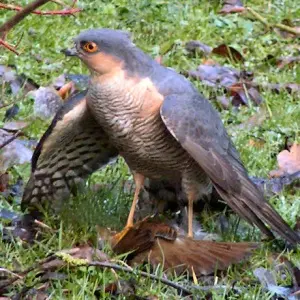 |
|
| Habitats; | Woodland | |||
| Status; | Resident | |||
| Family; | Accipitridae | |||
| Latin Name; | Accipiter nisus | |||
| Order; | Falconiformes | |||
Top of Page | 
| |||
|
||||
| English; | Goshawk | The United Kingdom population has now increased to around 500 pairs and of these, Scotland has at least 150 pairs. The main populations in Scotland are in the north-east, in the Scottish Borders and in Dumfries & Galloway. Female goshawks do most of the nest-building, which is made from sticks lined with bark chips. It is built in a large tree on a branch or in a fork close to the trunk. Common food includes other birds, such as wood pigeons, corvids (members of the crow family) and game birds. Squirrels, rabbits and other mammals are also regularly taken. Goshawks lay a single clutch of 3-4 eggs laid in May SRSG |
 |
|
| Habitats; | Woodland | |||
| Status; | Resident | |||
| Family; | Accipitridae | |||
| Latin Name; | Accipiter gentilis | |||
| Order; | Falconiformes | |||
Top of Page | 
| |||
|
||||
| English; | Red Kite | Between 1989 and 1994, 93 red kites of Swedish origin were reintroduced on the Black Isle (Ross-shire). This initial reintroduction was followed by a second reintroduction programme in central Scotland (Doune, near Stirling) between 1996 and 2001, releasing 103 birds of eastern German origin between 2007 and 2009 101 red kites were released on the outskirts of Aberdeen. In order to re-establish red kites in the south of Scotland, between 2001 and 2005 104 birds were released near Laurieston (Dumfries and Galloway). In 2012 there were 214 breeding pairs of red kites in Scotland and 318 young were fledged. A single clutch of 2-4 eggs are laid in April.SRSG |  |
|
| Habitats; | Woodland | |||
| Status; | Resident | |||
| Family; | Accipitridae | |||
| Latin Name; | Milvus milvus | |||
| Order; | Falconiformes | |||
Top of Page | 
| |||
|
||||
| English; | Marsh Harrier | The species only began to establish itself as a breeding colonist in Perthshire during the late 1980s. The Tay Estuary now hosts a small but regular population of between 3-5 nesting pairs. A significant milestone was reached in 2004 when the 100th chick was ringed. Present April to August. Marsh harriers feed on species that live in or near wetlands. They take a variety of prey items, including small birds, chicks, ducklings and mammals, especially rabbits, prey is caught by dropping onto it from the air. Their nests are usually well hidden among dense reeds or other vegetation, and constructed from grass, reeds and small sticks, 3-5 eggs are laid in a single clutch in May. SRSG |  |
|
| Habitats; | Freshwater | |||
| Status; | Migrant | |||
| Family; | Accipitridae | |||
| Latin Name; | Circus aeruginosus | |||
| Order; | Falconiformes | |||
Top of Page | 
| |||
|
||||
| English; | Montagu's Harrier | No breeding population in Scotland, and rare in England. Montagu's harriers breed in Europe, Asia, and Africa. Birds from Eurasia spend the winter in sub-Saharan Africa, while those from the eastern part of the range migrate to the Indian subcontinent. They feed mainly on small rodents, small birds, bird eggs, reptiles (including snakes) and large insects. The nest is built by the female, always in tall vegetation. It is a simple construction made of grass, used only for one season. A single clutch of 4-6 eggs are laid in May. |  |
|
| Habitats; | Farmland | |||
| Status; | Migrant | |||
| Family; | Accipitridae | |||
| Latin Name; | Circus pygargus | |||
| Order; | Falconiformes | |||
Top of Page | 
| |||
|
||||
| English; | Hen Harrier | Breeds throughout Scotland wherever suitable habitat exists, except for Shetland and Lewis & Harris, where the harriers primary vole prey are absent. The majority of pairs still occur in those regions where driven grouse shooting is not a feasible proposition, particularly the Uists, Orkney, mainland of Argyll and the west coast islands from Skye to Arran. They breed in upland areas such as heather moorlands and young conifer plantations. In winter, they move to lowland marshes, fenland, farmland and coastal regions. They feed primarily on small birds and mammals, but can adapt to insects, reptiles and amphibians when other prey is not available. A recent survey in 2010 recorded 505 territorial pairs. The nest is in heather, a clutch of 4-6 eggs is laid, usually in May |  |
|
| Habitats; | Hill | |||
| Status; | Resident | |||
| Family; | Accipitridae | |||
| Latin Name; | Circus cyaneus | |||
| Order; | Falconiformes | |||
Top of Page | 
| |||
|
||||
| English; | Buzzard | Formerly widespread throughout Scotland it was subject too much persecution during the 19th and much of the 20th centuries, and as a result was restricted to the more upland areas of north and west Scotland, though often at quite high densities. In the last 20-30 years there has been a considerable range recovery into eastern Scotland and the central belt; so much so that this species is now the commonest raptor in Scotland. The nesting site is usually a fork in a tall tree. A single clutch of 2-4 eggs are laid in May.
SRSG |
 |
|
| Habitats; | Hill | |||
| Status; | Resident | |||
| Family; | Accipitridae | |||
| Latin Name; | Buteo buteo | |||
| Order; | Falconiformes | |||
Top of Page | 
| |||
|
||||
| English; | Rough-legged Buzzard | The rough-legged buzzard or rough-legged hawk (Buteo lagopus) is a medium-large bird of prey. It is found in Arctic and Subarctic regions of North America, Europe, and Russia during the breeding season and migrates south for the winter. This species is carnivorous, typically feeding on small mammals, which make up 62-98% of its diet. Lemmings and voles are the major prey items of this species, seasonally comprising up to 80-90% of their prey. A bird of prey very similar to the much more common buzzard, though only a small number spend winter in the UK. |  |
|
| Habitats; | Hill | |||
| Status; | ||||
| Family; | Accipitridae | |||
| Latin Name; | Buteo lagopus | |||
| Order; | Falconiformes | |||
Top of Page | 
| |||
|
||||
| English; | Honey Buzzard | The honey-buzzard is a scarce passage migrant and very rare summer breeder to Scotland. Breeding habitat is undisturbed woodland with mature stands, open glades, clear fell and rides are the main requirements. Woodland can be either broadleaf, conifer or a mixture of both. These forested locations occur in proximity to lowland agricultural areas as well as inland straths and glens, and often in close proximity to scrub heath and moorland. A population of 10-15 pairs was thought to occur and regular breeding was occurring in Ross & Cromarty, Inverness, Badenoch & Strathspey, Moray & Nairn and Perth & Kinross. SRSG |  |
|
| Habitats; | Woodland | |||
| Status; | Migrant | |||
| Family; | Accipitridae | |||
| Latin Name; | Pernis apivorus | |||
| Order; | Falconiformes | |||
Top of Page | 
| |||
|
||||
| English; | Osprey | In 1954 the Osprey re-colonised naturally (by birds thought to be of Scandinavian origin) and a pair has nested successfully almost every year since 1959 at the RSPB's Loch Garten, Abernethy Forest, reserve in Scotland. The Osprey Centre at Loch Garten has become one of the most famous conservation sites in the world. It is estimated there are now 250 pairs in the UK.
SRSG |
 |
|
| Habitats; | Freshwater | |||
| Status; | Migrant | |||
| Family; | Accipitridae | |||
| Latin Name; | Pandion haliaetus | |||
| Order; | Falconiformes | |||
Top of Page | 
| |||
|
||||
| English; | Golden Eagle | Scotland holds almost all the UK's population, some 450 pairs. They hunt mostly in open ground, forests are also important as sources of prey as well as material to build their large nests. Their main territories are in the Highlands and West. A new initiative, The South of Scotland Golden Eagle Project, aims to reinforce the small, isolated and vulnerable population of Golden Eagles in the Scottish Borders and Dumfries & Galloway. Golden eagles hunt medium-sized mammals, such as rodents, rabbits, hares and young deer. They also hunt birds (particularly grouse), and occasionally feed on reptiles. They often feed on carrion (particularly sheep and lambs). 2-3 eggs are laid in a single clutch in April-May SRSG |
 |
|
| Habitats; | Hill | |||
| Status; | Resident | |||
| Family; | Accipitridae | |||
| Latin Name; | Aquila chrysaetos | |||
| Order; | Falconiformes | |||
Top of Page | 
| |||
|
||||
| English; | White-tailed Eagle | In Scotland the best places to see white-tailed eagles are Mull, Skye and parts of the northwest Highlands. The species was re-introduced between 1975 and 1985 using donor stock from Norway. On release these captive reared birds roamed widely before settling on the west coast of Scotland. In 2000 another significant milestone was reached when the 100th wild chick fledged in the re-established population, and by 2012 the number of territories exceeded 65. Their diet consists of fish, birds, mammals and carrion. Eyries are built in the top of mature trees, made from sticks, and can be more than 2 metres wide. 1-3 eggs are laid in late March-early April. SRSG |  |
|
| Habitats; | Coast | |||
| Status; | Resident | |||
| Family; | Accipitridae | |||
| Latin Name; | Haliaeetus albicilla | |||
| Order; | Falconiformes | |||
Top of Page | 
| |||
|
||||
| English; | Kestrel | The kestrel used to be the commonest bird of prey in Scotland. A bird of the open countryside, its characteristic hovering and perch hunting techniques make it a highly visible raptor, while its habit of nesting in unusual urban locations has given it a high media profile. Although there has been no national survey, the current estimate of the Scottish population is 8000 pairs, 21% of the UK population (36,800). A single clutch of 4-5 eggs are laid in late April-May. |  |
|
| Habitats; | Farmland | |||
| Status; | Resident | |||
| Family; | Falconidae | |||
| Latin Name; | Falco tinnunculuc | |||
| Order; | Falconiformes | |||
Top of Page | 
| |||
|
||||
| English; | Merlin | Merlins are found breeding in upland areas from Shetland to the Borders. Breeding densities vary across Scotland and many apparently suitable areas lack breeding merlins. The last national survey carried out in 2008 suggested a breeding population in Britain of around 1159 breeding pairs with about 733 pairs estimated for Scotland. Nesting among heather a single clutch is laid in May containing 3-5 eggs. |  |
|
| Habitats; | Hill | |||
| Status; | Resident | |||
| Family; | Falconidae | |||
| Latin Name; | Falco columbarius | |||
| Order; | Falconiformes | |||
Top of Page | 
| |||
|
||||
| English; | Hobby | The Hobby arrives in the UK from late April onwards and leaves again in September and October. While sometimes observed on passage, the Hobby is best considered a very scarce summer visitor to Scotland with a breeding range restricted to a handful of sites. It specialises in hunting acrobatic aerial prey such as dragonflies, swifts, swallows, martins and bats. It nests in an old crows nest and lays a single clutch of 3-4 eggs |  |
|
| Habitats; | Farmland | |||
| Status; | Migrant | |||
| Family; | Falconidae | |||
| Latin Name; | Falco subbuteo | |||
| Order; | Falconiformes | |||
Top of Page | 
| |||
|
||||
| English; | Peregrine Falcon | The peregrine falcon feeds primarily on smaller birds such as pigeons or collared doves and usually catch their prey mid-air and are famously capable of reaching speeds of around 320 kilometres per hour as they dive or 'stoop' to catch their prey. They have taken well to cities where they have plenty of Pigeons to prey on. They have also been known to hunt small mammals, amphibians and large insects. The last national survey (in 2002) recorded 544 peregrine pairs in Scotland. A ledge or platform on a cliff is chosen for the nesting platform, and a single clutch of 3-4 eggs in laid in late April-May. |  |
|
| Habitats; | Hill | |||
| Status; | Resident | |||
| Family; | Falconidae | |||
| Latin Name; | Falco peregrinus | |||
| Order; | Falconiformes | |||
Top of Page | 
| |||
|
||||
| English; | Gyrfalcon | A rare visitor to Scotland it is the largest falcon in the world, breeding in the High Arctic, on the islands of northern North America, Greenland, Iceland and the Euro Siberian region. A majority breed and hunt coinciding with ptarmigan and seabird colonies. Mammalian prey can range in size from shrews to marmots and often includes lemmings, voles, ground squirrels, hares. Breeding on cliff faces, pairs do not build their own nests, and regularly use a bare cliff ledge or the abandoned nest of other birds, particularly golden eagles and common ravens. The clutch can range from 1 to 5 eggs, but is usually 2 to 4. 2500 year old nest |
 |
|
| Habitats; | Coast | |||
| Status; | ||||
| Family; | Falconidae | |||
| Latin Name; | Falco rusticolus | |||
| Order; | Falconiformes | |||
Top of Page | 
| |||
|
||||
| English; | Red-legged Partridge | The Red-legged Partridge was introduced to Britain in the 1600s by Charles II, having brought them from France to provide target practice for guns. They are now resident and outnumber our native Grey Partridge. The red-legged partridge is now common throughout Scotland and is reared on many shoots, adding a different sporting target and quarry diversity to traditional driven shoots. A recent addition to some Scottish estates has been the rearing of partridges on heather moorland offering driven shooting on the open hill. A plump, round bird, the red-legged partridge is common on farmland, where it feeds on seeds, leaves and small invertebrates. When disturbed, it prefers to run instead of fly, but will fly short distances if necessary. It breeds in open scrub and farmland, laying its eggs on the ground, in a single clutch of 9-20 eggs at the end of April or begining of May. |  |
|
| Habitats; | Farmland | |||
| Status; | Resident | |||
| Family; | Phasianidae | |||
| Latin Name; | Alectoris rufa | |||
| Order; | Galliformes | |||
Top of Page | 
| |||
|
||||
| English; | Grey Partridge | The grey partridge is a British ground-nesting bird which inhabits grassland, arable farmland, hedgerows and field margins. It feeds on seeds, leaves and small invertebrates. When disturbed, grey partridges prefer to run instead of fly, but they will fly low to the ground if necessary. They breed in open scrub and farmland, close to hedges or other vegetation, laying their eggs on the ground in a grass-lined scrape. A single clutch is laid from the end of April onwards and contains between 7-20 eggs. |  |
|
| Habitats; | Farmland | |||
| Status; | Resident | |||
| Family; | Phasianidae | |||
| Latin Name; | Perdixx perdix | |||
| Order; | Galliformes | |||
Top of Page | 
| |||
|
||||
| English; | Quail | Quail breed in Southern Scotland and along the east coast, but the entire UK population is less than 600 pair. This is a terrestrial species, feeding on seeds and insects on the ground. It is notoriously difficult to see, keeping hidden in crops, and reluctant to fly, preferring to creep away instead. Even when flushed, it keeps low and soon drops back into cover. Laying begins from the middle of May, and with repeat laying can continue to the end of August. 1-2 clutches of 12-14 eggs are laid. |  |
|
| Habitats; | Farmland | |||
| Status; | Migrant | |||
| Family; | Phasianidae | |||
| Latin Name; | Coturnix coturnix | |||
| Order; | Galliformes | |||
Top of Page | 
| |||
|
||||
| English; | Pheasant | Pheasants on agricultural land and old fields, especially fields that are interspersed with grass ditches, hedges, marshes, woodland borders, and brushy groves. They have a varied diet which they forage for on the ground and occasionally in trees. Typically, the diet is seeds, berries, insects, worms, grass and fruit. Nests are usually surrounded by tall vegetation and built on the ground, often in a natural depression or a hollow that the female scoops out herself, about a third of an inch to 3 inches deep. emales gather grasses, leaves, weed stalks, fine twigs, corn husks, and/or a few feathers from their own breast with which to line the nest. 1-2 clutches of 7-15 eggs begining in March. |  |
|
| Habitats; | Farmland | |||
| Status; | Resident | |||
| Family; | Phasianidae | |||
| Latin Name; | Phasianus colchicus | |||
| Order; | Galliformes | |||
Top of Page | 
| |||
|
||||
| English; | Golden Pheasant | Smaller than a pheasant, the male is very brightly coloured with a yellow crown and lower back, dark wings and upper neck, red underparts and long finely barred tail. The female is paler brown than a female pheasant. It is a shy bird, keeping to dark, dense woodland. Roosts in trees at night. It is native to forests in mountainous areas of western China, but feral populations have been established in the UK. Scottish Breeding Birds? |  |
|
| Habitats; | Woodland | |||
| Status; | Resident | |||
| Family; | Phasianidae | |||
| Latin Name; | Chrysolophus pictus | |||
| Order; | Galliformes | |||
Top of Page | 
| |||
|
||||
| English; | Lady Amherst's Pheasant | The species is native to southwestern China and far northern Myanmar, but has been introduced elsewhere. Previously, a self-supporting feral population was established in England, the stronghold of which was in West Bedfordshire. Lady Amherst first introduced the ornamental pheasant on her estates, near the Duke of Bedford's Woburn Abbey, where the birds were also shot for game and interbred. Although thought to have been eradicated in Great Britain since 2015, a Lady Amherst's pheasant was photographed in Staplegrove, Taunton, May 2020. Subsequently, in early March 2021, a Lady Amherst's pheasant was spotted in a garden in Scotland. |  |
|
| Habitats; | Gardens | |||
| Status; | Resident | |||
| Family; | Phasianidae | |||
| Latin Name; | Chrysolophus amherstiae | |||
| Order; | Galliformes | |||
Top of Page | 
| |||
|
||||
| English; | Red Grouse | The red grouse is a bird of heather moorland, with a range restricted to areas of blanket bog and upland shrub heath. It is a subspecies of the willow grouse (L. l. lagopus), whose range extends across the northern latitudes of Europe, Asia and North America. The red grouse differs by not developing white plumage during winter and having a diet almost exclusively of heather. Also found in North and South West England and Wales. UK Population estimated at 250,000 pairs. Their nesting site is among heather, bracken, grass or other moorland plants. The nest is formed by a scraped hollow and sparsely lined with sprigs of grass, heather or similar material, a single clutch of 6-10 eggs are laid in April or May. |  |
|
| Habitats; | Hill | |||
| Status; | Resident | |||
| Family; | Tetraonidae | |||
| Latin Name; | Lagopus lagopus scoticus | |||
| Order; | Galliformes | |||
Top of Page | 
| |||
|
||||
| English; | Ptarmigan | The ptarmigan, also known as the 'rock ptarmigan', is a plump bird, a little larger than a grey partridge. It is exclusively found in the Scottish Highlands. Mature birds eat seeds, berries, nuts and leaves, while juveniles also eat invertebrates. Their plumage turns white in Winter and their haunts are rocky slopes and mountain tops where they blend into the snow. The nest is little more than a bare scape in the soil sparsly lined with a few whisps of grass. A single clutch is laid during May, and contains 7-10 eggs. |  |
|
| Habitats; | Hill | |||
| Status; | Resident | |||
| Family; | Tetraonidae | |||
| Latin Name; | Lagopus mutus | |||
| Order; | Galliformes | |||
Top of Page | 
| |||
|
||||
| English; | Black Grouse | Widespread in Scotland, the black grouse is a large gamebird about the same size as a female pheasant. Males are unmistakable black birds with a fan tail and white wing-bars. Females are smaller, grey-brown with an intricate pattern of black barring, and they have notched tails. Males have a lyre-shaped tail which they raise and fan out in display. Found on moorland at 1000 feet above sea-level. Nest site among heather, bracken, grass. A single clutch of 6-10 eggs are laid at the end of April. scottishwildlifetrust |  |
|
| Habitats; | Hill | |||
| Status; | Resident | |||
| Family; | Tetraonidae | |||
| Latin Name; | Tetrao tetrix | |||
| Order; | Galliformes | |||
Top of Page | 
| |||
|
||||
| English; | Capercaillie | A turkey sized bird, only found in Scotland after they were successfully reintroduced by Lord Breadalbane at Taymouth Castle in 1837. Their call resembles the sound of a clip-clopping horse, its Gaelic name means 'horse of the forest'. They breed in conifer woods, preferring Scots Pine, and are found mainly in the Eastern Highlands from Tayside to Easter Ross. Nesting on the ground, they lay a single clutch of 6-10 eggs. scottishwildlifetrust |  |
|
| Habitats; | Woodland | |||
| Status; | Resident | |||
| Family; | Tetraonidae | |||
| Latin Name; | Tetrao urogallus | |||
| Order; | Galliformes | |||
Top of Page | 
| |||
|
||||
| English; | Red-throated Diver | Breeding pairs occur in northwest Scotland, with significant numbers on Shetland, Orkney, the Outer Hebrides and mainland Scotland. This Diver nests beside moorland lochs but always flies to the sea to feed, giving a goose like crackle as it goes. Primarily a fish-eater, it sometimes feeds on molluscs, crustaceans, frogs, aquatic invertebrates, insects, fish spawn or even plant material. It seizes rather than spears its prey, which is generally captured underwater. It lays a single clutch contains 1 or 2 eggs at the end of May. In winter, they can be seen all around the coast, substantial numbers arrive from northern regions such as Greenland, Iceland and Scandinavia. |  |
|
| Habitats; | Coast | |||
| Status; | Resident | |||
| Family; | Gaviidae | |||
| Latin Name; | Gavia stellata | |||
| Order; | Gaviiformes | |||
Top of Page | 
| |||
|
||||
| English; | Black-throated Diver | Large lochs with Islands provide both nesting sites and fishing grounds, it breeds in Northwest Highlands and Western Islands. Conservationists devised the unique system of tethered floating rafts, covered in vegetation, to provide stable breeding habitat in the late 1980's, and has led to an increase in numbers to 240 pairs in 2012. There is a single clutch of 1 -2 eggs laid at the end of May. Small groups winnter around the Hebrides, the Northern Isles and off the east coast. scottishwildlifetrust |  |
|
| Habitats; | Coast | |||
| Status; | Resident | |||
| Family; | Gaviidae | |||
| Latin Name; | Gavia arctica | |||
| Order; | Gaviiformes | |||
Top of Page | 
| |||
|
||||
| English; | Great Northern Diver | Winter visitors off the coast. Have on occasion bred in Scotland, but these are very rare. Their breeding grounds are in Greenland, Iceland and North America. The Great Northern Divers start to appear in the Western isles around August and leave to breed in early May, they like lakes, rivers and ponds as well as the sea. The divers feed on large fish, crabs, other crustaceans amphibians, and bring flatfish to the surface after a dive. These divers nest on shallow scrapes on the waters edge, and have 2 eggs and one brood only - April to June. Wikipedia-Great Northern Diver |  |
|
| Habitats; | Coast | |||
| Status; | ||||
| Family; | Gaviidae | |||
| Latin Name; | Gavia immer | |||
| Order; | Gaviiformes | |||
Top of Page | 
| |||
|
||||
| English; | White-Billed Diver | Historically, White-billed Diver has been regarded as a very rare bird in Britain. However, observations in northwest Scotland in recent years support the view that, in this area at least, White-billed Diver is better regarded as a scarce passage migrant than a rarity. An Arctic species, breeding primarily along the coasts of the Arctic Ocean, and wintering on sheltered coastal waters of the Northern Pacific Ocean and the northwestern coast of Norway. It is a specialist fish-eater, catching its prey underwater, it also takes crustaceans, molluscs and annelids. builds a nest of plant material very close to the edge of the water, and lays 2 eggs in a single clutch in June. |  |
|
| Habitats; | Coast | |||
| Status; | Passage Migrant | |||
| Family; | Gaviidae | |||
| Latin Name; | Gavia adamsii | |||
| Order; | Gaviiformes | |||
Top of Page | 
| |||
|
||||
| English; | Water Rail | Water rails are said to be one of the most elusive birds, but there are around 1,250-1,400 breeding pairs in lowland Scotland. Omnivorous, they eat mainly small fish, snails and insects. They breed in reed beds and other marshy sites with tall, dense vegetation, building its nest a little above the water level from whatever plants are available nearby. The nest rests on a platform of broken plant stems, which lifts it out of the water, and is built of reeds, sedge, grass or any other similar materials. The first clutch of eggs is laid in April, followed by a second, each containing 6-12 eggs. |  |
|
| Habitats; | Freshwater | |||
| Status; | Resident | |||
| Family; | Rallidae | |||
| Latin Name; | Rallus aquaticus | |||
| Order; | Gruiformes | |||
Top of Page | 
| |||
|
||||
| English; | Spotted Crake | Breeding in Kirkcudbright, Fife, Inverness-Shire and the Islands. The spotted crake is a small waterbird of the family Rallidae. The spotted crake's breeding habitat are lowland swamps, wet grassland, fens, mire systems and overgrown edges of lakes and river. Spotted crakes tend to skulk in thick cover and walk with their body close to the ground and tail flicking. They swim with a jerky action like that of the moorhen. Diet consists of small aquatic invertebrates, parts of aquatic plants. They nest in a dry location in marsh vegetation, using reeds and other vegetation are interwoven to contain a lining of softer material. A single clutch of 8-12 eggs are laid in May or early June. The status and habitat of Spotted Crakes 1999 |  |
|
| Habitats; | Freshwater | |||
| Status; | Migrant | |||
| Family; | Rallidae | |||
| Latin Name; | Porzana porzana | |||
| Order; | Gruiformes | |||
Top of Page | 
| |||
|
||||
| English; | Corncrake | Corncrakes are another species of the most rare and endangered Scottish birds. Despite a successful rescue effort that led to its numbers rallying on the islands of north-west Scotland, rising to 1,289 calling males in 2014, the population has since fallen by more than 30%, to just 850 calling birds in Scotland in 2021. Summer visitors from the Congo in Africa, corncrakes are now only found over a fraction of their former range. They are omnivorous, but mainly feeds on invertebrates, including earthworms, slugs and snails, spiders, beetles, dragonflies, grasshoppers and other insects. They breed in long grass and hayfields, and produce one or two clutches of 7-10 eggs beginning in May scottishwildlifetrust |  |
|
| Habitats; | Farmland | |||
| Status; | Migrant | |||
| Family; | Rallidae | |||
| Latin Name; | Crex crex | |||
| Order; | Gruiformes | |||
Top of Page | 
| |||
|
||||
| English; | Moorhen | Moorhens are found around any pond, lake, stream or river, or even ditches in farmland, that are fringed with dense marginal plants. Absent from the Highlands prefering low lying areas. Their diet consists of Water plants, seeds, fruit, grasses, insects, snails, worms and small fish. The nest is a basket built on the ground in dense vegetation or in low hanging branches over water. It is composed of interwoven grass, reeds etc and lined with softer material. There are 2 or 3 clutches of 6-10 eggs begining in April. |  |
|
| Habitats; | Freshwater | |||
| Status; | Resident | |||
| Family; | Rallidae | |||
| Latin Name; | Gallinula chloropus | |||
| Order; | Gruiformes | |||
Top of Page | 
| |||
|
||||
| English; | Coot | Coot can be seen mainly on freshwater lakes, gravel pits, reservoirs, rivers and town park lakes when deep enough. Sometimes seen offshore, especially in winter if freshwater areas are frozen. They eat vegetation, seeds, snails and insect larvae. Plants at the water edge conceal the nest, which is a large structure that the birds raise by adding more material if the water level rises. It is built of reeds, sedge and other marginal plants with a softer lining. There are 2-3 clutches of 6-10 eggs. |  |
|
| Habitats; | Freshwater | |||
| Status; | Resident | |||
| Family; | Rallidae | |||
| Latin Name; | Fulica atra | |||
| Order; | Gruiformes | |||
Top of Page | 
| |||
|
||||
| English; | Crane | Numbers of breeding cranes reached a record high in Scotland thanks to peatland restoration and wetland protection The latest common crane survey reveals seven pairs in Scotland in 2020 and 64 pairs across the UK, both records. Cranes became extinct in the UK nearly 400 years ago and only began breeding in Scotland again in 2012, having returned to England in 1979. All Scotland's cranes nest in the North East. Their diet consists of plant matter, including roots, rhizomes, tubers, stems, leaves, fruits and seeds. They also commonly eat, when available, pond-weeds, heath berries, peas, potatoes, olives, acorns and cedar nuts. Cranes construct platform nests in shallow water, and typically lay two eggs in a single clutch in May. |  |
|
| Habitats; | Freshwater | |||
| Status; | Resident | |||
| Family; | Gruidae | |||
| Latin Name; | Grus grus | |||
| Order; | Gruiformes | |||
Top of Page | 
| |||
|
||||
| English; | Baillon's crake | No known Scottish breeding birds, Baillon's Crake is a rare breeding migrant in England and Wales. Inhabits mostly fresh or slightly salty lakes, ponds and rivers, with reed, reed mace and willow bush thickets. Appears mostly in April - early May. Nest is built in the floating heaps of old reed stems, close to open water; on the tussocks among the water; or near shore from the dry leaves of different grass. The base of the nest contacts water or is placed at 10-12 cm above the water. One or two clutches of 6-9 eggs are laid in May.
Rare Breeding Birds Panel |
 |
|
| Habitats; | Freshwater | |||
| Status; | Migrant | |||
| Family; | Rallidae | |||
| Latin Name; | Zapornia pusilla | |||
| Order; | Gruiformes | |||
Top of Page | 
| |||
|
||||
| English; | Great Bustard | This bird became extinct in Great Britain when the last bird was shot in 1832. Recent attempts to reintroduce it into England have met with some success and there is a population of 40 birds on Salisbury Plain, a British Army training area. Here the lack of public access allows them the freedom needed as a large ground-nesting bird. At 13.5 kg The Great Bustard male is the heaviest flying bird. RSPB - Great Bustard |  |
|
| Habitats; | Farmland | |||
| Status; | Migrant | |||
| Family; | Otididae | |||
| Latin Name; | Otis tarda | |||
| Order; | Otidiformes | |||
Top of Page | 
| |||
|
||||
| English; | Song Thrush | Turdus philomelos hebridensis, is a subspecies found in the Outer Hebrides and Isle of Skye. The Song Thrush is an iconic garden bird, happy to hunt worms on the lawn and garden snails, which it breaks by hammering onto a favourite stone. No bird is so prone to nesting in gardens and parks, up to 70% of birds nest here. Eating a wide range of invertebrates, especially earthworms and snails, as well as soft fruit and berries. They nest in bushes, hedges, evergreens, crevice in a wall or building, built with twigs, roots, grass leaves, wool, moss, paper and lined with mud. Nesting begins in March and often 3 clutches of 4-5 eggs. It is partly migratory with birds moving southwestwards from the Scottish Highlands in Autumn. Many Scottish thrushes spend winter in Ireland while a few go as far south as Portugal. |  |
|
| Habitats; | Woodland | |||
| Status; | ||||
| Family; | Turdidae | |||
| Latin Name; | Turdus philomelos | |||
| Order; | Passeriformes | |||
Top of Page | 
| |||
|
||||
| English; | Redwing | A small number breed in Sutherland, Orkney & Shetland, up to 100 pairs, where they prefer scrubby areas of woodland. Scottish Redwings are winter visitors from Iceland. Their presence is often noted by their high thin 'see-ip' call often heard on foggy Autumn nights, they also team up with Fieldfares. The diet is varied and includes snails, earthworms, slugs and insects, then progressively more berries and fallen fruit in the winter months. The nest site can be in a tree, bush, rotten tree stump, or even direct on the ground on a bank. The nest is made of twigs, grass, lichen and moss, and sometimes with an inner lining of mud, with the final lining being normally made up of fine grass. 1 or 2 clutch of 4-6 eggs are laid in May |  |
|
| Habitats; | Farmland | |||
| Status; | Winter Migrant | |||
| Family; | Turdidae | |||
| Latin Name; | Turdus illiacus | |||
| Order; | Passeriformes | |||
Top of Page | 
| |||
|
||||
| English; | Mistle Thrush | In Scotland, they are absent from the northern and western isles of Scotland, and also from high ground. Often known as Storm-cock due to its tendency to sing in all weathers. They frequent copses, orchards, gardens and open tree clad country. The mistle thrush eats berries, seeds and fruit, as well as worms and insects, and is named after its love of mistletoe berries. It is fiercely territorial when it comes to food, guarding its food sources (such as holly bushes or rowan trees) closely. They usually nest in the fork of a tree or large bush and there are normally two clutches of 4 or 5 eggs, beginning as early as February. |  |
|
| Habitats; | Woodland | |||
| Status; | Resident | |||
| Family; | Turdidae | |||
| Latin Name; | Turdus viscivorus | |||
| Order; | Passeriformes | |||
Top of Page | 
| |||
|
||||
| English; | Ring Ouzel | The Ring Ouzel is a summer visitor arriving in Scotland in March and leaving in September, for its wintering grounds in the Atlas Mountains of north-western Africa. It is often known as the mountain blackbird. I live in Langholm, Dumfriesshire and this bird can be seen on Whita Hill around Charteris Craigs in March as it heads north. It frequents moorland and mountainous areas, and breeds in open ground with scattered trees near crags and streams. Its diet is omnivorous, eating invertebrates, particularly insects and earthworms, some small vertebrates, and a wide range of fruit. There are 2 clutches of 4-6 eggs beginning late April. UK population 7500 pairs Penrith Study Group |  |
|
| Habitats; | Hill | |||
| Status; | Migrant | |||
| Family; | Turdidae | |||
| Latin Name; | Turdus torquatus | |||
| Order; | Passeriformes | |||
Top of Page | 
| |||
|
||||
| English; | Swallow | An iconic visitor from Africa arriving in Langholm between the 15th - 19th of April. This incredible bird has travelled over 8000 miles to get here from South Africa as they travel 200 miles/day during daylight it means they leave their wintering grounds at the end of February, the return journey begins in late September early October, when groups can be seen gathering on telegraph cables. It eats flying insects on the wing at quite low levels. They build mud and straw nests on ledges, often in farm buildings and outhouses or under the eaves of houses, and can have up to four broods of 4-6 eggs in each, indeed some young birds are still in the nest at the end of September, the longest breeding season of any bird in the UK. |  |
|
| Habitats; | Farmland | |||
| Status; | Migrant | |||
| Family; | Hirundinidae | |||
| Latin Name; | Hirundo rustica | |||
| Order; | Passeriformes | |||
Top of Page | 
| |||
|
||||
| English; | Sand Martin | The Sand Martin is one of the first to arrive from its African wintering home , often in mid-March onwards. It breeds in colonies, in sandy banks where they dig an upward sloping tunnel, usually 1 meter deep with a nest chamber lined with straw, grass and feathers. It breeds along rivers, near lakes, mainly in lowlands and open country, and even close to human habitations. Foraging over water, grassland and farmland, feeding mainly on insects caught in flight (mainly flies) and spiders caught from the ground or water surface. Normally 2 clutches of 4 or 5 eggs are laid in beginning in April-May. Artificial Nest Sites |  |
|
| Habitats; | Freshwater | |||
| Status; | Migrant | |||
| Family; | Hirundinidae | |||
| Latin Name; | Riparia riparia | |||
| Order; | Passeriformes | |||
Top of Page | 
| |||
|
||||
| English; | House Martin | House Martin can be found throughout Scotland, apart from Orkneys and the Western Isles. They nest on buildings, where they build a nest made of over 1,000 beak-sized pellets of mud. Some continue to use natural nest sites such as coastal cliffs in north-west Scotland. They raise two broods, sometimes three broods, and in some instances, the young from the first brood have been recorded helping to feed the young from later broods. The breeding season can last longer than many other species, and some birds may still have young in the nest in September or even October. |  |
|
| Habitats; | Gardens | |||
| Status; | Migrant | |||
| Family; | Hirundinidae | |||
| Latin Name; | Delichon urbica | |||
| Order; | Passeriformes | |||
Top of Page | 
| |||
|
||||
| English; | Skylark | Widespread in Scotland over country, cultivated areas, marshes, meadows, moorland and dunes. Although resident birds, breeding on higher ground, move to low-lying or coastal areas in winter. Skylarks are very gregarious, forming large mixed flocks during winter, with other species such as pipits, finches and buntings. There is no bird that sings such a sweet song for such a long time and from such a great height. To feed, it forages on the ground, searching for food by sight, in crouched posture, creeping forwards as it feeds, its diet consists of insects and plant material such as seeds and young leaves. Their nest is composed of dried grass, lined with finer grasses and some hair, laying 2-3 clutches of 3-5 eggs in April. |  |
|
| Habitats; | Hill | |||
| Status; | Resident | |||
| Family; | Alaudidae | |||
| Latin Name; | Alauda arvensis | |||
| Order; | Passeriformes | |||
Top of Page | 
| |||
|
||||
| English; | Woodlark | Woodlarks are scarce migrants in Scotland, and are mainly found breeding in eastern and southern England - the New Forest, Surrey/Berkshire heaths, Breckland and some Suffolk heaths are the best areas to find them. The ones which remain in winter are usually found in Hampshire, west Surrey and Devon and in recent years some wintering flocks have been found in East Anglia. The diet is mainly composed of seeds and such insects as beetles, flies and moths. Nest is built on the ground, under a low bush or scrub, consists of grass and moss lined with finer grass and hair. beginning in April, 3-5 eggs are laid in 2-3 clutches Bird Study |
 |
|
| Habitats; | Woodland | |||
| Status; | Resident | |||
| Family; | Alaudidae | |||
| Latin Name; | Lullula arborea | |||
| Order; | Passeriformes | |||
Top of Page | 
| |||
|
||||
| English; | Short-toed Lark | Short-toed Lark is found annually in Scotland in very small numbers, mostly in spring and autumn, with the majority of observations in the Northern Isles. It breeds in Europe (Iberia, France, Italy, the Balkans and Romania) and winters in Africa. A bird of dry open country, its food is seeds and insects, the latter especially in the breeding season. The nest is built by the female, of grasses, rootlets and similar vegetation, lined with softer material and placed in a shallow scrape on the ground, 3-5 eggs are laid in 1-2 clutches. |  |
|
| Habitats; | Coast | |||
| Status; | Resident | |||
| Family; | Alaudidae | |||
| Latin Name; | Calandrella brachydactyla | |||
| Order; | Passeriformes | |||
Top of Page | 
| |||
|
||||
| English; | Shore Lark | Shore larks were once a rare breeding species in Scotland, but are now only seen during migration periods or as winter visitors from populations in Scandinavia. Overwintering shore larks are usually seen on the coast, where they favour salt marshes and shingle shores. Most records come from the east coast of England, such as Holkham and Salthouse in Norfolk are regular sites. Less than 100 birds winter here. It breeds across much of North America from the high Arctic south to the Isthmus of Tehuantepec, northernmost Europe and Asia and in the mountains of southeast Europe. This is a bird of open ground. In Eurasia, it breeds above the tree line in mountains and the far north. |  |
|
| Habitats; | Coast | |||
| Status; | Resident | |||
| Family; | Alaudidae | |||
| Latin Name; | Eremophila alpestris | |||
| Order; | Passeriformes | |||
Top of Page | 
| |||
|
||||
| English; | Meadow Pipit | In Scotland, they are the most common breeding bird in upland areas. Birds in western Scotland are slightly darker coloured than those in other areas, and are often distinguished as the subspecies Anthus pratensis whistleri. During the breeding season meadow pipits prefer moorland, heaths, rough grazing, unimproved grassland, salt marshes and dune systems. They will vacate upland areas in September and October, returning in March and April. Its food is primarily insects and other invertebrates. It also eats the seeds of grasses, sedges, rushes and heather, and crowberry berries, mainly in winter. The nest is on the ground hidden in dense vegetation, with 3-5 eggs, laid in 2 clutches |  |
|
| Habitats; | Hill | |||
| Status; | Resident | |||
| Family; | Motacillidae | |||
| Latin Name; | Anthus pratensis | |||
| Order; | Passeriformes | |||
Top of Page | 
| |||
|
||||
| English; | Tree Pipit | A trans-Saharan migrant which returns to breed in Scotland during April and departs in September. It breeds in a variety of habitats, usually consisting of rough ground, scrub, heath with small bushes, trees, and young conifer plantations, where they can launch themselves from a tree perch and climb steadily singing, until reaching a crescendo and then parachute downwards to land again in another tree. They eat mainly small invertebrates, but some plant matter, especially berries, in autumn. The nest is built at ground level, concealed under a bank or tussock, in which 2 clutches of 4-5 eggs are laid in May |  |
|
| Habitats; | Woodland | |||
| Status; | Migrant | |||
| Family; | Motacillidae | |||
| Latin Name; | Anthus trivialis | |||
| Order; | Passeriformes | |||
Top of Page | 
| |||
|
||||
| English; | Water Pipit | Water Pipit breeds in the mountains of Southern Europe and Southern Asia eastwards to China. It is a short-distance migrant; many birds move to lower altitudes or wet open lowlands in winter, and a few have been turning up in Scotland. In recent years one to three records in winter has been the norm, but this year 2019, there has been over thirty, mainly on the coasts of Lothian and Ayrshire, with eight this winter in Ayrshire. Their diet consists of Insects and larvae. It's nest from grass and leaves, which is lined with finer plant material and animal hairs. The nest is hidden in vegetation on the ground, sometimes in a hollow. 1-2 clutches of 4-6 eggs are laid in May.
UK Water Pipit project |
 |
|
| Habitats; | Coast | |||
| Status; | Passage Migrant | |||
| Family; | Motacillidae | |||
| Latin Name; | Anthus spinoletta | |||
| Order; | Passeriformes | |||
Top of Page | 
| |||
|
||||
| English; | Rock Pipit | This species occupies exposed rocky sea coasts and islands with low vegetation. It occasionally breeds away from the coast, such as on St. Kilda. UK population around 34,000 pairs. It is a common bird of rocky beaches that feeds on seeds, small molluscs and invertebrates it finds among the stones. The nest is built by the female in a crevice in a cliff, in a small cavity on a bank or grassy slope, or under a rock or clump of vegetation. It is as a bulky cup of grass stems, leaves and seaweed and rather flimsily lined with finer material. There are normally two clutches of four to six eggs, beginning in May. |  |
|
| Habitats; | Coast | |||
| Status; | Resident | |||
| Family; | Motacillidae | |||
| Latin Name; | Anthus petrosus | |||
| Order; | Passeriformes | |||
Top of Page | 
| |||
|
||||
| English; | Yellow Wagtail | Only found in East Coastal Lothian And Berwickshire. A summer visitor, they arrive from their African wintering grounds from March onwards. It likes damp marshes, meadows and farmland, and spends much of its time running about on the ground, chasing insects disturbed by the feet of livestock. They nest on the ground or in long grass, using plants, grasses and stems to build a cup-shape which they line with fur. They can have up to two broods, each with five or six eggs. BTO - Yellow Wagtail |
 |
|
| Habitats; | Farmland | |||
| Status; | Migrant | |||
| Family; | Motacillidae | |||
| Latin Name; | Motacilla flava flavissima | |||
| Order; | Passeriformes | |||
Top of Page | 
| |||
|
||||
| English; | Grey Wagtail | 6,000-17,500 pairs in Scotland, distributed on most rivers across mainland Scotland and inner Hebrides. Likes fast-flowing rivers in summer, their greatest densities being in the hills of England, Scotland and Wales. In winter, they can be seen around farmyards and lowland streams, even in city centres. They build their nests in crevices or holes near fast running water, such as streams, waterfalls, canals, or lakes. Some Scottish birds may move south in winter. The nest is built from twigs, grass, and moss. 2 clutches may be attempted with 4-6 eggs in each, beginning in April or May. |  |
|
| Habitats; | Freshwater | |||
| Status; | Resident | |||
| Family; | Motacillidae | |||
| Latin Name; | Motacilla cinerea | |||
| Order; | Passeriformes | |||
Top of Page | 
| |||
|
||||
| English; | Pied Wagtail | The Pied Wagtail is a sub-species of the White Wagtail. Although resident across the UK, birds from the highland and northern areas of Scotland move south in winter. They are birds of open farmland, only occasionally visiting gardens; however, they do seem to find car parks in towns and villages particularly attractive. The male and female are quite similar, but the female has a greyer back and in summer the male has a much larger black bib. Insects are the staple diet of these pretty birds, and hence they spend quite a lot of time near water. Pied wagtails build their nests in holes in banks or walls, often near to water. They use dried grass, hair and wool as nesting material. Four to six eggs are laid in up to 3 clutches begining in April |  |
|
| Habitats; | Gardens | |||
| Status; | Resident | |||
| Family; | Motacillidae | |||
| Latin Name; | Motacilla alba yarrellii | |||
| Order; | Passeriformes | |||
Top of Page | 
| |||
|
||||
| English; | White Wagtail | A handful of pairs breed in Scotland each year, usually in the North and the Northern Isles, but also in western locations. Six pairs bred in Shetland in 2018. The White Wagtails that pass through Britain are northerly breeders, most come from Iceland, Greenland, Faroes, and sizeable numbers can be seen on migration in April. Motacillidae alba - identification |  |
|
| Habitats; | Farmland | |||
| Status; | Passage Migrant | |||
| Family; | Motacillidae | |||
| Latin Name; | Motacilla alba alba | |||
| Order; | Passeriformes | |||
Top of Page | 
| |||
|
||||
| English; | Wren | The wren is Scotlands most widespread bird, and is found on almost all offshore islands, and from sea level to the tops of the Highlands. Two distinct subspecies can be found on St Kilda and Fair Isle. Insects form the bulk of the diet; these are chiefly the larvae of butterflies and moths, as well as beetle larvae, fly larvae, aphids, spiders, and some seeds are also taken. The neatly-domed nest has a side entrance and is built of grass, moss, lichen and dead leaves, whatever is available locally. It is often tucked into a hole in a wall or tree trunk or a crack in a rock, but it is often built in brambles, a bush or a hedge, among ivy on a bank, in thatch, or in abandoned bird's nests. 2 clutches of 5-6 eggs are laid in April. |  |
|
| Habitats; | Woodland | |||
| Status; | Resident | |||
| Family; | Troglodytidae | |||
| Latin Name; | Troglodytes troglodytes | |||
| Order; | Passeriformes | |||
Top of Page | 
| |||
|
||||
| English; | Waxwing | The first Scottish arrivals each winter are usually seen on the East Coast. These distinctive songbirds are named for their wandering lifestyle, which is exemplified by irruptive behaviour -- a spontaneous mass movement of these birds from their northern range into more southern areas, often due to lack of food. The breeding habitat is coniferous forests, frequently near water. The pair build a lined cup-shaped nest in a tree or bush, often close to the trunk. A single clutch of 4-6 eggs are laid in May
Waxwing irruptions |
 |
|
| Habitats; | Woodland | |||
| Status; | ||||
| Family; | Bombycillidae | |||
| Latin Name; | Bombycilla garrulus | |||
| Order; | Passeriformes | |||
Top of Page | 
| |||
|
||||
| English; | Dipper | The dipper is a short-tailed, plump bird with a low, whirring flight. When perched on a rock it habitually bobs up and down and frequently cocks its tail. Its white throat and breast contrasts with its dark body plumage. It is remarkable in its method of walking into and under water in search of food. It is found next to fast flowing rivers, where it walks into the current picking invertibrates from the bottom of the river. The nesting site is near water, in a bank, under a bridge or among rocks. The large domed nest has a side entranceand is built of moss or dry leaves and grass and similarily lined, ther are 2-3 clutches in a year containing 4-6 eggs. |  |
|
| Habitats; | Freshwater | |||
| Status; | Resident | |||
| Family; | Cinclidae | |||
| Latin Name; | Cinclus cinclus | |||
| Order; | Passeriformes | |||
Top of Page | 
| |||
|
||||
| English; | Dunnock | The dunnock is a small bird, about the size of a robin, which is common in gardens, parks, hedgerows, scrub and along woodland edges. Dunnocks are shy birds, hopping about in low vegetation and around the edge of lawns, feeding on small insects, worms and seeds. In Scotland, they are only absent from the Northern Isles and outer Hebrides. A hedge, bush or evergreen is chosen for the nest which is built of twigs rootlets grass and moss. There are 4-5 eggs in 2 to 3 clutches beginning in March or April. |  |
|
| Habitats; | Gardens | |||
| Status; | Resident | |||
| Family; | Prunellidae | |||
| Latin Name; | Prunella modularis | |||
| Order; | Passeriformes | |||
Top of Page | 
| |||
|
||||
| English; | Robin | The most well-known bird in the UK, with some 7.5 million territories, but in winter our resident Robins are joined in the winter months by migrants from Scandinavia. Robins enjoy eating fruits, seeds and insects, such as beetles. They also love feasting on earthworms, and can often be seen in gardens on the lookout for juicy worms as they are dug up by gardeners. They can be easily tempted to feed from your hand with a bit of patience and something tasty. The breeding season usually begins in March, the female robin builds a cup-shaped nest using moss, hair, grass and dead leaves, somewhere on or close to the ground. Robins begin laying their eggs between mid-April and mid-August, with around 4-6 eggs, in up to 3 clutches. |  |
|
| Habitats; | Gardens | |||
| Status; | Resident | |||
| Family; | Muscicapidae | |||
| Latin Name; | Erithacus rubecula | |||
| Order; | Passeriformes | |||
Top of Page | 
| |||
|
||||
| English; | Nightingale | Rarely seen in Scotland and mostly confined to South East England. There is no other bird that sings so deeply, so full of ecstacy as the nightingale. The melody is endlessly varied. In the spring, they sing during the day as well as at night. Nightingales live mostly in thick vegetation from shrubs with lots of stinging nettle and blackberries. Feeding mainly on insects, by foraging on the ground, and in particular are partial to ants and beetles. Breeding occurs between April and June, during which time four to five eggs are laid. The nest is constructed with leaves as well as grass, usually at ground level. Nightingales winter in West Africa. |  |
|
| Habitats; | Woodland | |||
| Status; | Resident | |||
| Family; | Muscicapidae | |||
| Latin Name; | Luscinia megarhynchos | |||
| Order; | Passeriformes | |||
Top of Page | 
| |||
|
||||
| English; | Bluethroat | Bluethroats can be spotted in the UK on passage between March and May and again between August and October. They are found on the east coast hopping along the ground in grassland and scrubby areas. They eat mainly insects including beetles, flies, caterpillars, grasshoppers, crickets, and dragonflies. They will also take small snails and worms, as well as seeds, fruits, and berries. Bluethroats build their nests on the ground hidden in a shallow hole. It is a deep cup built by the female and constructed from grass, bark, roots, and moss, and lined with softer materials such as animal hair.Bluethroats lay 1-2 clutches of 4-7 eggs. | 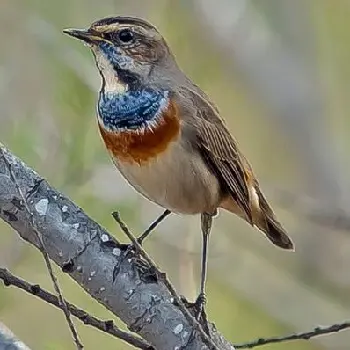 |
|
| Habitats; | Woodland | |||
| Status; | Passage Migrant | |||
| Family; | Muscicapidae | |||
| Latin Name; | Luscinia svecica | |||
| Order; | Passeriformes | |||
Top of Page | 
| |||
|
||||
| English; | Redstart | Redstarts are real tree-dwellers, nesting and feeding in mature oak woodlands and sometimes hedgerows in western parts of the UK. They are temperate rainforest specialists, thriving in the wet, mild conditions of the coastal woodlands of Wales, Scotland and South West England. They feed on mainly insect prey such as caterpillars and other larvae, but will also take spiders, worms and sometimes berries. Nests are built in tree cavities and sometimes also nest boxes, where the female lays six or seven eggs in 2 clutches beginning in May. Redstarts depart the UK around mid-August and return to their warmer climates in Africa and Asia for the winter. |  |
|
| Habitats; | Woodland | |||
| Status; | Migrant | |||
| Family; | Muscicapidae | |||
| Latin Name; | Phoenicurus phoenicurus | |||
| Order; | Passeriformes | |||
Top of Page | 
| |||
|
||||
| English; | Black Redstart | The black redstart is a small robin-sized bird with fewer than 100 breeding pairs in the UK. First recorded as breeding in Britain at the Wembley Exhibition Centre, London, in 1926. It prefers rock and scree habitats, but generally avoids wetter areas and dense vegetation unless there are buildings nearby. The species' diet revolves around small- to medium-sized invertebrates, berries and fruit, it also fly catches from low branches and walls and can hover in front of rocks and walls. Nesting among boulders, two clutches are produced with 4-6 eggs in each starting in April. Breeding in the Cairngorms |  |
|
| Habitats; | Gardens | |||
| Status; | Resident | |||
| Family; | Muscicapidae | |||
| Latin Name; | Phoenicurus ochruros gibraltariensis | |||
| Order; | Passeriformes | |||
Top of Page | 
| |||
|
||||
| English; | Stonechat | Found all over Scotland in suitable habitats, and although the birds are resident, some birds appear to migrate for warmer climes, with some ringed Scottish birds turning up in Spain in the Winter. It is easy to identify this bird from its unusual sound, which is like two stones being knocked together. It feeds on invertebrates, which it hunts from a suitable perch, picking up food from the ground. They nest close to the ground among grass, furze, bramble or heather, built with grass, small twigs and roots, lined with grass, hair and some feathers. 2 to 3 clutches containing 4-6 eggs in April. |  |
|
| Habitats; | Hill | |||
| Status; | Resident | |||
| Family; | Muscicapidae | |||
| Latin Name; | Saxicola torquata | |||
| Order; | Passeriformes | |||
Top of Page | 
| |||
|
||||
| English; | Whinchat | The whinchat is a summer visitor, spending the winter south of the Sahara. Whinchats are mainly found in upland areas of western Britain and Ireland. South-West Scotland is a particular stronghold (Uk 47,000 pairs). They breed in open habitat such as moorland, with low vegetation. They feed on invertebrates including ants, beetles and flies, and hunt from a perch, diving to pounce on prey. The nest is on the ground, and well hidden, generally in tall grass or bracken, it consists of dry grass and moss, lined with hair and fine grass. A single clutch of 4-6 eggs are laid in May |  |
|
| Habitats; | Hill | |||
| Status; | Migrant | |||
| Family; | Muscicapidae | |||
| Latin Name; | Saxicola rubetra | |||
| Order; | Passeriformes | |||
Top of Page | 
| |||
|
||||
| English; | Wheatear | They favour open upland habitat in Scotland, although they may also be seen along the coast in other areas while passing through on migration. The Greenland race (Oenanthe oenanthe leucorhoa) can also be spotted on migration. It migrates from Sub-Saharan Africa in spring over a vast area of the Northern Hemisphere that includes northern and Central Asia, Europe, Greenland, Alaska, and parts of Canada. They feed on Insects and larvae. It nests on the ground, in a hole under a rock, in rock crevice or among large stones, but also in an abandoned rodent burrow. It is an open cup made with leaves, stems, moss, feathers and hair, placed on a foundation of dried stems and grasses. A single clutch of 5-6 eggs are laid in May. |  |
|
| Habitats; | Hill | |||
| Status; | Migrant | |||
| Family; | Muscicapidae | |||
| Latin Name; | Oenanthe oenanthe | |||
| Order; | Passeriformes | |||
Top of Page | 
| |||
|
||||
| English; | Spotted Flycatcher | They are birds of deciduous woodlands, parks and gardens, with a preference for open areas amongst trees, which is good for catching insects. During the breeding season, spotted flycatchers can be found throughout the UK, although they are scarce in the far north and west and almost absent from Scottish islands. Flying from a high perch, dash out to grab a flying insect and return to the same spot, such as moths, butterflies, damselflies, crane-flies and other tasty morsels. They build an open nest in a suitable recess, often against a wall, and will readily adapt to an open-fronted nest box. 4-6 eggs are laid. |  |
|
| Habitats; | Woodland | |||
| Status; | Migrant | |||
| Family; | Muscicapidae | |||
| Latin Name; | Muscicapa striata | |||
| Order; | Passeriformes | |||
Top of Page | 
| |||
|
||||
| English; | Pied Flycatcher | Pied Flycatchers arrive from sub-Saharan western Africa in April. They are temperate rainforest specialists, thriving in the wet, mild conditions of the coastal woodlands of west Scotland, Wales and South West England. Pied flycatchers snatch flying insects from the air, often using favoured perches among tree branches from which to dart at passing prey. They will also take caterpillars and other invertebrates. Nesting in natural tree holes and nest-boxes, they lay 1 to 2 clutches of 6-7 eggs begining in May. |  |
|
| Habitats; | Woodland | |||
| Status; | Migrant | |||
| Family; | Muscicapidae | |||
| Latin Name; | Ficedula hypoleuca | |||
| Order; | Passeriformes | |||
Top of Page | 
| |||
|
||||
| English; | Cetti's Warbler | The Cetti's warbler was first recorded in the United Kingdom in 1961. It usually inhabits damp areas including ponds, lakes, marshes and rivers. It is unique amongst British birds in having only ten tail feathers, and in laying bright red eggs. The nest is placed in thick dense vegetation, usually at around 30 to 45 cm (12 to 18 in) above the ground. The untidy cup shaped nest is made from leaves and stems and is lined with feathers, hair and other finer material. A single clutch of 4-5 eggs laid in June. |  |
|
| Habitats; | Freshwater | |||
| Status; | Resident | |||
| Family; | Sylviidae | |||
| Latin Name; | Cettia cetti | |||
| Order; | Passeriformes | |||
Top of Page | 
| |||
|
||||
| English; | Savi's Warbler | Savi's warbler breeds in Algeria, Spain, Mallorca, France, Sicily, Crete, Italy, Netherlands, Germany, Poland, Romania, Bulgaria, Albania, Croatia, Slovenia, Serbia, Jordan, Turkey and Russia as far east as the River Volga. It winters in Algeria, Morocco, Sudan and Ethiopia. It is known as an occasional visitor to the United Kingdom (where a few pairs breed sporadically), Belgium, Switzerland, Corsica, Sardinia, Malta, Cyprus and Israel. Savi's warbler is to be found in reed beds, marshes and lagoons with reeds, sedges and other marsh vegetation. They feed on insects such as flies, beetles, moths, grubs and damselflies. The nest is in reed beds, 3-5 eggs are laid in 1-2 broods. |  |
|
| Habitats; | Freshwater | |||
| Status; | Occasional Visitor | |||
| Family; | Sylviidae | |||
| Latin Name; | Locustella luscinioides | |||
| Order; | Passeriformes | |||
Top of Page | 
| |||
|
||||
| English; | Grasshopper Warbler | The grasshopper warbler is a widely distributed but fairly scarce summer visitor (16,000 pairs), arriving in May and leaving in August. They nest throughout Scotland even Orkney, albeit in thinly scattered numbers They nest in a range of wet and dry habitats including fens, marshland, rough grassland, moorland, thickets, young plantations and forest clearings. Winter grounds are African coastal localities such as west Senegal and west Gambia. Its diet includes flies, moths, beetles, aphids, dragonflies and mayflies and their larvae. The nest is usually placed in a hollow in thick vegetation, with a good ground cover of brambles or grass. The breeding season begins May or early June and two broods can be raised in a season, consisting of 5-6 eggs. The grasshopper warbler has declined significantly in recent decades and is now classified as a Red List species due to habitat loss. |  |
|
| Habitats; | Freshwater | |||
| Status; | Migrant | |||
| Family; | Sylviidae | |||
| Latin Name; | Locustella naevia | |||
| Order; | Passeriformes | |||
Top of Page | 
| |||
|
||||
| English; | Marsh Warbler | In 2002 the first breeding occurred on Shetland, following on from the first breeding in Orkney in 1993. The marsh warbler is a Scarce Visitor, Scarce Breeder which is mainly confined to parts of Worcestershire and south-east England, especially Kent. They are found in areas of dense vegetation, with taller bushes nearby. It winters mainly in south-east Africa. Marsh Warblers require a matrix of sturdy herbaceous plants in which they can make their nests. Beds of willowherb species are commonly used but other robust herbs, including Stinging Nettles, Hemp Agrimony or Rose species, are often used. 4-5 eggs are laid in a single clutch in June, unless a replacement is required. Bird Guides |  |
|
| Habitats; | Woodland | |||
| Status; | Migrant | |||
| Family; | Sylviidae | |||
| Latin Name; | Acrocephalus palustris | |||
| Order; | Passeriformes | |||
Top of Page | 
| |||
|
||||
| English; | Reed Warbler | A summer visitor from mid-April to late September to breed in the UK, with the largest concentrations in East Anglia and along the south coast, there are relatively few breeding in Dumfries & Galloway in Scotland. It winters in sub-Saharan Africa, south to Zambia. Breeds almost exclusively in reed beds, common in estuaries and can also be found alongside rivers and lakes. Estimated 120,000 pairs visits the UK. It weaves its nest as a sling between two or three reed stems, interwoven with grass, moss, wool and reed flowers, whilst the deep cup is lined with finer grass, hair and more reed flowers. Laying begins in mid-May with 4-5 eggs in 2 clutches. They're a favourite of the Cuckoo. |  |
|
| Habitats; | Freshwater | |||
| Status; | Migrant | |||
| Family; | Sylviidae | |||
| Latin Name; | Acrocephalus scirpaceus | |||
| Order; | Passeriformes | |||
Top of Page | 
| |||
|
||||
| English; | Sedge Warbler | Found all over Scotland and the islands in low-lying areas with suitable habitat. All sedge warblers spend winter in sub-Saharan Africa. UK visitors are estimated 240,000 pairs. During the breeding season, this is a species found in reed beds, often with scrub, ditches and habitats away from water including hedgerows. Prey taken by sedge warblers includes mayflies, dragonflies and damselflies, grasshoppers, bugs, lacewings, moths, beetles and flies. The cup-shaped nest, stems and leaves, plus spiders' webs, with a thick, finer layer inside including reed flowers, animal hair and plant down. It is woven around vertical plant stems. Between 3-5 eggs are laid in 1 or 2 clutches. |  |
|
| Habitats; | Freshwater | |||
| Status; | Migrant | |||
| Family; | Sylviidae | |||
| Latin Name; | Acrocephalus schoenobaenus | |||
| Order; | Passeriformes | |||
Top of Page | 
| |||
|
||||
| English; | Garden Warbler | Garden warblers are plump birds with a round heads. They are grey-brown with olive upper parts and grey neck. The underparts are pale buff. They have dark brown eyes and a white eye-ring. Its haunts are coppiced woodland, woodland edges and woodland rides, and can be found in suitable habitats as far north as the Great Glen. They feed on caterpillars, flies, spiders and worms during breeding season as well as fruits and berries during the autumn and winter. They build a cup-shaped nest from grass, leaves and roots which is lined with finer grasses and hairs. It is usually constructed low down in a small tree or bush. A single clutch of 4-5 eggs are laid in May. It departs by Mid-July. |  |
|
| Habitats; | Woodland | |||
| Status; | Migrant | |||
| Family; | Sylviidae | |||
| Latin Name; | Sylvia borin | |||
| Order; | Passeriformes | |||
Top of Page | 
| |||
|
||||
| English; | Dartford Warbler | The Dartford warbler is a typical warbler from the warmer parts of western Europe and northwestern Africa. It is a small warbler with a long thin tail and a thin pointed bill. It is dependent on mature, dry heath habitats in the UK, and particularly on gorse that is in good condition for surviving cold, harsh winters. It only eats insects and does not migrate for the winter, which means it is vulnerable to cold weather and prolonged snow cover. It is a ground-nesting bird, preferring to breed under the protective cover of dense heather or compact gorse. It makes a grassy, cup-shaped nest, in which it lays three to five eggs. It can have up to three broods from April to July. Restricted to Devon, Dorset, Suffolk. |  |
|
| Habitats; | Hill | |||
| Status; | Resident | |||
| Family; | Sylviidae | |||
| Latin Name; | Sylvia undata | |||
| Order; | Passeriformes | |||
Top of Page | 
| |||
|
||||
| English; | Barred Warbler | An average of 160 birds per year arrived during the 1990s and this had increased to around 200 per annum between 2000 and 2003. The first arrivals tend to occur in early August, with new arrivals steadily increasing throughout August with the peak in the last week of the month and early September. |  |
|
| Habitats; | Grassland | |||
| Status; | Occasional Visitor | |||
| Family; | Sylviidae | |||
| Latin Name; | Sylvia nisoria | |||
| Order; | Passeriformes | |||
Top of Page | 
| |||
|
||||
| English; | Lesser Whitethroat | Scottish birds (400 pairs) commoner on the East coast as far as Fife, across the Central belt, and low-lying Dumfries & Galloway, but have also reached as far North as Orkney and Shetland. Wintering in Africa, just south of the Sahara, from October to April. It is insectivorous, but will also take berries and other soft fruit. The breeding habitat, fairly open country, with bushes for nesting, the nest is built of dried grass, stems and rootlets, lined with plant fibres and hair, in low shrub or brambles. A single clutch of 4-6 eggs are laid in May or June. PNHS |  |
|
| Habitats; | Grassland | |||
| Status; | Migrant | |||
| Family; | Sylviidae | |||
| Latin Name; | Curruca curruca | |||
| Order; | Passeriformes | |||
Top of Page | 
| |||
|
||||
| English; | Whitethroat | A summer migrant from the Sahel Region, just south of Sub-Saharan Africa. Widespread in Scotland except in upland areas, it is a bird of open country and cultivation, with bushes for nesting. Their diet varies throughout the year, during the breeding season they will favour insects, whereas on autumn migration, and while on their African wintering grounds, they prefer to eat berries. The nest is built in low shrub or brambles, built out of dry grass and roots, the lining of which is made from wool, finer roots and/or plant down. 4-6 eggs are laid in 1-2 clutches beginning in May. |  |
|
| Habitats; | Hill | |||
| Status; | Migrant | |||
| Family; | Sylviidae | |||
| Latin Name; | Sylvia communis | |||
| Order; | Passeriformes | |||
Top of Page | 
| |||
|
||||
| English; | Blackcap | Blackcap is a common summer breeding visitor in much of central and southern Scotland, they are not generally observed in extreme northern areas of Scotland, including the islands. A distinctive greyish warbler, the male has a black cap and the female a chestnut one. Its delightful fluting song has earned it the name 'northern nightingale'. Blackcaps switch from insects such as flies and caterpillars in the summer months, to berries and other fruit in the winter. Nesting in thick bushes or hedges there are 2 clutches of 4-5 eggs begining in mid-May. Blackcaps are now resident in Scotland and migrant furthar North. Uk population estimated 1.2 million pairs. |  |
|
| Habitats; | Woodland | |||
| Status; | Migrant | |||
| Family; | Sylviidae | |||
| Latin Name; | Sylvia atricapilla | |||
| Order; | Passeriformes | |||
Top of Page | 
| |||
|
||||
| English; | Melodious Warbler | Medium-sized warbler, olive-green above and yellow below, with a rather long bill. Compared to Icterine Warbler, wings are shorter and lack the pale panel. Song is fast and prolonged, containing quite a lot of mimicry and usually some House Sparrow-like chattery calls intermixed. Breeds in southwest Europe and northern Morocco, in forests, scrubbier vegetation, orchards, and well-wooded gardens. Winters in tropical Africa. Bird Guides - Melodious Warbler |  |
|
| Habitats; | Woodland | |||
| Status; | Occasional Visitor | |||
| Family; | Sylviidae | |||
| Latin Name; | Hippolais polyglotta | |||
| Order; | Passeriformes | |||
Top of Page | 
| |||
|
||||
| English; | Icterine Warbler | First Breeding Record Scotland 1992, in 2009, an exciting breeding discovery in the north of Scotland of Icterine Warbler, two pairs have been found, one in Sutherland and one in Strathspey, representing the fourth and fifth breeding records. The icterine warbler is a bird of woodland rather than forest, preferring woodland edge or glades, favouring the crowns of well spaced trees with tall undergrowth. Prefers broad leafed trees, but may be found in conifers mixed with broad leafed trees. Will use copses, orchards, parks, gardens, shelter belts and tall hedges interspersed with trees. it is normally a passage migrant in Great Britain and Ireland. It is a migratory species and the entire population winters in sub-Saharan Africa, mainly south of the equator. |  |
|
| Habitats; | Woodland | |||
| Status; | Passage Migrant | |||
| Family; | Sylviidae | |||
| Latin Name; | Hippolais icterina | |||
| Order; | Passeriformes | |||
Top of Page | 
| |||
|
||||
| English; | Chiffchaff | Chiffchaffs are one of the first birds to arrive back in Scotland in March after spending the winter months in warmer places. Chiffchaffs mainly eat insects, caterpillars, aphids and moths. They will also feed from the sap of trees and in autumn and winter will supplement their diet with seeds and berries. The nest is built amongst the undergrowth, usually a foot above the ground It is domed, with an entrance in the side, it has 1-2 clutches with 5-7 eggs laid in late April, early May. |  |
|
| Habitats; | Woodland | |||
| Status; | Migrant | |||
| Family; | Phylloscopidae | |||
| Latin Name; | Phylloscopus collybita | |||
| Order; | Passeriformes | |||
Top of Page | 
| |||
|
||||
| English; | Willow Warbler | An iconic, abundant visitor found all over Scotland and the UK (2.4 million pairs). Arriving in April, they frequent open woodlands with trees and ground cover for nesting, including most importantly birch, alder, and willow habitats. The nest is usually built in close contact with the ground, often in low vegetation. The willow warblers diet consists of fruits, berries, insects, spiders and small snails. They build a dome shaped nest on the ground, formed with grass, bracken heather, fine twigs but also moss and dead leaves. The cup is lined with plenty of feathers. 5-7 eggs are laid in 1-2 clutches beginning in May. In September, it leaves to winter in Sub-Saharan Africa. |  |
|
| Habitats; | Woodland | |||
| Status; | Migrant | |||
| Family; | Phylloscopidae | |||
| Latin Name; | Phylloscopus trochilus | |||
| Order; | Passeriformes | |||
Top of Page | 
| |||
|
||||
| English; | Wood Warbler | Wood warblers are found in deciduous woodland under closed canopies where there is little or no shrub layer. Much of the population in Europe is found in forested lowlands, though in Scotland it is predominantly found in upland western oak woods. Wood warblers sing from high-up in the canopy, but build their nests in low scrub or even on the ground in hollows. Like other warblers, they are insectivorous. Their diet is made up of insects, flies and spiders which they pick off nearby vegetation. The nest is built on the ground, usually in a hollow well hidden by grass or bracken, it is dome -shaped, with a side entrance, it is built of moss, dried grass and leaves, and lined with hair and fine grass. A single clutch of 5-7 eggs are laid in May. |  |
|
| Habitats; | Woodland | |||
| Status; | Migrant | |||
| Family; | Phylloscopidae | |||
| Latin Name; | Phylloscopus sibilatrix | |||
| Order; | Passeriformes | |||
Top of Page | 
| |||
|
||||
| English; | Firecrest | The Firecrest is an incredibly rare bird in the UK, there are only 550 known breeding pairs. They exhibit a range of migratory behaviour, and while those UK residents are restricted to south-east areas of the UK i.e. Kent, other Firecrests are either winter migrants (south-west, from Cornwall and the far south of Wales) or passage migrants (East Anglia and a thin strip towards Wiltshire). They prefer for broadleaf forests with an abundance of oak and alder, otherwise you may find Firecrests in habitat among holly (winter) and beech. Breeding begins in March and April; a typical clutch consists of between 7 to 12 eggs | |
|
| Habitats; | Woodland | |||
| Status; | Resident | |||
| Family; | Regulidae | |||
| Latin Name; | Regulus ignicapillus | |||
| Order; | Passeriformes | |||
Top of Page |
| |||
|
||||
| English; | Goldcrest | Our smallest bird, found all over Scotland, primarily in coniferous or mixed woodland. These birds are quite vocal, with a high-pitched "sih-sih-sih" call. These insect eaters will allow you to get close and flutter around in search of insects, much in the same erratic movement as a butterfly. They usually build their nests in conifers, especially cedars, where they to sling their nests underneath fine branches, well hidden by overhanging twigs or leaves. The nest looks like a tiny hammock or basket of interwoven moss lichens and spiders webs, lined with hair wool or feathers. The eggs 7 to 10 are laid in April or early May and often a second clutch later. These birds only weight 5.5 grams. In comparison, the Bee Hummingbird weighs only 2 grams. |  |
|
| Habitats; | Woodland | |||
| Status; | Resident | |||
| Family; | Regulidae | |||
| Latin Name; | Regulus regulus | |||
| Order; | Passeriformes | |||
Top of Page | 
| |||
|
||||
| English; | Blue Tit | The population has flourished due to the increased availability of nest boxes and garden feeders. Some of their favourite foods are insects, sunflower hearts, suet and peanuts. From analyse of 793 samples of blue tit faeces, collected from nest boxes at 39 points along a 220-kilometre-long study area running from Edinburgh to Dornoch, in the Highlands. They found 53 per cent of the samples contained DNA evidence of garden bird feed, with peanuts in 49 per cent of samples. In comparison, the most common natural prey found in the faeces was the moth Argyresthia goedartella, in 34 per cent of samples. Widespread throughout Scotland, except Orkney and Shetland. A single clutch of 6-10 eggs are laid in April-May |  |
|
| Habitats; | Gardens | |||
| Status; | Resident | |||
| Family; | Paridae | |||
| Latin Name; | Cyanistes caeruleus | |||
| Order; | Passeriformes | |||
Top of Page | 
| |||
|
||||
| English; | Great Tit | Absent only from the Northern and Western Isles of Scotland, they can be seen in woodlands, parks and gardens across the UK. Primarily insectivorous in the summer, feeding on insects and spiders, which they capture by foliage gleaning. Their larger invertebrate prey include cockroaches, grasshoppers and crickets, lacewings, earwigs, bugs (Hemiptera), ants, flies (Diptera), caddis flies, beetles, scorpion flies, harvestmen, bees and wasps, snails and woodlice. During the breeding season, the tits prefer to feed protein-rich caterpillars to their young. Cavity nesters, breeding in a hole that is usually inside a tree, and they will readily take to nest boxes. They attempt 2 broods a year with clutch sizes varying from 6-15 eggs, apparently depending on food availability. |  |
|
| Habitats; | Gardens | |||
| Status; | Resident | |||
| Family; | Paridae | |||
| Latin Name; | Parus major | |||
| Order; | Passeriformes | |||
Top of Page | 
| |||
|
||||
| English; | Marsh Tit | In Scotland, confined to the East Coast as far as the Forth, but in very small numbers. Total UK population is only estimated at 40,000 territories. The ideal habitat is mature broadleaf woodland, in particular oak, and a rich and dense understory. Their diet consists mostly of spiders and insects, but will also eat seeds, nuts and berries during autumn and winter. Marsh tits build their nests in holes in trees, walls and sometimes on the ground. They make a nest of moss lined with wool, fur, hair and feathers. The 5-9 eggs are laid in late April or early May, and sometimes a second clutch is produced. |  |
|
| Habitats; | Woodland | |||
| Status; | Resident | |||
| Family; | Paridae | |||
| Latin Name; | Poecile palustris | |||
| Order; | Passeriformes | |||
Top of Page | 
| |||
|
||||
| English; | Willow Tit | Confined to the South west and South east of Scotland, they are often found in wet woodland and other damp places, such as the edge of lowland peat bogs and marshes.
Willow tits eat mostly insects, but will also eat berries and seeds when food is scarce in the winter. They use their small bills to excavate their own nest holes in standing, decaying birch and willow, and use the resulting wood chippings as the base of their nest, a cup is then formed of fur, hair and some feathers felted together. A single clutch of 6-9 eggs are laid in May
Protecting the Willow Tit in Galloway |
 |
|
| Habitats; | Woodland | |||
| Status; | Resident | |||
| Family; | Paridae | |||
| Latin Name; | Poecile montanus | |||
| Order; | Passeriformes | |||
Top of Page | 
| |||
|
||||
| English; | Coal Tit | The coal tit is mainly found in coniferous woodland, but can also be spotted in gardens and parks. It is a small tit, in fact the smallest European tit, and could be confused with the almost indistinguishable Marsh Tit and Willow Tit if it was not for the white patch on the nape. These diminutive birds will seek out insects and spiders among the smaller branches and leaves of trees. But they also visit gardens to take meals from feeders. In times when food is plentiful, they hoard it by hiding it in many locations so that they can retrieve it when meals become scarce. They lay a single clutch of 7-11 eggs in early May. scottishwildlifetrust |  |
|
| Habitats; | Woodland | |||
| Status; | Resident | |||
| Family; | Paridae | |||
| Latin Name; | Periparus ater | |||
| Order; | Passeriformes | |||
Top of Page | 
| |||
|
||||
| English; | Crested Tit | These birds only breed in the highlands, mostly in the native pinewoods of the Spey valley, but spreading into the Scots Pine plantations of the Culbin forest. Their diet consists mainly of insects and spiders, and a wide range of species are taken. In the Caledonian pinewood remnants, foraging takes place on the trunks and large branches of the old pines, and also amongst the needles. They build their nests in holes in decaying or dead tree trunks or in holes excavated by woodpeckers, but also readily adapt to nest boxes. Female crested tits build the cup-shaped nest which is constructed from moss, lichen, hair, wool, feathers and spiders' webs. The Scottish breeding population is estimated at 1,000-2,000 pairs with a winter population of 5,600-7,900 individuals. Breeding begins in April and usually only results in a single clutch consisting of between 4-8 eggs. |  |
|
| Habitats; | Woodland | |||
| Status; | Resident | |||
| Family; | Paridae | |||
| Latin Name; | Lophophanes cristatus | |||
| Order; | Passeriformes | |||
Top of Page | 
| |||
|
||||
| English; | Bearded Reedling | The largest single population in Great Britain is to be found in the reedbeds at the mouth of the River Tay in Perth and Kinross, where over 700 birds were ringed in 2014. The English population of about 500 pairs is largely confined to the south and east with a small population in Leighton Moss in north Lancashire. This species is a wetland specialist, breeding colonially in large reed beds by lakes or swamps. It eats reed aphids, insect larvae, spiders in summer, and reed seeds in winter, its digestive system changing to cope with the very different seasonal diets. They lay 5-7 eggs and have 2-3 clutches begining in April. Rare Bird Alert |  |
|
| Habitats; | Freshwater | |||
| Status; | Resident | |||
| Family; | Panuridae | |||
| Latin Name; | Panurus biarmicus | |||
| Order; | Passeriformes | |||
Top of Page | 
| |||
|
||||
| English; | Long-tailed Tit | In Scotland, it is only found on the mainland in low-lying districts. Long-tailed tits are largely resident breeders in deciduous and mixed woodland. They form large groups in June and July following nesting. In winter, long-tailed tits will often flock with other tit species and are regular visitors to garden feeders, especially suet balls from which they can easily extract small berries and seeds with their tiny black bills. They build a domed nest, in a bush, with a small entrance hole towards the top, built out of moss, lichen, feathers and spider silk. A single clutch is laid in April, May with 8-12 eggs. |  |
|
| Habitats; | Woodland | |||
| Status; | Resident | |||
| Family; | Aegithalidae | |||
| Latin Name; | Aegithalos caudatus | |||
| Order; | Passeriformes | |||
Top of Page | 
| |||
|
||||
| English; | Treecreeper | In Scotland, its distribution in general matches that of deciduous and mixed woodland. It also occurs in coniferous woodland, particularly Scots Pine. This unmistakable bird feeds by spiralling up a tree, searching the cracks in the bark for insects. It then flies to the bottom of the next tree and begins again. Nesting is generally at the same time as the tits, as the breeding adults need to take advantage of the same glut of caterpillars at the beginning of June. The nest site is generally rather constricted, often squeezed behind a hanging piece of bark. Usually a bed of tiny twigs lines the nest cavity, and it generally has two openings, one used as the entrance and the other as the exit. Normally a single brood of 5-6 eggs are laid in late April. |  |
|
| Habitats; | Woodland | |||
| Status; | Resident | |||
| Family; | Certhiidae | |||
| Latin Name; | Certhia familiaris | |||
| Order; | Passeriformes | |||
Top of Page | 
| |||
|
||||
| English; | Short-toed Treecreeper | The Short-toed Treecreeper is resident across Europe, from Portugal to Turkey and Greece, and also in NW Africa. It breeds in temperate forests with mature trees, usually in lowlands, but it breeds locally between 900 and 1,800 metres of elevation. It typically seeks invertebrate food on tree trunks, starting near the tree base and spiralling its way up using its stiff tail feathers for support, its thin bill extracts insects from the bark crevices. Likewise, it nests in crevices in tree trunks or behind bark flakes, and it will also use artificial nest boxes, and consisting of a small bowl of grass and feathers, one brood of 5 or 6 eggs. |  |
|
| Habitats; | Woodland | |||
| Status; | Rare Visitor | |||
| Family; | Certhiidae | |||
| Latin Name; | Certhia brachydactyla | |||
| Order; | Passeriformes | |||
Top of Page | 
| |||
|
||||
| English; | Nuthatch | Only since around 1990 have these birds been breeding in Scotland. I live in Langholm, Dumfriesshire and first saw these birds in 2005 when I heard their unfamiliar call. I believe they are now up as far as Edinburgh on the east coast and further west into Galloway. They move so slowly because they rarely travel more than 5 miles from where they were born. Unusually, they are the only bird that moves down a tree they also have the habit of plastering mud around a nest hole to stop larger birds getting in. Believed to be around 220,000 pairs in the UK. Nuthatches are omnivorous, eating mostly insects, nuts, and seeds. They forage for insects hidden in or under bark by climbing along tree trunks and branches, sometimes upside-down. Typically, it lays a single clutch of between 6 and 8 eggs. |  |
|
| Habitats; | Woodland | |||
| Status; | Resident | |||
| Family; | Sittidae | |||
| Latin Name; | Sitta europaea | |||
| Order; | Passeriformes | |||
Top of Page | 
| |||
|
||||
| English; | Red-backed Shrike | The red-backed shrike is a carnivorous passerine bird and member of the shrike family Laniidae. Its breeding range stretches from Western Europe east to central Russia. It is migratory and winters in the eastern areas of tropical Africa and southern Africa. Red-backed shrikes are now effectively extinct as a breeding bird and best looked for on passage in spring and autumn. Most birds are seen on the south and east coasts of the UK as far north as northern Scotland. |  |
|
| Habitats; | Hill | |||
| Status; | Passage Migrant | |||
| Family; | Laniidae | |||
| Latin Name; | Lanius collurio | |||
| Order; | Passeriformes | |||
Top of Page | 
| |||
|
||||
| English; | Great Grey Shrike | A striking bird, with a stocky body and a long tail, Lanius excubitor is a rare winter visitor and the largest of the European family of shrikes, with no more than 200 gracing our shores each year. First appearing on the east coast of England in September, the fiercely territorial nature of these silvery-grey birds means they cut solitary figures in their winter haunts, before departing for Scandinavian breeding grounds in spring. Their diet consists of beetles and other insects, small mammals and birds. Food is often stored in a 'larder' by impaling it on a thorn! |  |
|
| Habitats; | Hill | |||
| Status; | Occasional Visitor | |||
| Family; | Laniidae | |||
| Latin Name; | Lanius excubitor | |||
| Order; | Passeriformes | |||
Top of Page | 
| |||
|
||||
| English; | Woodchat Shrike | The woodchat shrike breeds in southern Europe, the Middle East and northwest Africa, and winters in tropical Africa. It breeds in open cultivated country, preferably with orchard trees and some bare or sandy ground. This migratory medium-sized passerine eats large insects, small birds and amphibians. Like other shrikes it hunts from prominent perches, and impales corpses on thorns or barbed wire as a "larder". This species often overshoots its breeding range on spring migration, and is a rare, but annual, visitor to UK. |  |
|
| Habitats; | Farmland | |||
| Status; | Rare Visitor | |||
| Family; | Laniidae | |||
| Latin Name; | Lanius senator | |||
| Order; | Passeriformes | |||
Top of Page | 
| |||
|
||||
| English; | Starling | The starling can be found throughout lowland Scotland where there is cultivation and pasture, with the highest densities being found along the East coast, Central lowlands and Dumfries and Galloway. A subspecies also exits in Shetland (S. v. zetlandicus) birds from Fair Isle, St. Kilda and the Outer Hebrides may also be included. Famous for its aerial displays at dusk in winter called murmurations they are unmistakable. Starlings forage in lawns, fields, and other open areas with short vegetation, looking for grubs and insects, they will also eat fruits and seeds. They nest in any suitable cavity whether in a wall, tree, or buildings. They have 2 clutches of 4-7 eggs between April & June. |  |
|
| Habitats; | Farmland | |||
| Status; | Resident | |||
| Family; | Sturnidae | |||
| Latin Name; | Sturnus vulgaris | |||
| Order; | Passeriformes | |||
Top of Page | 
| |||
|
||||
| English; | Rose-coloured Starling | The rosy starling is a colonial breeder, and like other starlings, is highly gregarious, forming large winter flocks. It also shares other species' omnivorous diet, although it prefers insects. It is a bird of steppe and open agricultural land. In years when grasshoppers and other insects are abundant, it will erupt well beyond its core range, with significant numbers reaching France, the United Kingdom and Ireland. The species breeds in huge colonies. The nest is often placed between stones or in a crack in a rock or cliff, in a hole or crevice in a building, in an old abandoned nest or even in a tree hole. The nest is built with grasses and twigs, and the cup is lined with finer grasses, feathers and sometimes aromatic plants. 3-6 eggs are laid in a single clutch. RSPB |
 |
|
| Habitats; | Farmland | |||
| Status; | Occasional Visitor | |||
| Family; | Sturnidae | |||
| Latin Name; | Sturnus roseus | |||
| Order; | Passeriformes | |||
Top of Page | 
| |||
|
||||
| English; | Golden oriole | The golden oriole is very secretive and difficult to see. May be encountered on migration on the south or east coast of England, but best looked for in the poplar plantations at the RSPB's Lakenheath reserve in Suffolk. Golden orioles arrive as passage migrants and can mainly be seen in May and June. Feeds in canopy of tall fruit-bearing trees on insects and fruit. They lay 3-4 eggs in a single clutch in late April to May. |  |
|
| Habitats; | Woodland | |||
| Status; | Passage Migrant | |||
| Family; | Oriolidae | |||
| Latin Name; | Oriolus oriolus | |||
| Order; | Passeriformes | |||
Top of Page | 
| |||
|
||||
| English; | Magpie | Sadly, one of the birds, gamekeepers like to keep out of their area, as they will take game bird chicks. Widely distributed in the UK, but absent only from the Highlands of Scotland. Magpies are very vocal birds, they have a harsh, ascending call and a raspy chatter. Their diet consists of Invertebrates, fruit, seeds, carrion, scraps, eggs & chicks. The usual nesting site is in a thorny bush, where it builds a domed structure of thorny twigs, lined with fine roots and grass. A single clutch of 5-8 eggs is laid in April. |  |
|
| Habitats; | Farmland | |||
| Status; | Resident | |||
| Family; | Corvidae | |||
| Latin Name; | Pica pica | |||
| Order; | Passeriformes | |||
Top of Page | 
| |||
|
||||
| English; | Jay | The biggest ever bird survey, carried out in the UK, show that jays are moving north. Normally seen across most of Britain, but traditionally absent from northern Scotland, more of these birds are taking up residence in the Highlands. Jays particularly favour oak woodlands and are well-known for their acorn hoarding habits, burying several thousand acorns in the autumn and retrieving them when food is scarce later in the cold winter months. Some of these go unfound and go on to grow young oaks the following spring. Diet includes acorns, nuts, seeds and insects, but also eats nestlings of other birds and small mammals. A single clutch of 4-7 eggs is laid in April-May. Pinching cherries of a tree in France |  |
|
| Habitats; | Woodland | |||
| Status; | Resident | |||
| Family; | Corvidae | |||
| Latin Name; | Garrulus glandarius | |||
| Order; | Passeriformes | |||
Top of Page | 
| |||
|
||||
| English; | Jackdaw | Found across Europe, Western Asia and North Africa; it is mostly resident, although northern and eastern populations migrate south in the winter. Jackdaws can be found in fields, woods, parks and gardens. Being social birds, they roost communally in woodlands. They're widespread and common across the UK, except the Scottish Highlands. They are omnivorous, eating all sorts of scraps left out by humans, seeds, berries, invertebrates, and even small birds and eggs. Jackdaws will build a nest almost anywhere, from chimneys to tree cavities. A single clutch of 4-7 eggs are laid in April or May |  |
|
| Habitats; | Gardens | |||
| Status; | Resident | |||
| Family; | Corvidae | |||
| Latin Name; | Corvus monedula | |||
| Order; | Passeriformes | |||
Top of Page | 
| |||
|
||||
| English; | Raven | The raven is a bird of mountains, moorland and sea cliffs and is a widely distributed resident in the Highlands, Southern Uplands, the west coast of Scotland, the Outer and Inner Hebrides, Orkney and Shetlands, and spreading further east with a few sightings in Fife, Borders, Angus and Dundee and Perth and Kinross. Being omnivores, ravens generally eat anything available, including birds, eggs, seeds, berries, insects, and carrion. They prefer to nest in Tall firs, cliff ledges, rocky heights or ruins, building materials are sticks, grass, earth, roots and stems of local plants, lined with wool, fur, hair, or moss. A single clutch of eggs is laid in February or March, with 4-7 eggs. Raven Population Scotland |  |
|
| Habitats; | Hill | |||
| Status; | Resident | |||
| Family; | Corvidae | |||
| Latin Name; | Corvus corax | |||
| Order; | Passeriformes | |||
Top of Page | 
| |||
|
||||
| English; | Carrion Crow | Common and widespread resident. In north-west Scotland and most of Ireland it is replaced with the distinctive grey and black form, Hooded Crow. The two races interbreed where they meet. Carrion crows are birds of farmland and grassland, but are extremely adaptable and will come to gardens for food, often seeming to be quite fearless. They feed on dead animals (as their name suggests), invertebrates and grain, as well as stealing eggs and chicks from other birds' nests. They nest in tall trees in a nest of twigs and roots lined with wool, grass, moss. A single clutch of 4-5 eggs are laid in April-May. |  |
|
| Habitats; | Farmland | |||
| Status; | Resident | |||
| Family; | Corvidae | |||
| Latin Name; | Corvus corone | |||
| Order; | Passeriformes | |||
Top of Page | 
| |||
|
||||
| English; | Hooded Crow | Hooded crows can be found in N and W Scotland (260,000 pairs), N Ireland and on the Isle of Man, where it replaces the carrion crow. They are omnivores, eating a diet made up of carrion, insects, grain and will steal eggs from other birds' nests and are also known to eat chicks on occasion. They are more sociable than carrion crows, and may be seen feeding in groups. Breeding populations are joined by winter visitors from Scandinavia, which can be seen down the East coast as far as Norfolk. They often nest on or near the ground, among undergrowth on moorlands or on a cliff site, and produce a single clutch of 4-6 eggs in early April. |  |
|
| Habitats; | Woodland | |||
| Status; | Resident | |||
| Family; | Corvidae | |||
| Latin Name; | Corvus cornix | |||
| Order; | Passeriformes | |||
Top of Page | 
| |||
|
||||
| English; | Red-billed Chough | The Scottish population of Chough has shown signs of stabilization after numbers dropped to a few dozen breeding pairs. On the islands of Islay and Colonsay there were fewer than 50 pairs in 2018. The birds are threatened simultaneously by lack of food, affecting first year survival, parasites and low genetic diversity. Nesting in caves or cliffs, they produce a single clutch of 4-5 eggs in late April-May. |  |
|
| Habitats; | Coast | |||
| Status; | Resident | |||
| Family; | Corvidae | |||
| Latin Name; | Pyrrhocorax pyrrhocorax | |||
| Order; | Passeriformes | |||
Top of Page | 
| |||
|
||||
| English; | Rook | Rooks are communal breeders, nesting in colonies known as rookeries. Nests are built high in the trees and made of twigs and branches. These are broken off trees or stolen from a nearby nest. Some rookeries can contain thousands of birds, with their noisy calls making them easy to discover. Worms, beetles and other invertebrates are the rook's main food, which it catches by probing the ground with its large beak. It will also feed on grain, fruit, acorns and occasionally carrion and birds' eggs. Rooks normally build their nests in February or March, but may start as early as January, three to four eggs will be laid in a single clutch. |  |
|
| Habitats; | Farmland | |||
| Status; | Resident | |||
| Family; | Corvidae | |||
| Latin Name; | Corvus frugilegus | |||
| Order; | Passeriformes | |||
Top of Page | 
| |||
|
||||
| English; | House Sparrow | A noisy, gregarious bird, the house sparrow is a regular in towns and gardens, taking advantage of our scraps, crumbs and bird feeders. The house sparrow is so successful that it has managed to colonize most of the world. Between 1994 and 2017 the breeding House Sparrow population in Scotland increased by almost 50%. Their diet consists of grain and other cereals, also seeds, young plants, fruits, earthworms and insects. Their nest is usually under roof tiles or any other cavity they can find, occasionally they will form colonies in thick bushes or hedges. They can have 3 clutches in a year with 4-6 eggs in each beginning in March House Sparrow Science |  |
|
| Habitats; | Gardens | |||
| Status; | Resident | |||
| Family; | Passeridae | |||
| Latin Name; | Passer domesticus | |||
| Order; | Passeriformes | |||
Top of Page | 
| |||
|
||||
| English; | Tree Sparrow | Tree Sparrows are scarce birds of farmland, hedgerows and woodland edges, found mainly on the east coast with pockets in Dumfries & Galloway. It is predominantly a seed and grain eating bird which feeds on the ground in flocks, often with house sparrows, finches, or buntings. They are sociable birds and can nest colonially in a clump of old trees, holes among rocks or hollows between the roots of bushes. The nest itself is also untidy, like the House Sparrows, but in early May the first of 2 or 3 clutches of 4-7 eggs are laid. |  |
|
| Habitats; | Woodland | |||
| Status; | Resident | |||
| Family; | Passeridae | |||
| Latin Name; | Passer montanus | |||
| Order; | Passeriformes | |||
Top of Page | 
| |||
|
||||
| English; | Chaffinch | They are Britain's second-commonest bird after wrens. They came second in the 2019 Big Garden Birdwatch Scotland results and were spotted in over half of the gardens of those who took part in Scotland. There are between 1 and 1.5 million breeding pairs in Scotland and around 5.4 million pairs in Britain. Chaffinches build their compact cup-shaped nests in the forks of trees or hedges, in which they lay 4-6 eggs in April-May, a second clutch is laid in June-July. During the breeding season, they forage on trees for invertebrates, especially caterpillars, and feed these to their young. | 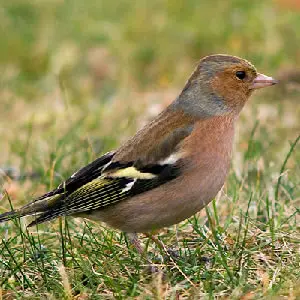 |
|
| Habitats; | Gardens | |||
| Status; | Resident | |||
| Family; | Fringillidae | |||
| Latin Name; | Fringilla coelebs | |||
| Order; | Passeriformes | |||
Top of Page | 
| |||
|
||||
| English; | Brambling | Bramblings are winter visitors to parts of Scotland and their numbers will depend on the food supply available. There will usually be anywhere from 45,000-1,800,000 wintering in the UK. Mainly breeding in Scandinavia and Russia. A very small number of birds - currently estimated at no more than two pairs - may stay in the UK all year round. In their summer range, they will also take insects and invertebrates, such as caterpillars and beetles. They typically lay between five and seven eggs in a nest built within the fork of a tree. While they are in the UK, bramblings feed mainly on nuts, seeds and berries. The nuts of beech trees are favoured in particular and flocks of birds will travel in search of this food source. |  |
|
| Habitats; | Woodland | |||
| Status; | ||||
| Family; | Fringillidae | |||
| Latin Name; | Fringilla montifringilla | |||
| Order; | Passeriformes | |||
Top of Page | 
| |||
|
||||
| English; | Goldfinch | Goldfinches can be found in most lowland areas of Scotland and are only absent from the Highlands. Numbers have been increasing on the Isles of Islay, Colonsay and Mull but only since the 1990s. Scottish goldfinches are both resident and migrant, meaning that a proportion of the UK breeding population migrates each autumn to more favourable wintering grounds to the south, typically in France, Portugal and Spain. The nest is made in May and is very small and compact like the Chafffinch. It is made of fine twiggs, roots, and grasses, interwoven with moss and lichens, and lined with wool, thistledown, or hair. There are 4-6 eggs in a clutch laid in May. |  |
|
| Habitats; | Farmland | |||
| Status; | Resident | |||
| Family; | Fringillidae | |||
| Latin Name; | Carduelis carduelis | |||
| Order; | Passeriformes | |||
Top of Page | 
| |||
|
||||
| English; | Hawfinch | Small Scottish population in the South East up to Edinburgh, The Botanical Garden had a noted population. Hawfinches enjoy the seeds of trees including hornbeam, elm, ash keys and beech mast; hedgerow fruits are also eaten and these include hips, holly berries and, of course, haws from which the bird gets its English name. Sparse population estimated 1000 pairs for the whole of the UK. Winter visitors may boost that by 15,000. They lay 4-6 eggs in a single clutch. |  |
|
| Habitats; | Gardens | |||
| Status; | Resident | |||
| Family; | Fringillidae | |||
| Latin Name; | Coccothraustes coccothraustes | |||
| Order; | Passeriformes | |||
Top of Page | 
| |||
|
||||
| English; | Eurasian Linnet (Scottish) | Linnet (Scottish) (Carduelis cannabina autochthona) is one of 7 subspecies of Linnet. The linnet is a common, small finch of heathland, scrub and farmland. Linnets have recently spread to breed in north and northwest Scotland, Northern Isles and Orkney. Birds breeding in these areas move south or southeast to winter in agricultural land around the Moray Firth. Here, there is a relative abundance and availability of seed, particularly in weedy stubbles, brassica crops. Land with thick bushes is favoured for breeding, including heathland and garden. It builds its nest in a bush, laying four to seven eggs. | .webp) |
|
| Habitats; | Hill | |||
| Status; | Resident | |||
| Family; | Fringillidae | |||
| Latin Name; | Linaria cannabina autochthona | |||
| Order; | Passeriformes | |||
Top of Page | .webp)
| |||
|
||||
| English; | Twite | Linaria flavirostris pipilans is the Scottish (and UK) subspecies, and it is in trouble
RSPB Twite recovery |
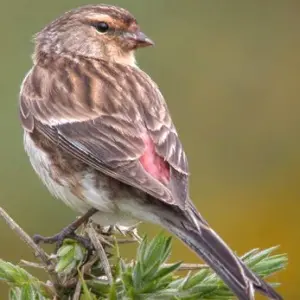 |
|
| Habitats; | Hill | |||
| Status; | Resident | |||
| Family; | Fringillidae | |||
| Latin Name; | Linaria flavirostris | |||
| Order; | Passeriformes | |||
Top of Page | 
| |||
|
||||
| English; | Lesser Redpoll | They breed mainly in Scotland and north-east England. It is a short-distance migrant, with many birds spending the winter within the breeding range. Alpine birds often move to lower elevations. In Great Britain, it becomes more widespread in lowland areas. Some British birds move south to mainland Europe, occasionally reaching as far as Iberia. It inhabits open woodland, scrubland, farmland, and dunes. Its spread has been aided by an increase in conifer plantations. Small seeds from trees such as alder, birch and spruce constitute the main diet. Its nests are cup-shaped, often untidy and made from materials such as fine brittle twigs and grass, and built in trees hedges or brambles. Up to 2 clutches with 4-6 eggs in each |  |
|
| Habitats; | Woodland | |||
| Status; | Resident | |||
| Family; | Fringillidae | |||
| Latin Name; | Carduelis cabaret | |||
| Order; | Passeriformes | |||
Top of Page | 
| |||
|
||||
| English; | Serin | Serins are small finches with short stubby bills and forked tails. Both sexes have streaky yellow brown upper parts, paler streaked under parts and lemon yellow rumps. Males have bright yellow heads with darker patches on the crown and below the eye, females and juveniles are much duller. They have been recorded annually in the UK in small numbers since the 1960s and have bred sporadically since the 1970s (Devon, Dorset, Sussex, East Anglia and the Jersey) but no more than one or two pairs a year. |  |
|
| Habitats; | Woodland | |||
| Status; | Resident | |||
| Family; | Fringillidae | |||
| Latin Name; | Serinus serinus | |||
| Order; | Passeriformes | |||
Top of Page | 
| |||
|
||||
| English; | Bullfinch | Mainly absent from The North of Scotland and the Islands. Bullfinches prefer woodland, scrub, orchards and gardens. Their diet is almost entirely made up of seeds, buds and shoots including heather, though some insects are also taken but mainly fed to their young. In spring the male chooses a nest site and leads the female to it which will be in a thick hedge or conifer, where she builds a delicate nest of twigs and fine rootlets. Two clutches of 4-6 eggs are laid in May. Breeding pairs around 200,000 in the UK. scottishwildlifetrust |  |
|
| Habitats; | Gardens | |||
| Status; | Resident | |||
| Family; | Fringillidae | |||
| Latin Name; | Pyrrhula pyrrhula | |||
| Order; | Passeriformes | |||
Top of Page | 
| |||
|
||||
| English; | Siskin | Widespread in Scotland, siskins mostly feed on seeds of trees - especially of alders, conifers, elms, birch and poplars; various flowering plants (thistles, dandelions, Artemisia, knapweeds and goosefoots) and herbs. They will also readily take advantage of bird feeders. Its breeding habitat is forested areas at a particular altitude on a mountain side, and they prefer humid areas. Coniferous woodland, especially spruce, is favoured for breeding. In winter, migrants arrive from Europe and birds breeding in the north move south. These social birds can nest in groups of 6 pairs, 2 broods of 4-6 eggs ar e attempted. 11/10/21 Just saw a flock of about 12 birds on the Langholm moor |  |
|
| Habitats; | Woodland | |||
| Status; | ||||
| Family; | Fringillidae | |||
| Latin Name; | Carduelis spinus | |||
| Order; | Passeriformes | |||
Top of Page | 
| |||
|
||||
| English; | Greenfinch | Until the 2005, greenfinches were one of the most common birds at our garden feeders. However, hit by the finch disease trichomonosis, they are now a rarity in many gardens and their population has declined by about 35 per cent. Found in lowland areas of woodland, non-intensive farmland with trees and hedges, parks, gardens, church and graveyards, the last four often providing ideal and favoured nest sites in ornamental conifers and evergreen shrubs. Their diet consists of seeds, buds and berries. They visit bird tables for seed and are, according to various recent reports, increasingly willing to perch on and feed from hanging feeders. They nest quite high up in any overgrown hedges or shrubs, and can have up to 3 clutches of 4-6 eggs. |  |
|
| Habitats; | Gardens | |||
| Status; | Resident | |||
| Family; | Fringillidae | |||
| Latin Name; | Carduelis chloris | |||
| Order; | Passeriformes | |||
Top of Page | 
| |||
|
||||
| English; | Crossbill | The crossbill is a large finch of conifer woodlands; so-named for its bizarre cross-tipped bill, which it uses skilfully to prise out and eat the seeds from pine cones. They have distinctive crossed bills and forked tails; males are brick-red, females olive-green with a yellow rump. Two similar species include the parrot crossbill which is slightly larger with a heavier bill, and the Scottish crossbill which is endemic to Scots Pine woods in Scotland and has a slightly smaller bill.There are 2 clutches in a year of 4-5 eggs begining as early as February. scottishwildlifetrust |  |
|
| Habitats; | Woodland | |||
| Status; | Resident | |||
| Family; | Fringillidae | |||
| Latin Name; | Loxia curvirostra | |||
| Order; | Passeriformes | |||
Top of Page | 
| |||
|
||||
| English; | Common Rosefinch | The Common Rosefinch has bred successfully in the Scottish Highlands and eastern England. Breeds in Central Europe and Asia, winters in India, mainland Southeast Asia, and southeastern China. Occasionally seen in the Shetland and Orkney Islands and along the east coast of Scotland and England. They are found in summer in thickets, woodland and forest edges near rivers and in winter in gardens and orchards, wetlands and locally in dry oak woods. It forages on ground and in trees and shrubs for seeds and insects. Also eats buds and other plant material, and small invertebrates. They nest in shrubs or small trees, the nest cup made of stems and grass; lined with hair and rootlets, a single clutch of 4-5 eggs is laid in May. |  |
|
| Habitats; | Woodland | |||
| Status; | Occasional Visitor | |||
| Family; | Fringillidae | |||
| Latin Name; | Carpodacus erythrinus | |||
| Order; | Passeriformes | |||
Top of Page | 
| |||
|
||||
| English; | Yellowhammer | A bird most associated with farmland, but it also lives in coastal areas where it shows a preference for maritime heath rich in gorse, particularly where there is also farmland nearby. Typical food plants include common nettle, docks, common knotgrass, fat hen, common chickweed, and yarrow. Grasses are also important, particularly cereals, wheat and oats being preferred to barley. The nest is on or near the ground, and is typically well hidden in tussocks, against a bank or low in a bush, with plant material, such as leaves, dry grass, and stalks, and is lined with fine grasses and sometimes animal hair. 3-5 eggs are laid in May with up to 3 clutches.
SWScotland - Survey |
 |
|
| Habitats; | Farmland | |||
| Status; | Resident | |||
| Family; | Emberizidae | |||
| Latin Name; | Emberiza citrinella | |||
| Order; | Passeriformes | |||
Top of Page | 
| |||
|
||||
| English; | Cirl Bunting | Cirl buntings are confined to south-west England. They are best looked for in fields and hedges of South Devon, near to the coast. In the summer their natural food consists of invertebrates for example grasshoppers and crickets to feed their chicks. In the winter they feed on small seeds from over-wintered stubbles, fallow land, set-aside, and the over-winter feeding of stock with grain or hay. They tend to feed in flocks during the winter. The nest is on the ground, within dense cover such as that provided by thick hedgerows and scrub. There are 2 clutches of 4-6 eggs laid in May. |  |
|
| Habitats; | Farmland | |||
| Status; | Resident | |||
| Family; | Emberizidae | |||
| Latin Name; | Emberiza cirlus | |||
| Order; | Passeriformes | |||
Top of Page | 
| |||
|
||||
| English; | Reed Bunting | They are resident all year round in the UK, apart from the northernmost parts of mainland Scotland, where they are just summer visitors. A sparrow-sized bird of reed beds, wetlands and farmland, the reed bunting feeds on seeds and invertebrates. In the winter, reed buntings join mixed flocks of buntings, finches and sparrows to feed on seeds on farmland. The nest site is usually very close to water, among rushes and reeds, in a clump of grass or sedge; it is a well-built structure of grass, sedge, reeds etc and lined with finer dried grass, hair. 2-3 clutches of 4-6 eggs are laid in April. |  |
|
| Habitats; | Freshwater | |||
| Status; | Resident | |||
| Family; | Emberizidae | |||
| Latin Name; | Emberiza schoeniclus | |||
| Order; | Passeriformes | |||
Top of Page | 
| |||
|
||||
| English; | Ortolan Bunting | The ortolan is served in French cuisine, typically cooked and eaten whole, thus little surprise then the French population is low. The birds are caught with nets set during their autumn migratory flight to Africa. They are then kept in covered cages or boxes. The birds react to the dark by gorging themselves on grain, usually millet seed, until they double their bulk. The birds are then thrown into a container of Armagnac, which both drowns and marinates the birds. Only around 31 records/year in the UK. Ortolan buntings eat mostly invertebrates, but also seeds. Found in Scrub, farmland, towns. The nest is mostly placed on the ground, sometimes also low in bushes or small trees, egg-laying occurs during May-June, a single clutch with 3-5 eggs. |  |
|
| Habitats; | Farmland | |||
| Status; | Occasional Visitor | |||
| Family; | Emberizidae | |||
| Latin Name; | Emberiza hortulana | |||
| Order; | Passeriformes | |||
Top of Page | 
| |||
|
||||
| English; | Corn Bunting | In Scotland, populations are now restricted to four core areas; Fife, Angus, the Western Isles and Aberdeenshire/Moray, it was thought that as few as 800 singing males were left. Corn buntings have faced historical declines in the British Isles which led to extinction in Ireland, an end to regular breeding in Wales and a large contraction of range in England and Scotland. In eastern Scotland, numbers fell by 83% between 1989 and 2007. Adults feed mainly on seeds, especially cereal grain, making them very dependent on farmland practices. Breeding success also relates directly to the availability of insect food they require for their young. The birds build in low bushes, in the undergrowth near a hedge or even among long grass in an open field, they often have 2 clutches of 4-6 eggs. |  |
|
| Habitats; | Farmland | |||
| Status; | Resident | |||
| Family; | Emberizidae | |||
| Latin Name; | Miliaria calandra | |||
| Order; | Passeriformes | |||
Top of Page | 
| |||
|
||||
| English; | Snow Bunting | Plectrophenax nivalis insulae subspecies are the resident Scottish birds, of which there are about 60 pairs that breed in the Cairngorms. In winter, they are joined by 10-15,000 visiting birds from Iceland, Faroe Islands and the Plectrophenax nivalis nivalis birds which originate from Scandinavia with only a small percentage being from Greenland. WINTERING SNOW BUNTINGS IN CAITHNESS |  |
|
| Habitats; | Hill | |||
| Status; | ||||
| Family; | Emberizidae | |||
| Latin Name; | Plectrophenax nivalis | |||
| Order; | Passeriformes | |||
Top of Page | 
| |||
|
||||
| English; | Lapland Bunting | In 1977 two nests were found in Northern Scotland which produced chicks, since then there have been no more repots. However, Lapland buntings are not commonly sighted in the UK, only ever appearing in low numbers on the east coast, from Lothian in Scotland down to Kent in the south-east of England. They are a species whose habit it is to winter in the UK, doing so from September and October until May, after which time they leave to breed in those colder northern European regions across Scandinavia. It breeds in wet areas with birch or willow, and or bare mountains, and winters on cultivated land or coasts. Its natural food consists of insects when feeding young, and otherwise seeds. The nest is on the ground. 2-4 eggs are laid. |  |
|
| Habitats; | Hill | |||
| Status; | ||||
| Family; | Emberizidae | |||
| Latin Name; | Calcarius lapponicus | |||
| Order; | Passeriformes | |||
Top of Page | 
| |||
|
||||
| English; | Redpoll | Rare breding bird in the north of Scotland less than 4 pairs. The common (or mealy) redpoll is a small finch. It is larger and paler than the very similar lesser redpoll. It is streaky brown above and whitish below with black streaks, and shows two white lines on the folded wing. Mostly a winter visitor, particularly to the east coast. Its typical habitat is forests of pines, spruces and larches. It forages mostly in trees eating small seeds, principally birch and alder seeds in the winter, and invertebrates in summer. It uilds its nest low down in a tree or bush. The nest has an outer layer of thin twigs, a middle layer of root fibres, fragments of juniper bark and lichens and an inner layer of down, willow buds and reindeer hair. 4-6 eggs are laid in two clutches. |  |
|
| Habitats; | Woodland | |||
| Status; | ||||
| Family; | Fringillidae | |||
| Latin Name; | Carduelis flammea | |||
| Order; | Passeriformes | |||
Top of Page | 
| |||
|
||||
| English; | Parrot Crossbill | This bird breeds in the pine forests of northwest Europe and into western Russia. There is also a small population in Scotland, adding to the difficulty of distinguishing it from the sympatric red crossbill and the endemic Scottish crossbill. This crossbill is mainly resident, but will migrate south and west if its food source fails. It will form flocks outside the breeding season, often mixed with other crossbills. There are 2 clutches in a year of 4-5 eggs begining as early as February. |  |
|
| Habitats; | Woodland | |||
| Status; | Resident | |||
| Family; | Fringillidae | |||
| Latin Name; | Loxia pytyopsittacus | |||
| Order; | Passeriformes | |||
Top of Page | 
| |||
|
||||
| English; | Scottish Crossbill | The Scottish crossbill is a chunky, thick-set finch with a large head and substantial bill. It is very difficult to distinguish from the other members of the crossbill family. It is the UK's only endemic bird species. Scottish crossbills are confined to the Scots pine forests of the Scottish Highlands, both ancient Caledonian forest and new commercial plantations. Crossbills' beaks are perfectly adapted for taking seeds from the cones of pine, spruce and larch. They particularly like Scots pine seeds, but will feed on whatever cones are most plentiful, wherever they are. Nests high up a conifer tree, Pine or Larch, nest base made from twigs with a cup of moss, wool, hair, grass. There are 2 clutches in a year of 4-5 eggs, beginning as early as February. |  |
|
| Habitats; | Woodland | |||
| Status; | Resident | |||
| Family; | Fringillidae | |||
| Latin Name; | Loxia scotica | |||
| Order; | Passeriformes | |||
Top of Page | 
| |||
|
||||
| English; | Aquatic Warbler | Last recorded in Scotland in 2008, the aquatic warbler is a regular but scarce autumn migrant to certain areas in southern Britain, visiting on its way between breeding grounds in Eastern Europe and its winter home in West Africa. Aquatic Warbler occurs annually in the autumn in Britain, though with a decreasing world population of no more than 21,000 pairs, they are of high conservation concern. The species is very particular when it comes to breeding habitat, requiring sedge fen mires with a water depth of 5-10 cm. Drainage has resulted in the deterioration of many wetlands that Aquatic Warbler relies on. Bird Guides |  |
|
| Habitats; | Freshwater | |||
| Status; | Passage Migrant | |||
| Family; | Acrocephalidae | |||
| Latin Name; | Acrocephalus paludicola | |||
| Order; | Passeriformes | |||
Top of Page | 
| |||
|
||||
| English; | Tawny Pipit | With a dozen records per year, the Tawny Pipit is a scarce visitor during spring and autumn passage in the UK. It is a medium-large passerine which breeds in much of temperate Europe and Asia, and north-west Africa. It is a migrant, moving in winter to tropical Africa and the Indian subcontinent. Feeding on various insects, small spiders, worms, small seeds and grasshoppers, it forages on the ground by walking and running fast. Their breeding habitat is dry open country, including semideserts. The nest is on the ground, with 4-6 eggs being laid. Pipits BG |  |
|
| Habitats; | Grassland | |||
| Status; | Passage Migrant | |||
| Family; | Motacillidae | |||
| Latin Name; | Anthus campestris | |||
| Order; | Passeriformes | |||
Top of Page | 
| |||
|
||||
| English; | Richard's Pipit | Richard's pipit breeds in southern Siberia, Mongolia, parts of Central Asia and in northern, central and eastern China. It migrates south to winter in the Indian subcontinent and South-east Asia, with records as far south as Sri Lanka, Singapore and northern Borneo. It is a scarce passage migrant in Korea and Japan. A small part of the population regularly moves west in autumn, and birds have been recorded from most countries in Europe, the Middle East and North Africa. It is seen annually between September and November at coastal watch points in areas such as UK, the Netherlands and Scandinavia, with occasional birds appearing in spring. A few overwinter in countries like Spain, Portugal, Italy and Morocco. |  |
|
| Habitats; | Coast | |||
| Status; | Vagrant | |||
| Family; | Motacillidae | |||
| Latin Name; | Anthus richardi | |||
| Order; | Passeriformes | |||
Top of Page | 
| |||
|
||||
| English; | Nutcracker | The nutcracker is widespread, especially in montane and subalpine coniferous forests. It prefers the pine and larch woods, while in winter it is sometimes also found in coppice woods. It nests towards the upper edge of the arboreal vegetation, in steep slopes full of isolated trees. The maximum percentage of nesting occurs around 1,700 meters above sea level. Diet consists of pine cone seeds of trees in mainly cold climates (far north and high altitudes), characterized by large seeds, primarily the Swiss stone pine. In some regions, where none of these pines are found, chestnut and silver fir seeds also form an important part of the diet. Nutcracker in Caithness 2021 |
 |
|
| Habitats; | Woodland | |||
| Status; | ||||
| Family; | Corvidae | |||
| Latin Name; | Nucifraga caryocatactes | |||
| Order; | Passeriformes | |||
Top of Page | 
| |||
|
||||
| English; | Yellow-browed Warbler | Scotland have seen steady increases of this small wonder along the East Coast and the Northern Isles. Breeding in Siberian Taiga forests, they have traditionally wintered in south-east Asia. The European breeding population west of the Urals has increased westwards in recent decades; in 1950 it was described as 'fairly scarce', but 'locally abundant' with 45,000-46,000 pairs in 1990. It may well be this population that migrates westwards, a much shorter journey. Like most warblers, it is insectivorous. Its nests in dense vegetation, often at the base of a tree or old stump; 2-4 eggs are laid in a single clutch. SOC Yellow-browed Warbler |
 |
|
| Habitats; | Woodland | |||
| Status; | Passage Migrant | |||
| Family; | Phylloscopidae | |||
| Latin Name; | Phylloscopus inornatus | |||
| Order; | Passeriformes | |||
Top of Page | 
| |||
|
||||
| English; | Red Breasted Flycatcher | is a small passerine bird in the Old World flycatcher family. It breeds in eastern Europe and across Central Asia and is migratory, wintering in south Asia. It is a regular passage migrant in western Europe. As well as taking insects in flight, this species hunts caterpillars amongst the oak foliage, and will take berries. The base of the outertail feather is white and the tail is often flicked upwards as they perch looking out for insect prey which are caught on the wing or sometimes from the ground. They are found mainly deciduous woodlands, especially near water. They build an open nest in a tree hole or similar recess. 4–7 eggs are laid. |  |
|
| Habitats; | Woodland | |||
| Status; | Vagrant | |||
| Family; | Muscicapidae | |||
| Latin Name; | Ficedula parva | |||
| Order; | Passeriformes | |||
Top of Page | 
| |||
|
||||
| English; | Isabelline Shrike | It is found in an extensive area between the Caspian Sea and north and central China southeast to the Qaidam Basin. Overwinters in Africa and Arabia. This migratory medium-sized passerine eats large insects, small birds, rodents and lizards. Like other shrikes it hunts from prominent perches, and impales corpses on thorns or barbed wire as a larder. It breeds in open cultivated country, preferably with thorn bushes. The breeding pair construct the cup-shaped nest among thorny bushes. Both the pair incubate the eggs and raise the young. The clutch contains 4-6 white eggs with a few pale brown spots. |  |
|
| Habitats; | Farmland | |||
| Status; | Vagrant | |||
| Family; | Laniidae | |||
| Latin Name; | Lanius isabellinus | |||
| Order; | Passeriformes | |||
Top of Page | 
| |||
|
||||
| English; | Blackbird | Blackbird inhabits a very wide range of habitats. Its main and original habitat is relatively open broadleaf, coniferous, mixed and deciduous forests but it is also found in tree plantations, orchards, farmland, gardens and parks and commonly in open grassy areas so long as vegetation cover is within a short distance. The nest is a large cup of dry grass stems and small twigs, packed with mud and lined with fine grass and stems. It is generally sited 0·5–15 m off the ground in a bush or tree or in a climbing plant against a wall, and frequently in or on a wall, outside or inside a building. It is a highly flexible and adaptive forager and feeds principally on invertebrates, mainly earthworms and insects and their larvae but will also take fruits and seeds and, occasionally, small vertebrates. |  |
|
| Habitats; | Gardens | |||
| Status; | Resident | |||
| Family; | Turdidae | |||
| Latin Name; | Turdus merula | |||
| Order; | Passeriformes | |||
Top of Page | 
| |||
|
||||
| English; | White-crowned Sparrow | A White-crowned Sparrow in Cornwall at Rosudgeon on 2nd Dec. a Cornish first, the bird was destined to be at the very least locally popular. Remarkably, it’s the fourth individual of its kind to be seen in Britain this year (2023), following the spring bird at Seaford Head (East Sussex) in April, a singing bird in Aberdeenshire at Girdle Ness in June, and yet another in Shetland on Fetlar in October. These birds forage on the ground or in low vegetation, but sometimes make short flights to catch flying insects. They mainly eat seeds, other plant parts and insects. |  |
|
| Habitats; | ||||
| Status; | Rare Visitor | |||
| Family; | ||||
| Latin Name; | Zonotrichia leucophrys | |||
| Order; | Passeriformes | |||
Top of Page | 
| |||
|
||||
| English; | Fieldfare | Migration southwards from the breeding range starts in October, but the bulk of birds arrive in the United Kingdom in November. They are often accompanied by Redwings as they roam around the countryside looking for snails and slugs, earthworms, spiders and insects such as beetles and their larvae, flies and grasshoppers. Hawthorn, holly, rowan, yew, juniper, dog rose, Cotoneaster, Pyracantha and Berberis berries are all relished. Their nest is built of dried grasses and weeds with a few twigs and a little moss, with a lining of mud and an inner lining of fine grasses. A single clutch of 5-6 eggs are laid in May or June. |  |
|
| Habitats; | Woodland | |||
| Status; | ||||
| Family; | Turdidae | |||
| Latin Name; | Turdus pilaris | |||
| Order; | Passeriformes | |||
Top of Page | 
| |||
|
||||
| English; | Two-barred Crossbill | Two-barred Crossbills are seen with increasing frequency in Okrney and the Hebrides around July-August. Males are mainly red in colouring, with two wide white stripes on each wing, and white tips to their tail. Females are a bright yellowish-green with the same white markings. Specialist feeders on conifer cones, and hence, the unusual bill shape to extract seeds from the cone. They also take berries including our native Rowan. Nearest breeding birds are from Sweeden Finland and furthar east. Nesting high up 2m+, nesting material consists of conifer twigs lined with grass. 3-5 eggs are produced as early as February. |  |
|
| Habitats; | Woodland | |||
| Status; | Occasional Visitor | |||
| Family; | Fringillidae | |||
| Latin Name; | Loxia leucoptera | |||
| Order; | Passeriformes | |||
Top of Page | 
| |||
|
||||
| English; | Shag | The European shag is endemic to the northeast Atlantic and the Mediterranean. An inshore species that is almost never observed out of sight of land, it takes a wide range of small fish that it catches on or near the seabed over both sandy and rocky substrates. The species nests on offshore islands or on cliffs and colonies range in size from a few to several thousand pairs.A single clutch of 2-5 eggs are laid in April.
Seabird 2000 |
 |
|
| Habitats; | Coast | |||
| Status; | Resident | |||
| Family; | Phalacrocoracidae | |||
| Latin Name; | Phalacrocorax aristotelis | |||
| Order; | Pelecaniformes | |||
Top of Page | 
| |||
|
||||
| English; | Cormorant | Cormorants breed in colonies and in Scotland are primarily found on the coast where they build simple nests on the ground. They tend to overwinter on Northerly coasts. After birth, most populations disperse, and in Scotland overwinter on coasts or on estuaries, though they can also be found along larger rivers, such as the Clyde, Tweed and Spey and on lochs. Historically, great cormorants have been regarded as primarily coastal birds in Britain and Ireland, but during the last 40 years there has been a gradual shift of wintering quarters inland, to the extent that almost every lowland lake and river has some. A single clutch of 3-5 eggs is laid in May.
scottishwildlifetrust |
 |
|
| Habitats; | Coast | |||
| Status; | Resident | |||
| Family; | Phalacrocoracidae | |||
| Latin Name; | Phalacrocorax carbo | |||
| Order; | Pelecaniformes | |||
Top of Page | 
| |||
|
||||
| English; | Grey Heron | Herons are a common sight in the UK, often seen perched on the bank of a river or lake, or hunting for fish in wetlands and marsh. Herons will mostly eat fish, particularly eels, but will eat frogs, voles, ducklings and even rabbits. The most recent Heronries Census estimate of UK Grey Heron population size is 9,940 apparently occupied nests in 2019. A single clutch containing 3-5 eggs laid in as early as February. The young spend almost 2 months in the nest. |  |
|
| Habitats; | Freshwater | |||
| Status; | Resident | |||
| Family; | Ardeidae | |||
| Latin Name; | Ardea cinerea | |||
| Order; | Pelecaniformes | |||
Top of Page | 
| |||
|
||||
| English; | Black-crowned Night Heron | The Black-crowned Night Heron is a vagrant and feral breeding colonies were established at Edinburgh Zoo from 1950 into the 21st Century and at Great Witchingham in Norfolk where there were 8 pairs in 2003 but breeding was not repeated in 2004 or 2005. A pair of adults were seen with two recently fledged juveniles in Somerset in 2017, which is the first proven breeding record of wild black-crowned night herons in Great Britain. |  |
|
| Habitats; | Freshwater | |||
| Status; | Vagrant | |||
| Family; | Ardeidae | |||
| Latin Name; | Nycticorax nycticorax | |||
| Order; | Pelecaniformes | |||
Top of Page | 
| |||
|
||||
| English; | Great White Egret | In Scotland, the species remains scarce, but in 2020, the great white egret was seen regularly by UK bird watchers. It was reported more than 8,000 times in almost every part of England and Wales, including in 2,300 new locations. The Great White Egret is a bird at home in a variety of wet habitats. It occurs typically in marshes, damp meadows, swamps, river margins, lake shorelines, flooded grasslands. It is also found in marine habitats such as tidal marshes. Its principal prey in most situations is fish, but also includes frogs, lizards, snakes, small mammals, and small birds. It nests in reed beds or in trees or bushes, producing a single clutch of 3-5 eggs n May. 2022 around a dozen birds around Annan on the Solway, undoubtably breeding. Heron Conservation |
 |
|
| Habitats; | Freshwater | |||
| Status; | Resident | |||
| Family; | Ardeidae | |||
| Latin Name; | Ardea alba | |||
| Order; | Pelecaniformes | |||
Top of Page | 
| |||
|
||||
| English; | Western Cattle Egret | Cattle Egrets have become established as a breeding species in the UK since 2008, and wintering birds are present in many areas of southern Britain, sometimes including flocks of tens or hundreds of birds, indeed some individuals reported in Scotland. They nest in colonies, which are often found in woodlands near lakes or rivers. Their diet consists of insects, grasshoppers, crickets, flies, and moths, as well as spiders, frogs, and earthworms. The nest is a small untidy platform of sticks in a tree or shrub, with a clutch size of 3-4 eggs. |  |
|
| Habitats; | Freshwater | |||
| Status; | Resident | |||
| Family; | Ardeidae | |||
| Latin Name; | Bubulcus ibis | |||
| Order; | Pelecaniformes | |||
Top of Page | 
| |||
|
||||
| English; | Wryneck | The wryneck was once a common breeding bird in Britain, but its range gradually contracted leaving just a handful of pairs in Scotland, however reports indicate more sightings, so recovery possible. Like the Green Woodpecker, they mostly feed on the ground, lapping up ants with their long tongue. They nest in an existing tree hole and produce 7-10 eggs in 1-2 broods between May and July. Wryneck near Inverness |  |
|
| Habitats; | Woodland | |||
| Status; | Migrant | |||
| Family; | Picidae | |||
| Latin Name; | Jynx torquilla | |||
| Order; | Piciformes | |||
Top of Page | 
| |||
|
||||
| English; | Great Spotted Woodpecker | Uncommon or rare on most Scottish Islands, with densities generally declining north of the Great Glen. The typical call of this species is a single, sharp 'kik' or 'kek', and fast, loud staccato 'drumming' in early spring, usually on trees but also on telephone poles or even metal structures. In flight, it undulates very strongly with complete closure of the wings. Woods and parkland, particularly with old timber, are their favoured haunts. They are omnivorous, eats a mixture of insects and seeds (mainly conifer), they also very partial to peanuts and easy to attract into the garden. But they'll also take eggs and even young birds from nest and boxes. They bore a nest hole, usually at least 12 feet up, and a foot down. In the nest cavity they lay a single clutch of 4-7 eggs, usually towards the end of May. |  |
|
| Habitats; | Woodland | |||
| Status; | Resident | |||
| Family; | Picidae | |||
| Latin Name; | Dendrocopus major | |||
| Order; | Piciformes | |||
Top of Page | 
| |||
|
||||
| English; | Lesser Spotted Woodpecker | This diminutive woodpecker also has a large world range, occurring similarly from Iberia in the west to Kamchatka in the east. In UK, it is declining fast and has disappeared from many of its former haunts. It is now spread very sparsely indeed across parts of southern England and is increasingly unlikely to be encountered by chance. It is associated with mature woodland, parks and orchards, but in winter can wander more widely, sometimes joining parties of tits in river valley alders. or wander into reed beds. A bird on Shetland in October 2012 (a new species for Scotland following its earlier removal from the Scottish list) was presumably of the occasionally irruptive continental nominate form. Only 2,000 breeding pairs in total in the UK. |  |
|
| Habitats; | Woodland | |||
| Status; | Resident | |||
| Family; | Picidae | |||
| Latin Name; | Dendrocopus minor | |||
| Order; | Piciformes | |||
Top of Page | 
| |||
|
||||
| English; | Green Woodpecker | The green woodpecker is a relative newcomer to Scotland, with the first recorded breeding occurring in the early 1950s after the bird had spread from England. It is now found in many central, eastern and southern parts of the country, although it is patchily distributed. They spend such an incredible amount of time looking for ants, you will often find them rummaging around in parks and on garden lawns, short grass provides the ideal feeding grounds for Green woodpeckers. Also, eating caterpillars and beetles, and have a specially-adapted long 'sticky tongue' which serves the purpose of extracting bugs from the cracks and crevices of old, rotting trees. Hole nesters, they lay a single clutch of 4-7 eggs in May. |  |
|
| Habitats; | Woodland | |||
| Status; | Resident | |||
| Family; | Picidae | |||
| Latin Name; | Picus viridis | |||
| Order; | Piciformes | |||
Top of Page | 
| |||
|
||||
| English; | Great Crested Grebe | Breeding in low-lying lochs with plenty of emerging vegetation, these birds have elaborate courtship displays. The head-shaking display is probably the most familiar; in this, the head plumage is fanned into a ruff before the birds then face each other and shake their heads from side to side. The display is seen predominantly during the early stages of courtship and is usually performed when the pair is reunited after a period of separation, suggesting that it is used as a greeting and for reinforcement. They produce 2 clutches of 3-4 eggs, beginning in April. They winter at sea in sheltered waters in Scotland this is Firth of Forth and Loch Ryan, they return to the breeding lochs as early as February. Wikipedia-Great Crested Grebe |  |
|
| Habitats; | Freshwater | |||
| Status; | Resident | |||
| Family; | Podicipedidae | |||
| Latin Name; | Podiceps cristatus | |||
| Order; | Podicipediformes | |||
Top of Page | 
| |||
|
||||
| English; | Red-necked Grebe | Winter visitors around the East Coast of Scotland. The species breeds in Northern Europe and East Asia, wintering along the coast as far south as the Mediterranean Sea, south China, and India. They breed in ponds, lakes, and shallow marshes, preferring areas with thick vegetation to more open water. In winter, this species may be found in shallow marine environments near the coast. Red-necked Grebes primarily eat small insects in summer, switching to small fish during the winter. Wikipedia-Red-necked Grebe |  |
|
| Habitats; | Coast | |||
| Status; | ||||
| Family; | Podicipedidae | |||
| Latin Name; | Podiceps grisegena | |||
| Order; | Podicipediformes | |||
Top of Page | 
| |||
|
||||
| English; | Little Grebe | In Scotland, it is found as far north as Orkney and Shetland It frequents lochs and ponds with plenty of cover, mainly in the low laying areas. The little grebe or Dabchick is an excellent swimmer and diver and pursues its fish and aquatic invertebrate prey underwater. Like all grebes, it nests at the water's edge, constructing a large floating nest of marginal and water plants. Usually four to seven eggs are laid in 2 clutches beginning in late April. When the adult bird leaves the nest, it usually takes care to cover the eggs with weeds. |  |
|
| Habitats; | Freshwater | |||
| Status; | Resident | |||
| Family; | Podicipedidae | |||
| Latin Name; | Tachybaptus Ruficollis | |||
| Order; | Podicipediformes | |||
Top of Page | 
| |||
|
||||
| English; | Black-necked Grebe | Grebes are diving waterbirds. The black-necked grebe is a small grebe, about the same size as a Moorhen. A rare breeding bird, it is also uncommon in winter. Breeds on rich low ground lochs in the Scottish Central lowlands and produce 1 or 2 clutches of 3-4 eggs. The diet consists of insects, crustaceans, molluscs, tadpoles, and small frogs and fish. Some fish winter around the coast, especially Loch Ryan. Brine shrimp becomes their main diet. UK breeding population less than 50 pairs. Survey |  |
|
| Habitats; | Coast | |||
| Status; | Resident | |||
| Family; | Podicipedidae | |||
| Latin Name; | Podiceps nigricollis | |||
| Order; | Podicipediformes | |||
Top of Page | 
| |||
|
||||
| English; | Slavonian Grebe | A rare breeding bird in Scotland, less than 50 pairs. In the breeding season, they are mainly found around the Great Glen and in Strathspey. In winter, they can be found around the Moray Firth, the Firth of Forth, the Clyde Estuary and Islay. They dive underwater using their large feet for agile manoeuvrability to feed on aquatic arthropods, fish and crustaceans, and will also catch airborne insects on the water's surface. Underwater, they swallow or capture large prey and re-emerging at the surface to manipulate the fish head first. Their nests are built from plant matter and are most commonly affixed to emergent vegetation, otherwise built on land or in shallow open water. A single clutch of 4-8 eggs beginning in June. |  |
|
| Habitats; | Coast | |||
| Status; | Resident | |||
| Family; | Podicipedidae | |||
| Latin Name; | Podiceps auritus | |||
| Order; | Podicipediformes | |||
Top of Page | 
| |||
|
||||
| English; | Storm-petrel | Storm Petrels are true seabirds, spending the majority of their time-out in open water. They breed on the west coast and western isles, as well as on Orkney and Shetland. They nest in burrows and rocky crevices, only returning to land at night. A famous site is Mousa, Shetland, where artificial nests have been successfully trialled. A single clutch of a single egg is laid in May or June. Storm petrels are present at and around the breeding colonies from May to September. Migrants best looked for in September and October as they journey south to waters off South Africa. Nest Box |  |
|
| Habitats; | Sea | |||
| Status; | Migrant | |||
| Family; | Hydrobatidae | |||
| Latin Name; | Hydrobates pelagicus | |||
| Order; | Procellariiformes | |||
Top of Page | 
| |||
|
||||
| English; | Leach's Storm-petrel | Scottish population on Dun in the St Kilda archipelago, North Rona, Gruney and Gloup Holm in Shetland, Flannan Isles. Irish population on the Stags of Broadhaven. 2000 census put the population at 48,000 pairs. Most British and Irish birds migrate in the winter to the tropics, although a few remain in the northern Atlantic. Seabird 2000 Census |  |
|
| Habitats; | Coast | |||
| Status; | Migrant | |||
| Family; | Hydrobatidae | |||
| Latin Name; | Oceanodroma leucorhoa | |||
| Order; | Procellariiformes | |||
Top of Page | 
| |||
|
||||
| English; | Manx Shearwater | Most of the estimated world population of around 340,000-410,000 pairs of Manx shearwaters breed in Britain and Ireland. Of the UK population, 40% breed on Rum, and 50% in Pembrokeshire on the adjacent islands of Skomer, Skokholm and Middleholm. The nesting sites are visited at night, where the birds produce a single egg in May. The breeding colonies are deserted from July to March, when the birds migrate to the South Atlantic, wintering mainly off Brazil and Argentina, with smaller numbers off southwest South Africa.
Seabird 2000 |
 |
|
| Habitats; | Coast | |||
| Status; | Resident | |||
| Family; | Procellariidae | |||
| Latin Name; | Puffinus puffinus | |||
| Order; | Procellariiformes | |||
Top of Page | 
| |||
|
||||
| English; | Yelkouan Shearwater | Yelkouan shearwaters breed on islands and coastal cliffs in the eastern and central Mediterranean. Most winter in that sea, but small numbers enter the Atlantic in late summer. This species nests in burrows which are only visited at night to avoid predation by large gulls. Formerly considered to be a subspecies of and similar to the black-and-white Manx shearwater of the Atlantic. |  |
|
| Habitats; | Sea | |||
| Status; | Vagrant | |||
| Family; | Procellariidae | |||
| Latin Name; | Puffinus yelkouan | |||
| Order; | Procellariiformes | |||
Top of Page | 
| |||
|
||||
| English; | Cory's Shearwater | This species breeds on Madeira, the Azores and the Berlengas Archipelago in Portugal and the Canary Islands in Spain. They nest on open ground or among rocks or less often in a burrow where one white egg is laid. The burrow is visited at night to minimize predation from large gulls. In late summer and autumn, most birds migrate into the Atlantic as far north as the south-western coasts of Great Britain and Ireland. |  |
|
| Habitats; | Sea | |||
| Status; | ||||
| Family; | Procellariidae | |||
| Latin Name; | Calonectris diomedea | |||
| Order; | Procellariiformes | |||
Top of Page | 
| |||
|
||||
| English; | Great Shearwater | This species breeds on Nightingale Island, Inaccessible Island, Tristan da Cunha, and Gough Island. It is one of only a few bird species to migrate from breeding grounds in the Southern Hemisphere to the Northern Hemisphere, the normal pattern being the other way around. This shearwater nests in large colonies, laying one white egg in a small burrow or in the open grass. In August it can be seen off the southwestern coasts of Great Britain and Ireland. |  |
|
| Habitats; | Sea | |||
| Status; | Vagrant | |||
| Family; | Procellariidae | |||
| Latin Name; | Puffinus gravis | |||
| Order; | Procellariiformes | |||
Top of Page | 
| |||
|
||||
| English; | Fulmar | Scotland is home to around 97% of the UK population of Northern fulmars. Once they only nested on St Kilda, but they are now one of the commonest seabirds, and are present year-round, with no pronounced migration after becoming adult. They usually nest on wide ledges near the top of cliffs, but will also nest on more gently sloping land, under boulders and in puffin burrows on islands free from mammalian predators. They feed at sea on a variety of foods ranging from zooplankton and small fish to offal and discards produced by commercial fishing. Breeding in Orkney, Shetland, East Coast, Minches, North West. Population estimated at 500,000 pairs. Fulmar |  |
|
| Habitats; | Coast | |||
| Status; | Resident | |||
| Family; | Procellariidae | |||
| Latin Name; | Fulmarus glacialis | |||
| Order; | Procellariiformes | |||
Top of Page | 
| |||
|
||||
| English; | Gannet | The northern gannet is the largest seabird in the North Atlantic. Gannets often perform dramatic plunge dives from high in the sky to catch fish up to depths of 20m and can stay submerged for over half a minute. They also feed from the surface on small shoaling fish like sandeels and on discards from fishing vessels, where their large size helps them out-compete most other scavenging species. The northern gannet is endemic to the North Atlantic and most breed in Britain and Ireland. There are 21 gannetries around Britain and Ireland, with most being on remote offshore islands and stacks, and two on mainland cliffs. Some colonies have been occupied for centuries and are large and conspicuous. A single egg is laid in May.
Seabird 2000 |
 |
|
| Habitats; | Coast | |||
| Status; | Resident | |||
| Family; | Sulidae | |||
| Latin Name; | Morus bassanus | |||
| Order; | Procellariiformes | |||
Top of Page | 
| |||
|
||||
| English; | Barn Owl | The barn owl is at the northern limit of its global range in Scotland. It is widespread in the milder south and west, though at moderate elevations, becoming less numerous in the cooler north and east where most birds are confined to the coastal plain, and is known only as a vagrant to the Northern Isles. They hunt for voles and mice in young forestry plantations and over hill sheep ground. They nest in tree holes or on a ledge inside a building. Two clutches of 3-8 eggs are laid in May. |  |
|
| Habitats; | Farmland | |||
| Status; | Resident | |||
| Family; | Tytonidae | |||
| Latin Name; | Tyto Alba | |||
| Order; | Strigiformes | |||
Top of Page | 
| |||
|
||||
| English; | Snowy Owl | The snowy owl, also known as the polar owl, the white owl and the Arctic owl, is a large, white owl of the true owl family. Snowy owls are native to the Arctic regions of both North America and the Palearctic, breeding mostly on the tundra. Between 1967 and 1975, snowy owls bred on the remote island of Fetlar in the Shetland Isles, north of mainland Scotland. Females summered as recently as 1993, but their status in the British Isles is now that of a rare winter visitor to Shetland, the Outer Hebrides and the Cairngorms. Older records show that the snowy owls may have once semi-regularly bred elsewhere in the Shetland wikipedi - Snowy Owl |  |
|
| Habitats; | Moorland | |||
| Status; | ||||
| Family; | Strigidae | |||
| Latin Name; | Bubo scandiacus | |||
| Order; | Strigiformes | |||
Top of Page | 
| |||
|
||||
| English; | Tawny Owl | The tawny owl is the most abundant owl in Scotland, commonly found in many parts of the mainland and the Inner Hebrides although apparently absent from the Outer Hebrides and Northern Isles. Despite the fact that it is nocturnal and therefore more often heard than seen, the hooting call of the tawny owl actually makes it one of the most familiar species of British birds. They prefer a hollow tree but will use old crows nests or similsr. A single clutch of 2-4 eggs are laid in March or April. |  |
|
| Habitats; | Woodland | |||
| Status; | Resident | |||
| Family; | Strigidae | |||
| Latin Name; | Strix aluco | |||
| Order; | Strigiformes | |||
Top of Page | 
| |||
|
||||
| English; | Short-eared Owl | In Scotland, most breeding short-eared owls are associated with moorland and the highest densities are reported from rough grasslands adjacent to, or intermixed with, heather moors. Lowland rough grassland, marshes and coastal sand dunes are also used for breeding though their use of such areas can be erratic, except on some of the western islands and Orkney. Like most owls, it's primarily a nocturnal hunter, preying upon small rodents, particularly voles and field mice, but also small birds such as meadow pipits and reed buntings. Scottish population estimates 1000-2000 pairs. The nesting site is always on the ground, and a single clutch of 4-8 eggs is laid late March to early June |  |
|
| Habitats; | Hill | |||
| Status; | Resident | |||
| Family; | Strigidae | |||
| Latin Name; | Asio flammeus | |||
| Order; | Strigiformes | |||
Top of Page | 
| |||
|
||||
| English; | Long-eared Owl | Long-eared owls are usually found on the wooded edges of moorland and rough grassland and other areas with high populations of small mammals, such as young tree plantations. They feed principally on field voles and other small mammals, but will also take small birds. They do not build their own nests, but use the old nests of other birds such as crows and sparrowhawk, they will even nest on the ground. A single clutch of 3-5 eggs are laid in March or early April. |  |
|
| Habitats; | Woodland | |||
| Status; | Resident | |||
| Family; | Strigidae | |||
| Latin Name; | Asio otus | |||
| Order; | Strigiformes | |||
Top of Page | 
| |||
|
||||
| English; | Little Owl | The Little Owl is a species of open country, favouring lowland habitats such as farmland, parkland and orchards. Introduced from the Continent during the latter part of the 19th century, the species can be found breeding across England and Wales, just reaching Scotland in the north. This owl usually perches in an elevated position, ready to swoop down on any small creature it notices. It feeds on prey such as insects and earthworms, as well as small vertebrates including amphibians, reptiles, birds and mammals. Small cavities are favoured for breeding, these often located within hedgerow trees or the walls of old agricultural buildings. A single clutch of 4-5 eggs are laid in May. |  |
|
| Habitats; | Woodland | |||
| Status; | Resident | |||
| Family; | Strigidae | |||
| Latin Name; | Athene noctua | |||
| Order; | Strigiformes | |||
Top of Page | 
| |||
|
||||